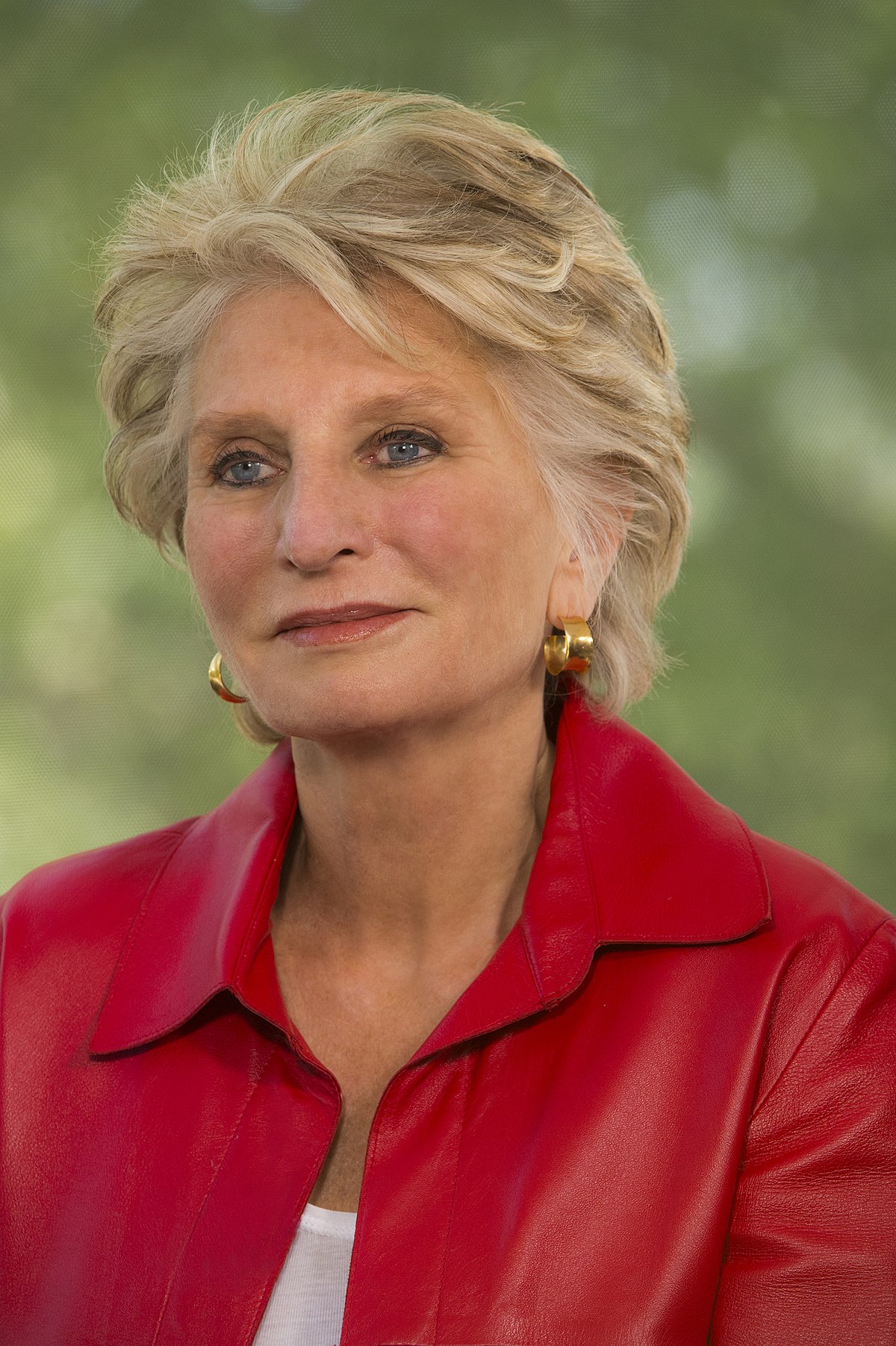
Jane Harman
Former United States Representative
13
APPEARANCES
12
PODCASTS
Sep 12, 2026


Jane HarmanGUEST
Uh, on 9/10/2001, I had lunch with someone named L. Paul Bremer, Ambassador Jerry Bremer, who later became, uh, what was called the viceroy in I- in Iraq.
Jane HarmanGUEST
But at the time, he had chaired something called the National Commission on Terrorism.
Jane HarmanGUEST
I was a member of that commission, which was one of three commissions predicting, based on, uh, studies we had made, that there could be a major terror attack on US soil.
Jane HarmanGUEST
And Jerry and I were having lunch near the Capitol, uh, bemoaning the fact that no one was paying attention to us.
Jane HarmanGUEST
So, uh, 12 hour, whatever, 20 hours later, guess what? And I, yes, I had had lunch, I had had breakfast on the Hill, and I was walking to my office on the way to a meeting of the House Intelligence Committee.
Jane HarmanGUEST
I was then co-chair of something called the Task Force on Terrorism with Saxby Chambliss, who was then a member of the House and later became a senator.
20 MINS LATER


Dasha BurnsHOST
And what's going through your mind as you're making your way to the Capitol? Are you seeing the same images that Senator Chambliss just described?
Jane HarmanGUEST
Number one, my youngest child, number four out of four, was in high school in Washington at the time.
37 MINS LATER
Dasha BurnsHOST
Congresswoman, explain your thoughts here and why you thought it was important to put pen to paper here.

Dasha BurnsMODERATOR
Congresswoman,
Jane HarmanGUEST
But when it finally reopened, and I had forgotten we were there for a briefing, we were standing together.


Jane HarmanGUEST
On 9-10-2001, I was having lunch with somebody many of you know, Jerry Bremer, Ambassador L. Paul Bremer, because he had chaired something called the National Commission on Terrorism, on which I served.
37 MINS LATER

John BellingerGUEST
And, you know, we heard our allies were with us at the beginning, but we did as we as we took actions along the way that went off course, you know, we began to lose some of the support that we had internationally.

Jane HarmanGUEST
Uh, on 9/10/2001, I had lunch with someone named L. Paul Bremer, Ambassador Jerry Bremer, who later became, uh, what was called the viceroy in, in Iraq.
Jane HarmanGUEST
But at the time, he had chaired something called the National Commission on Terrorism.
Jane HarmanGUEST
I was a member of that commission, which was one of three commissions predicting, based on, uh, studies we had made, that there could be a major terror attack on US soil.
Jane HarmanGUEST
And Jerry and I were having lunch near the Capitol, uh, bemoaning the fact that no one was paying attention to us.
20 MINS LATER


Joe MathieuHOST
When you hear a post like this or read a post like this from President Trump, does it make you optimistic for a breakthrough?
Jane HarmanGUEST
No, I think we've been hearing things like this over the long period since this war of choice commenced in late February.
Jane HarmanGUEST
I think the to use the metaphor that President Trump uses, Iran has a lot of cards and so does Israel.
Jane HarmanGUEST
And both of them have to be in a place where it's to their advantage to end this or at least slow this down.
Jane HarmanGUEST
It's to our advantage to do that, but I don't really think to theirs at this point.
Jane HarmanGUEST
I also don't think we have any really good military options, because if we now bomb the energy facilities of Iran, which would be the next logical target, they're going to attack the energy facilities of the entire region, and that will probably shut down even more oil and other resources from reaching the world and make the markets even more closed.


Jake TapperHOST
Turning to Iran, from what we know about the talks so far, are you at all hopeful that President Xi can help push Iran to make a deal to end this war?
Jane HarmanGUEST
He's the biggest user of Iran's oil, and he has the relationship, and, uh, not only with Iran, but with others in the region.


Jane HarmanGUEST
That is a collaborative intelligence relationship among the US, Canada, UK, Australia, and New Zealand.
Jane HarmanGUEST
If we don't share intelligence, I certainly worry that, uh, that the US mainland is very vulnerable because we are completely adjacent to Canada, and some of the threats we can think about, let's imagine coming from Russia, China, et cetera, could easily cross the Canadian mainland into the US mainland.
Jane HarmanGUEST
We have the Northern Command, which is structured to think about the two countries as contiguous.
9 MINS LATER


Alicia MenendezHOST
One, amazing how much of this just puts us back in the position of where we were when Witkoff and Kushner were negotiating this the first time around, except now we have to talk about reopening the Strait of Hormuz.
Jane HarmanGUEST
It's called the United States Congress, which under the Constitution is supposed to declare war.
Jane HarmanGUEST
And we may end up sometime somewhere soon with boots on the ground, at least according to the president's rhetoric.
15 MINS LATER

Michael SteeleHOST
What do people in positions that you know well—we talked a little bit about before—how do they navigate this? But how do the American people consume this? And I think the polling has shown that they're not consuming it well.
Jane HarmanGUEST
Um, but my take is Trump is not negotiating with Iran, he's negotiating with the markets, and I think a lot of this, uh, what amounts to noise, because it changes all the time, is about is the market going up, is the market going down.
Jane HarmanGUEST
Uh, maybe there's some early whispers to a few folks who could, uh, invest in the markets.
Jane HarmanGUEST
Um, but I think that's what it is, and I don't think he ever anticipated that after a couple of days it would become this.


Nina ArmagnoGUEST
They survive launch, but then when they're in orbit, it's kind of, you know, they're in a vacuum.
Jane HarmanGUEST
And in addition to that, some of them can be targeted by others of them, and that's a huge worry.
Jane HarmanGUEST
The weaponization of space by a variety of countries without adequate rules is extremely scary.
Jane HarmanGUEST
But even without that, there have been anti-satellite tests by China and Russia which show that they have the capacity to shoot down satellites in space.
Jane HarmanGUEST
I mean, obviously, if they don't like the United States, you can pick what they'll shoot down, and how do we protect against that? And if you have space debris, some call it space junk, floating around at very high speeds, it takes a very tiny little fragment to damage a satellite.
10 MINS LATER


Jane HarmanGUEST
Yeah, if I could just add to that, uh, it's a boffo performance, uh, by a, an A+ performer, our president, uh, but leading to what? Um, so far, Putin is winning.
Jane HarmanGUEST
Uh, this is a huge, uh, opportunity for him after, uh, invading, uh, a sovereign country despite all his promises since 1994.


Mike MassiminoHOST
From your perspective, how has the role of space as a national priority for the United States evolved over the past decade?
Jane HarmanGUEST
Well, thank you for including me in the broadcast, and I'm looking at three people who are far more expert than I, but I did pay my dues.
Jane HarmanGUEST
I did represent what I used to call the Aerospace Center of the Universe for 17 years and counting in the United States Congress.
Jane HarmanGUEST
And let me just back up three decades, because that's when I was elected, in the '90s, and when I was elected in 1992, uh, the Cold War had just ended.And, uh, the view of the United States, starting with the George H.W. Bush Administration was, "We won, they lost.
Jane HarmanGUEST
We can now downsize our procurement budgets for defense and space," et cetera, and we did.
25 MINS LATER

Mike GreenleyHOST
Congresswoman, if you were advising the US political administrators, what's one space security priority that you would put on top of the list these days?