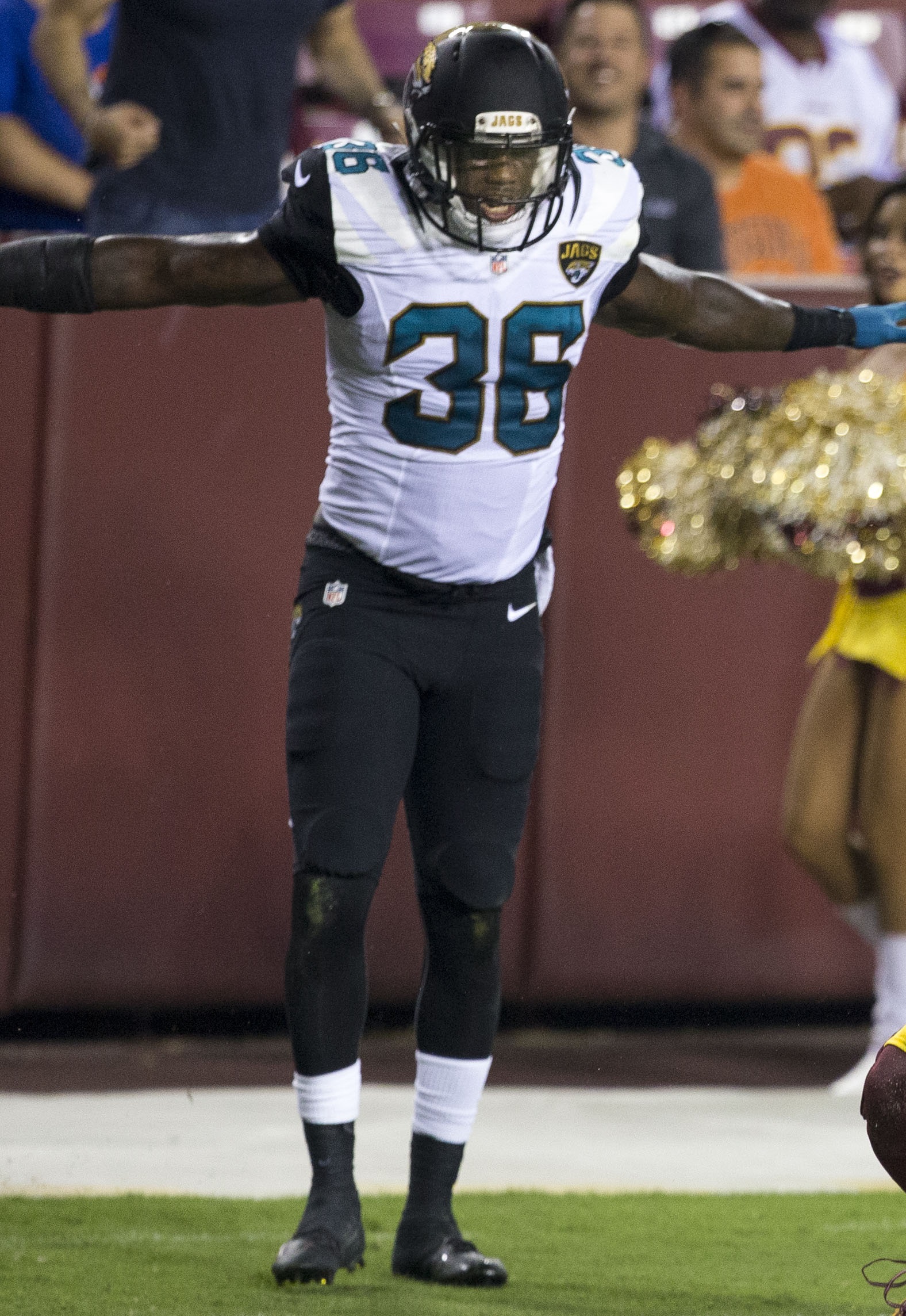
James Sample
American American football player
61
APPEARANCES
14
PODCASTS
Oct 26, 2026


Stephanie RuhleHOST
Do you think there are Texans that are at this point getting so turned off by Elon Musk trying to buy the state?

James SampleGUEST
I mean, when one individual is spending over one hundred million dollars in one state election, that same individual, by the way, is spending seven figures in a variety of house races around the country.
7 MINS LATER

James SampleGUEST
The law that they cite is the so-called Motor Vehicle Registration Act, the Motor Voter Act, the National Voter Registration Act.
James SampleGUEST
And they cite a cherry-picked portion of the purpose of it, the innocuous and frankly wonderful purpose to ensure that America's elections are free and fair and all of that.

Antonia HyltonHOST
You know, to that point, James, do you think part of the intention with a case like what they're pursuing against Ilhan Omar is less about their, you know, the merits, once again, the possibility, although we know they have the perhaps intention there to denaturalize or like whether or not that is successful? Is it about sending a message to other immigrants of color who have been denaturalized in the country or have been naturalized in the country about speaking out about their political opinions, taking part in high stakes elections, rebuking this administration in any way? Do you think it's less actually about Omar herself and about something bigger?
James SampleGUEST
So you have a scenario where you want to you have an individual who's trying to get out from under significant corruption charges and is in theory, you know, we don't know and we have to stipulate that.
James SampleGUEST
But it certainly looks like we are using bribery to get out from underneath corruption charges.

Katy TurHOST
Do you have anything new for us? Anything in particular that has come up in the last couple of weeks?
James SampleGUEST
Well, the thing that I would say to piggyback on what David just said, this is not just coming from Democrats.
James SampleGUEST
Let's remember that in 2020, Donald Trump said that he regretted not having the National Guard seize voting machines.
James SampleGUEST
So the notion that this is just, you know, sky is falling, chicken little, you know, fear mongering.
James SampleGUEST
He's actually said that he regrets not doing the thing that that democracy advocates are afraid he might do.

James SampleGUEST
And the reality is, and John just alluded to this, so L.A. County staff reviewed a sample.
James SampleGUEST
They took 200 of the individual records that DHS identified for them in the so-called 20,000.
James SampleGUEST
Out of those 200 ballots, and this is in the affidavit of Maria Flores, who's one of the assistant county registers there in L.A. County, out of those 200 that they chose as a sample, a random sample, 112 of those were individuals whose registrations were canceled or inactive.
James SampleGUEST
39% of them show a U.S. birthplace, and 71% of them have no voting history whatsoever.
Antonia HyltonHOST
So what due process will be available to people who are at the center of all this and may have no remedy before Election Day?

James SampleGUEST
I mean, you said in the end of the last segment, bulldoze first and ask for permission later.
James SampleGUEST
It's about a golf course, but it's about something much bigger than that, Nicole.
6 MINS LATER


Alicia MenendezHOST
Right, because you have the lawyer saying, this is conceptual, there's no plan that's being implemented, and then the president is going out there and saying the opposite.
James SampleGUEST
For months and months, the government told the court that there is no plan, that there are just concepts of an idea, right? And then on Sunday, it's a detailed plan, there's a map involved, there's a rerouting of the golf course involved, there's an elimination of another golf course, elimination of things like bike paths, etc., all of which is relatively small stakes for On the scale of national civilization and catastrophe, right? We're talking about trees on a golf course.
James SampleGUEST
But at the same time, when the government is affirmatively ignoring orders from a court, merely even in order to keep the court appropriate.
James SampleGUEST
Judge Reyes has not stood in the way of this project except to say that the government needs to provide notice and opportunity for the plaintiffs to be heard.
Alicia MenendezHOST
Because we are all the trees just getting trampled by incredible executive overreach.
17 MINS LATER

James SampleGUEST
Uh, you can say, "I graduated from law school." You can say, "I'm trained in the law." You cannot hold yourself out as an attorney, as a lawyer.
James SampleGUEST
She, she held herself out as the general counsel of Rick Grenell's, uh, organization, Fix California.
James SampleGUEST
It's a really good, it's a really important question, and it's a question that goes, not to be pedantic, but all the way back to Marbury v. Madison.
James SampleGUEST
I mean, Marbury versus Madison, John Marshall was faced with essentially a choice as to whether or not he could order Thomas Jefferson, who was from essentially the opposite political party as John Marshall, and James Madison, who was in, who was Madison, uh, Jefferson's Secretary of State, to do what they didn't wanna do.
James SampleGUEST
We've generally found a way to not have that kind of a conflict for the last 240 years, and now we are having it over and over again.
Katy TurHOST
Um, i- when the, if the Democrats win, and if the Democrats retake the White House, does this stuff get addressed?
James SampleGUEST
The fact is what she was really selling under the Supreme Court's very, very sharply narrowed doctrine of bribery or what we call honest services fraud, which is the formal name for bribery.
7 MINS LATER
Antonia HyltonHOST
What stage of this retribution tour that we have been talking about since the very beginning of this second term, what stage of the tour have we now reached?
James SampleGUEST
I, I mean, it could be part of an overall recipe for a perjury, perjury charge.
James SampleGUEST
Even, even January 6th i, h- was as horrible as it was, and the erasure of January 6th, including the pardons, including the commutations, is horrible, as is the targeting of those who investigated the, uh, uh, the horror of January 6th.
James SampleGUEST
That doesn't absolve anyone who was involved in pointing out the horrors of January 6th.
21 MINS LATER
Alicia MenendezHOST
Um, what, what's at risk when someone like that is inside the Department of Justice?
James SampleGUEST
A lot is at risk, and, you know, an economist would call this an adverse selection problem, which is to say you've lost a lot of good people, and you've brought in a, a, a lot of people with some suspect resumes.
James SampleGUEST
A movie buff would call this the rogue's gallery at the Star, at the Star Wars bar scene, and that is not what you want [laughs] out of the Department of Justice.
James SampleGUEST
It's a phrase as old as professionalism, and if you have those kinds of people in these positions...
Alicia MenendezHOST
And the fact that these people, James, have had problems with the law themselves and are supposed to be upholding the law.
Katy TurHOST
Are Democrats doing enough to ensure that they can intervene or stop any shenanigans?
James SampleGUEST
Well, they aren't superheroes, but they are doing everything that is within human capacity and a political party's capacity and even nonpartisan capacities to do.
James SampleGUEST
And to Alex's point, which is a great point, you know, more election observers, including election observers, even from the Department of Justice, can build trust in As long as the people who are watching are watching and reporting back to others on what is actually happening as opposed to what they are primed and expecting and maybe even wanting to see.
James SampleGUEST
Having election observers in and of itself from all walks of the political spectrum is itself not a bad thing.

James SampleGUEST
... and the allocation of resources point that Michael is making, that when you combine those two things, there's an adverse selection problem, right? Economists talk about adverse selection.
James SampleGUEST
When you lose your good people and you are simultaneously hiring people who are basically being hired strictly for partisan purposes...

James SampleGUEST
So the Insurrection Act is an exception to what's known as the Posse Comitatus Act, which means that if you invoke the Insurrection Act, which the president can do, does not need Congress to help him in that.
James SampleGUEST
And the reason is that Congress has already empowered him through the Insurrection Act to have that power if, in fact, he chooses to use it.
12 MINS LATER
Ted BoutrosSOUNDBITE_SPEAKER
a closer call.
James SampleGUEST
As much as I think the press ban, and I absolutely agree with Jim and with Akayla, that every time the president speaks, every time he posts, he is actually becoming the lead witness for Ted Boutros, for MSNOW, CNN, and Politico, because the more he says, the more evidence there is that this is straight viewpoint discrimination, and that the national security arguments were just a post-talk pretextual, if you will, which is really quite an achievement in many respects.
James SampleGUEST
Circuit has a case pending before it that they have had pending for over a year involving the Associated Press growing out of the Gulf of Mexico, Gulf of America debate.
James SampleGUEST
And in that case, which has not yet reached a full ruling on the merits, the concurring opinion by Judge Naomi Rao in that particular case in which there was a stay— indicated that places like the Oval Office, places like Air Force One are subject to a bit more presidential discretion than places that are open on a broader scale like the Brady briefing room.
James SampleGUEST
That being said, on the overall point, it doesn't change the fact that what we're seeing here is actually not only retaliatory, not only viewpoint discrimination, but frankly, a little bit childish.
Antonia HyltonHOST
But I wonder if you can give us a sort of larger picture here of what's happening with this administration in terms of people's right to vote and what could be coming down the line here because of their step to try to essentially weaponize systems like this to restrict to as an access.

James SampleGUEST
Well, Jacob, first on the national security point, I'll quote from Justice Hugo Black in 1971, the so-called Pentagon Papers case.
James SampleGUEST
Now, that's a case involving classified documents, involving a prior restraint on publication.
James SampleGUEST
The word security is a broad, vague generality whose contours should not be invoked to arrogate the fundamental law embodied in the First Amendment.
James SampleGUEST
You mentioned in your opening how this is being stretched so far that it's losing its meaning.
7 MINS LATER

Jacob SoboroffHOST
Are there any that stick out to you that preceded this and how they might be different?
James SampleGUEST
Well, and to David's point about national security and your question about national security being wheeled as this kind of talisman for all of these different things, ranging from the ballroom to... you know, threatening the press and revoking their credentials.
James SampleGUEST
It's not as though it's a new thing that national security is an executive prerogative.
James SampleGUEST
But you know what's also always been a thing, Katie? Limits on government power.
Alicia MenendezHOST
What do you think the court is going to think of the argument from the government that access to the White House is a privilege?
James SampleGUEST
And the reason it's going to go nowhere is we have precedent as recently, literally as yesterday from the D.C.
James SampleGUEST
Circuit, the circuit that governs the district that today's hearing will be before that says that even if.
James SampleGUEST
You take the government's argument seriously that it is a privilege and not a right.
19 MINS LATER
Alicia MenendezHOST
He's discussed putting his name on Penn Station in New York, Dulles Airport in Virginia, the Commander Stadium in D.C. Is there anything legally that can stop him, Jim Sample?


James SampleGUEST
It is absolutely accurate that the freedom of the press is in the First Amendment.
James SampleGUEST
The freedom of the press depends on a structure in which constitutional rights, at least in the United States, are rights that apply as against the government.
James SampleGUEST
You can't get much more squarely in line with being the government than the president of the United States and then the underlings who execute that policy.
James SampleGUEST
In this instance, it was literally Secret Service members who deprived the individual reporters, producers, and photographers for the networks and journalists for Politico.
James SampleGUEST
of their credentials early on Saturday morning when they were trying to access the White House.
James SampleGUEST
And there is precedent on point, legal precedent that applies to an almost identical scenario from nearly 50 years ago, 1977.

James SampleGUEST
And if you track the complaint, the complaint actually doesn't start with the First Amendment.
James SampleGUEST
The complaint starts with the due process claim, which is to say that when the reporters and photographers for the three networks, the journalists who were denied their credentials on Saturday morning were denied their credentials.
James SampleGUEST
And when it became government action, the challenge to what the government had done was right.
James SampleGUEST
And the answer to your question is absolutely not, and there is precedent on point, Nicolle.
James SampleGUEST
It goes back to the LBJ era, and there was a reporter by the name of Robert Sherrill at The Nation.
James SampleGUEST
And there's substance behind that analysis, and you can go through this step by step.
James SampleGUEST
The government is allowed to regulate speech on some level, and what we do is we sort speech into categories.
James SampleGUEST
Content-based restrictions... fall under what's known as strict scrutiny, which is the strictest test in constitutional law.
James SampleGUEST
But within strict scrutiny and within content-based regulations is an even narrower category called viewpoint discrimination.
James SampleGUEST
I think that the way Susan just phrased that is absolutely perfect, which is to say Donald Trump, you never would have thought you'd utter this sentence.
James SampleGUEST
Donald Trump is the best witness for MSNOW, CNN and Politico because every single time he speaks, every single time he posts, it becomes more and more clear.
James SampleGUEST
clear that this is what is known in First Amendment law as viewpoint-based discrimination.
James SampleGUEST
That is the absolute worst thing that you can do as the government when it comes to regulating speech.
James SampleGUEST
It's not the case that the government can never regulate access for the media.
Scroll for more appearances