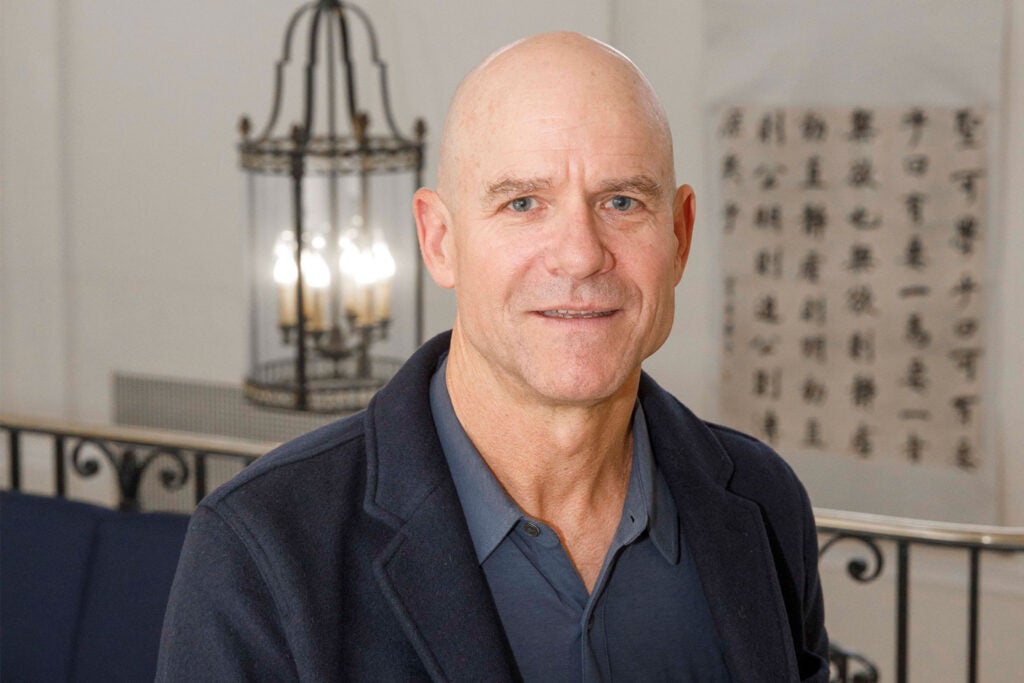
James Robson
American sinologist
13
APPEARANCES
11
PODCASTS
Nov 19, 2026


Punit BhatiaHOST
So how do you see privacy and how has your privacy perspective shifted over the years?

James RobsonGUEST
What a great intro, because I've not really looked back at my career in that way.
James RobsonGUEST
It's almost I'm advocating as much exposure and use of data for the furtherance of the individual or the organization.
James RobsonGUEST
And now I'm on the other side of the fence saying, no, slow it down and block the uses of that data because we think it could be bad for you.
James RobsonGUEST
I mean, you're right to say that as an actor, you would be using tools like Mandy.com. to advertise you for roles and you will these days that people will call themselves kind of it and you see a lot of maybe uh youtube shorts or instagram reels or those kinds of things so you're literally filming yourself to then send it off to a casting director to review where are they storing that how are they storing that when are they deleting that don't think any of those actors care they just want to get employed um in truth not not worried about kind of that cross-pollination of oh it's in the cloud but it's also on my device and it's uh not password protected that i i don't think there is much concern around the privacy of being an actor i know i didn't even have that concept in my mind that didn't care email everyone thousands of emails or phone calls and trying to leave my details with them in the hope that they will call me back.
James RobsonGUEST
And so you have photographers and not only the casting directors, but then you have the producers having your data.
14 MINS LATER
Punit BhatiaHOST
And how does that go around? What did you experience in that role, especially using data for public interest?
Punit BhatiaHOST
So how do you see privacy and how has your privacy perspective shifted over the years? What
James RobsonGUEST
It's almost I'm advocating as much exposure and use of data for the furtherance of the individual or the organization.
James RobsonGUEST
And now I'm on the other side of the fence saying, no, slow it down and block the uses of that data because we think it could be bad for you.
James RobsonGUEST
I mean, you're right to say that as an actor, you would be using tools like Mandy.com. to advertise you for roles and you will these days that people will call themselves kind of it.
James RobsonGUEST
And you see a lot of maybe YouTube shorts or Instagram reels or those kinds of things.
James RobsonGUEST
So you're literally filming yourself to then send it off to a casting director to review.

Mateo BerbegalloHOST
How well do you think businesses, governments, and charities are balancing innovation with public trust? And what impact is that having on society?
James RobsonGUEST
So it's very difficult to give you a blanket answer there because, you know, nobody knows.
James RobsonGUEST
You know, we don't have a, a global system of privacy, uh, rules or legislation.
9 MINS LATER


James RobsonGUEST
I think GDPR is absolutely aligned to the concept of anonymity because that is the breadth of what data protection is all about.
James RobsonGUEST
But anonymity in and of itself is a very high bar to meet and gets higher the more technology that we have.
James RobsonGUEST
I mean, yeah, we've got the concept from the likes of 4chan and the development of the internet that you have, you know, the spawning of Anonymous and LulzSec and all of those things.
James RobsonGUEST
kind of anarchic groups that wanted the internet to be this freedom of expression place where you'll never be judged, you'll never go to jail because nobody will know who you are.
13 MINS LATER


Aakash SuriHOST
I mean, my understanding of it is you're just combining information, right? Man, I was
James RobsonGUEST
And it's trusted research environments created for researchers to be able to access two different data sets from different sources in a secure environment to do analysis on them, combine them, match them, and then come out with an output.
7 MINS LATER
James RobsonGUEST
I mean, I, I started as one of the sort of jump on the bandwagon GDPR consultants, if you like, and, and, and really enjoyed that.
James RobsonGUEST
And o- over the years, I jumped into an organization as a data protection specialist, a big kind of, uh, globalized multinational psychometric testing firm, and then became DPO after that.
James RobsonGUEST
And, um, up until November of last year, I was data protection officer for the UK, uh, Labour Party.
James RobsonGUEST
Now, the, the whole ecosystem of data protection as a, as a job that you can do has completely changed.
19 MINS LATER
AlexHOST
[laughs] Yeah.


James RobsonGUEST
Right now, we focus on specifically debt capital, so lending, any kind of lending facility.
James RobsonGUEST
Now we've been through a bit of a change, I guess, because we've been around for about six years.
16 MINS LATER


James RobsonGUEST
I knew I was coming to the end of that sort of, I don't know, second career, if you like, because I've been in TV and I'm in infrastructure sales and there was an old boss.
James RobsonGUEST
It's going to be cybersecurity, but there's a thing called the European General Data Protection Regulation coming.
14 MINS LATER


Dean GuidaHOST
Like, what most, what are most CEOs still getting wrong about the strategic value of data?
James RobsonGUEST
Yeah, I, you know, it can make and break an organization now, and so maybe it's, it's more valuable than money because if you lose your reputation around the uses of data, have a data breach, maybe you get a fine from a regulator, you get splashed over the papers, depend on maybe how high-profile you are in your sector, then you're going to lose custom, you're gonna lose money from the bottom line.
James RobsonGUEST
And yet they, they do say data is the new oil, but I may- might go one step further that, and say data, personal data is the new money.
James RobsonGUEST
You know, an email address, somebody's name, a salutation, uh, maybe an, a, an opinion in there.
9 MINS LATER
Dean GuidaHOST
Do, do, do you think about that? Like, once they s- once they start building themselves, like, what's gonna happen?


Scott SammonsHOST
Given what you've seen and given the experiences that you've had, and like me, you work with different organisations, do you think we're any further along in the protection of personal data? Or has the last few years been a lovely adventure and a lovely story to tell the grandkids, but nothing's really changed?
James RobsonGUEST
No, I think because of the amount of publicity that GDPR has had, you know, however much we sort of scorn any practitioner these days that says, fines, you will be fined 20 million euros, 70 million, you know, it's probably useful that message early on to, to, to really give people a kick to go like, like now, now take it, take it seriously.
James RobsonGUEST
You know, even the phrases like data is the, new money all those kinds of things are get really have I think proliferated into society so people do have an idea that there is a value to their own personal information and you can't easily get away from it now so um you know maybe I'm getting off topic away from has the GDPR changed things over the past 10 years um of course it's eight years since it since it was enforceable but Yeah, it has, but it doesn't feel like it's been resolved or solved anything.
James RobsonGUEST
individuals with enough money to take them through the courts and probably prove something that they've done wrong and then they may get some sort of tarnish on their reputation i think that message is really out there and i think that's probably a good message to to still be out there because yeah what why not have a name and shame um around problem within an organization and so if there is that fear then yeah what are the questions organizations are asking themselves and I think generally they do and I'll be compliant before even are we are we making sure we're looking after the people whose data we are processing you know if you're in social care for example as of course you know then yeah there's a huge it could cause actual harm to someone.
14 MINS LATER


Rav Ubhi AdamsHOST
How does the role of a DPO for a political party interact with that type of natured approach to data?
James RobsonGUEST
One of them in the Labour Party is definitely the attack and the rebuttal communications team.
James RobsonGUEST
So they are the people that are interacting with the media about what the media have put out and maybe rebuffing it or calling out, you know, inaccuracies and factual inaccuracies.
9 MINS LATER
AlexHOST
I


James RobsonGUEST
Making it visual, I think, is really important, especially if a DPIA is going to...
James RobsonGUEST
Most of my clients are in the research space, so... and there are multiple organizations working together and the organizations that are my client aren't always the lead organization and so there's that that's why i'm getting to see all these other dpias and i generally try and manipulate it so they just use my template and and take the take the lead on there but what is really useful for the non-data protection data protection professionals that are generally on those calls It is a flow diagram and knowing where it's going to go, why it's going to go there, what the relationships are, and they can see that really clearly.
James RobsonGUEST
Now, sometimes as we've broken down, it's kind of very granular little keys of what this means, rather than because you can't have so many words on the flow diagram.
James RobsonGUEST
But I also have a table, a data flow table that I sort of built out of a roper.
James RobsonGUEST
So I almost call that section of my DPIA the roper and then augment that with another piece at the bottom and have codes together to go, this is the second part of the roper and


Ralph O'BrienHOST
So James, please give us a little spiel on where you came from and how you got here.
James RobsonGUEST
But it was, and K. Royal is showing an image of the privacy notice at, what is it, an airport, a port of some sort? So I was coming to the end of an IT sales career, IT security sales.
James RobsonGUEST
I'd been fairly good at recruiting new grads to become desk-based account managers for various organizations.
16 MINS LATER