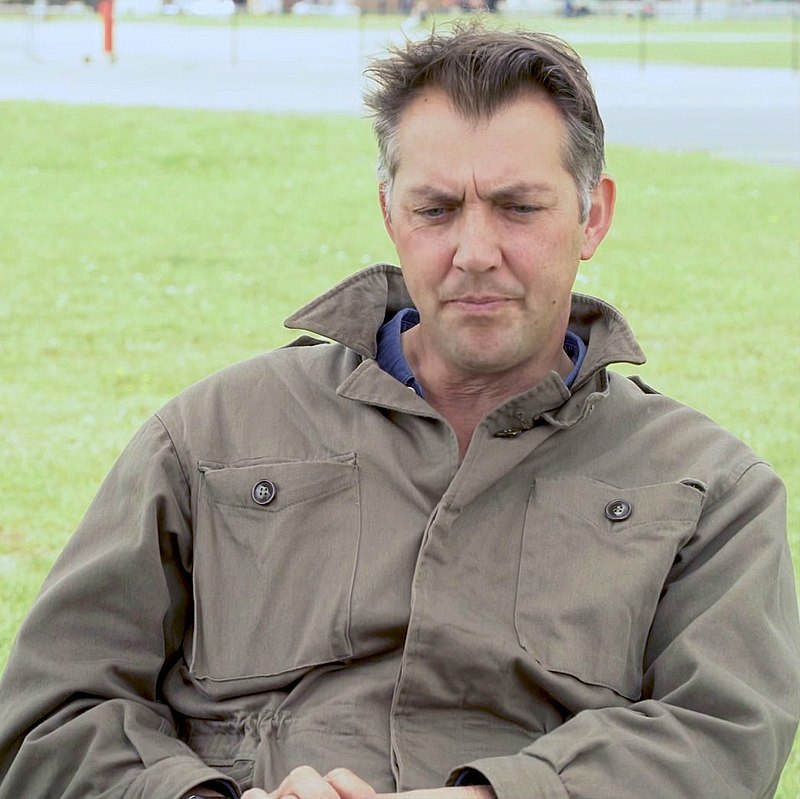
James Holland
Historian and author
44
APPEARANCES
10
PODCASTS
Oct 27, 2026


James HollandGUEST
I think that was a justified, but I'm not saying, what I'm saying is I'm not saying that, I'm saying that those who, those, I just want to sort of clarify the point you're making about sort of ideology and pragmatism or what point I'm making about ideology and pragmatism.
James HollandGUEST
Those who are ruled by ideology rather than pragmatism, it tends to kind of come undone.
48 MINS LATER

Winston MarshallHOST
It's quite a different experience to reading the book because the book, I got the impression of you being more flattering of Wilson


James HollandGUEST
I think on several levels, one of the most important levels is that before him, it was the duty of the people to serve the king.
James HollandGUEST
And from then on, from his way, he changed kingship and the monarchy to it is the king's job to serve the people.
James HollandGUEST
And I know that was sort of, you know, it was not worded as such in the past, but it was implicit, that balance, that you're the king and everyone else is beneath you and they've got to do a lot of sucking up and all the rest of it.
James HollandGUEST
And your job is to just sort of be a figurehead or kind of drop heads off or raise taxes to go to war or whatever it might be.
5 MINS LATER


James HollandGUEST
Well, one of his, one of his former officers takes, takes pity on him and asks him to help do some, um, some, some sort of propaganda courses to try and sort of bash Bolshevism out of young Germans.
James HollandGUEST
Uh, and he finds out he's actually a really good orator, and he finds he's rather good at it, and he can just stand up and just deliver.
James HollandGUEST
And as he's thinking about this and thinking about trying to sort of, you know, dissuade people from Bolshevism, his, his own thoughts starts to sort of coalesce.
James HollandGUEST
And he's gravitated to Munich as well, 'cause although he's Austrian, he's, Munich is where he ends up.
54 MINS LATER

Francis FosterHOST
And the interesting thing is you also have an Adolf Hitler who tried to gain power through physical force, but he also learned his lesson and thought to himself, "Let's go the legitimate route."

speaker_14NARRATOR
Laura Smith or Kelly Cox, Tiffany Johnston and Jessica Kane.

James HollandGUEST
The Ranger had put pictures out basically to say if you want to, you know if you want to help yourself, I need to know.
James HollandGUEST
And he was referring to basically the district attorneys in those different jurisdictions.
James HollandGUEST
So when he laid all the pictures out of the girls, he asked him, who do I need to go speak to? The ranger's asking, Bill, who do I need to go speak to? And at first, he doesn't say anything.
James HollandGUEST
He just kind of... puts his hand over all of them, and he says, what does that mean? And he says, all of them.
James HollandGUEST
So we knew that night that he was acknowledging responsibility for all the girls that we had pictures there.
6 MINS LATER
speaker_14NARRATOR
Reese began to show his frustration.


James HollandGUEST
With Sammy, there's indications of visualization of when he's thinking about a crime scene, he'll start stroking his face and as he's starting to picture a victim, you'll see him look out and up and you can tell he has this revolving carousel of victims and it's just spinning and he's waiting for it to stop at the one that he wants to talk about.
speaker_13HOST
Little vented in the interview room for 30 minutes that he had been wrongly depicted as a rapist.
James HollandGUEST
And then you could see in his eyes as he's looking away and he falls back as I say the word killer.


James HollandGUEST
This is the point at four thirty in the morning on Monday the fifth, where Eisenhower has to say, "Yes, we're gonna go on the sixth, or we're not," because everyone's got to start moving out sort of like now.
James HollandGUEST
He sits in that seat, in that chair, armchair in the library at Southwark House, puts his head in his hands, thinks about it.Looks up and goes, "Okay, let's go." But again, I think your grandfather was really instrumental in that decision because he was all for it.
James HollandGUEST
We're committed, we've done it, we need to back ourselves, we've done everything we possibly can.

16:52

So take us through some of that decision-making, and take us through the revolution or the evolution of his reputation as this is going on.
James HollandGUEST
Well, he, he, he navigates the end of the war, first in Europe in, in May 1945, and then in, um, uh, against Japan in August brilliantly, I think.
James HollandGUEST
He doesn't actually spell out what it is, but he says to the Japanese, you know, "This ...
13 MINS LATER

speaker_6ADVERTISER
Insurance underwritten by NJM Insurance Company and its subsidiaries.
James HollandGUEST
What was the response? Well, the response was a massive strain on democratic politics.
James HollandGUEST
And what you start to see is that when you have really major economic upheavals, you then have political upheavals in democracies.
James HollandGUEST
You go to the fringes of the left, political left and the political right, and you have mayhem.
James HollandGUEST
And once you have political uncertainty combined with economic uncertainty, you're that much closer to war.
James HollandGUEST
And so here we are in 2026 with economic mayhem and downturns, political mayhem, And what is the result? Well, we've got a European war.
AlexHOST
quite appealing in today's world, isn't it? It's all

James HollandGUEST
Well, it arrives the- the previous evening of the 4th of May, um, and he's handed it, um...
James HollandGUEST
This beautiful little, um, village in the kind of sort of hinterland between Bremen and Hamburg.
James HollandGUEST
You know, he's taken over this farmyard building as the regimental headquarters and suddenly this message is scrawled in sort of...

John BatchelorHOST
And John Semken lives to a ripe age of 2016 and you s- you visited with, uh, John Semken.
James HollandGUEST
Yeah, so this is the big, um, uh, Canadian Army push to cross, uh, through the Reichswald and, um, uh, take the towns of Kleve and Goch, in cahoots incidentally with, um, uh, General Bill Simpson's U.S. Ninth Army, uh, on their right-hand flank and, uh, Operation Grenade, and then close up to the River Rhine.
James HollandGUEST
So this is clearing the Rhineland to the west of the River Rhine, the German, um, German territory west of the, of the River Rhine.
James HollandGUEST
And, um, it's a major, major operation, although a lot of S- British Second Army units are transferred into the Canadian Army.
James HollandGUEST
What you get, John, is just this sort of mounting sense of the relentlessness of it.
9 MINS LATER
John BatchelorHOST
So how does the disappointment of Market Garden lead into the winter battles for the Scheldt lead into slowing the charge into Germany down? How do they all fit together, James?
James HollandGUEST
Well, the, the idea for Market Garden is not a bad one on paper because the idea is that, that the Siegfried Line, the West Wall, the German border defenses runs up alongside Belgium and, and France, but, um, and Luxembourg, but it doesn't really run up into kind of the northern stretch of Holland 'cause Holland stretches round into kind of Northern Germany and, and it, and there's no border defenses between northern Dutch border and Germany.
James HollandGUEST
So the idea is to cross, get across the River Rhine which becomes very, very big further, further south, but, um, it is not so big, um, at Arnhem, um, in Northern Holland.
James HollandGUEST
And so the idea is to kind of sort of punch a line, um, with 30 Corps, British 30 Corps, to secure this road, th- this, this sort of avenue up to Arnhem.
James HollandGUEST
British and American and Polish airborne troops, paratroopers and glider troops, will land and secure various bridges so the 30 Corps, when it reaches it, can get across.
James HollandGUEST
Um, so you can see the, the thought behind it, but, but it just doesn't quite...
John BatchelorHOST
What is the Long Tail and why is it part of the big war concept being practiced?
James HollandGUEST
Yeah, well it's just, it's just a huge support in terms of maintenance and supply and, um, you know, they have tank crews being trained constantly over in the UK and they're just coming in and they're just sort of funneled in.
James HollandGUEST
Um, but, you know, a tank regiment like the Sherwood Rangers is about 688 men of which, um, only about 329 are actually in tanks.
James HollandGUEST
The rest of them are in what's called the A echelon and the B e- echelon, which is the support behind it.
James HollandGUEST
So this is trucks, um, ah, ah, ah, and half tracks and, and what have you bringing up supplies and it's the armored recovery vehicles.
James HollandGUEST
So, you know, at the end of the day if a tank's been left on the battlefield but hasn't been completely knocked out, they'll beetle around and whip it back and change an engine or repair the tracks or whatever and it'll be good to go the next day.
6 MINS LATER
James HollandGUEST
Um, it's actually a Ca- it's a Canadian-led operation, uh, pushing down from, from Caen, the Bulgarous Ridge down into, to Falaise.
James HollandGUEST
And the crossing of the Noireau is, is, uh, you know, again it's on a sort of flank action of Operation Tractable.
James HollandGUEST
He's the commander of the 43rd, um, um, 43rd Wessex division and he's known as von Thoma 'cause von Thoma was a German Afrika Korps commander who was captured at, um, um, at Alamein.
John BatchelorHOST
Did everybody recognize that? All the other tanks who were supposed to swim to shore, did they also run as close as they could?
James HollandGUEST
I mean, I should just, uh, just say for your, uh, for American listeners that, that a, a squadron, a, a tank squadron in the British Army is the same as a tank company in a, you know, in an armored battalion, armored regiment in, in, in the US Army.
James HollandGUEST
You know, when they're thinking about this, this invasion, you know, what everyone's imagining is it's summer, um, the seas are calm, there's no wind, just like a mill pond and it's all gonna be fine.
John BatchelorHOST
What was his mission that day and for the next months? How did he see himself helping?
John BatchelorHOST
Did everybody recognize that? All the other tanks who were supposed to swim to shore, did they also run as close as they could?
James HollandGUEST
I mean, I should just, uh, just say for your, uh, for American listeners that, that a, a squadron, a, a, a tank squadron in the British army is the same as a tank company in a, you know, in an armored battalion, armored regiment in, in, in the US Army.
John BatchelorHOST
What was his mission that day and for the next months? How did he see himself helping?
James HollandGUEST
Well, good evening to you, John, and thank you very much for that and, and for having me on.
James HollandGUEST
I mean, the British Army in 19- 1939 at the outbreak of the Second World War is actually 100% mechanized.
James HollandGUEST
Um, but, but (laughs) they could, that sounds more impressive than it actually is, and it's largely because the British Army's incredibly small in 1939.
James HollandGUEST
It's allied with France, and France is gonna do the army bit and Britain's gonna provide naval power and burgeoning air power.
James HollandGUEST
Well, it arrives the, the previous evening of the 4th of May, um, and he's handed it, um, he's in this courtyard in this, this farmyard, this farm, this beautiful little, um, village in the coastal hinterland between Bremen and Hamburg.
James HollandGUEST
Some farming, low-level farming land, um, called Karlshöfen and he's overtaken, you know, he's taken over this farmyard and building as the regimental headquarters, and suddenly this message is scrawled and sort of on, on a used message pad, um, i- in pencil and he's rather irritated that, why haven't you used a clean sheet of paper? A- and the guy says, "I just, I had to take this down immediately on the first thing I could find.
James HollandGUEST
Um, stay where you are." And they realized that this is the end of the war, um, and it was amazing because in October 2020, in a gap in the pandemic, um, I went over to, um, I went over to Karlshöfen, uh, on a pilgrimage really, a kind of, sort of following the footsteps of the Sherwood Rangers all through Germany, through Dunkirk and through, uh, the route through Operation Veritable, through Kleve, Goch, Issum up to the River Rhine, across the River Rhine all, all the way through that l- single road through the woods and forests and stuff, uh, up to Bremen.
John BatchelorHOST
And John Samkin lives to a ripe age of 2016 and you s- you visited with, uh, John Samkin?
James HollandGUEST
Yeah, so this is the big, um, uh, Canadian Army push to cross, uh, through the Reichswald and, and, uh, take the towns of Kleve and Goch, in cahoots incidentally with, um, uh, General Bill Simpson's U.S. Ninth Army, uh, on their right-hand flank and, uh, Operation Grenade.
James HollandGUEST
So this is clearing the Rhineland to the west of the River Rhine, of the German, um, German territory west of the, of the River Rhine.
James HollandGUEST
And, um, it's a major, major operation, although a lot of S- British Second Army units are transferred into the Canadian Army.
9 MINS LATER
John BatchelorHOST
So, how does the disappointment of Market Garden lead into the winter battles for the Scheldt lead into slowing the charge into Germany down? How do they all fit together, James?
James HollandGUEST
Well, the, the idea for Market Garden is not a bad one on paper because the idea is that- that the Siegfried Line, the West Wall, the German border defenses runs up alongside Belgium and, and France but, um, and Luxembourg, but it doesn't really run up into kinda the northern stretch of Holland 'cause Holland stretches round into kind of northern Germany and, and i- and there's no border defenses between northern Dutch border and Germany.
James HollandGUEST
So, the idea is to cross, get across the River Rhine which becomes very, very big further, further south but, um, i- is not so big, um, at Arnhem, um, in northern Holland.
James HollandGUEST
And so the idea is to kind of sort of punch a line, um, with 30 Corps, British 30 Corps, to secure this road, th- this, this sort of avenue up to Arnhem.
James HollandGUEST
British and American and Polish airborne troops, paratroopers and glider troops, will land and secure various bridges so that 30 Corps when it reaches it can get across.
James HollandGUEST
Um, so you can see the, the thought behind it but, but it just doesn't quite, it just, they don't pull it off.
Tom BatchelorHOST
What is the Long Tail and why is it part of the big war concept being practiced?
James HollandGUEST
(smacks lips) Yeah, well it's just, it's just a huge support in terms of maintenance and supply and, um, you know, they have tank crews being trained constantly over in the UK and they're just coming in and they're just sort of funneled in.
James HollandGUEST
Um, but, you know, a tank regiment like the Sherwood Rangers is about 688 men of which, um, (smacks lips) only about 329 are actually in tanks.
James HollandGUEST
The rest of them are in what's called the A echelon and the B-ish echelon, which is the support behind it.
James HollandGUEST
So this is trucks, um, (smacks lips) uh, uh, uh, and halftracks and, and what have you bringing up supplies and it's the armored recovery vehicles so, you know, at the end of the day if a tank's been left on the battlefield but hasn't been completely knocked out, they'll beetle around and whisp it back and change an engine or repair the tracks or whatever, and it'll be good to go the next day.
James HollandGUEST
I mean obviously after something as long as, as, you know, sort of 300 miles up to, up into Belgium in, in kind of no time at all, um, the maintenance required on a lot of the tanks is, is quite extreme.
6 MINS LATER
James HollandGUEST
Um, it's actually a Ca- it's a Canadian-led operation, uh, pushing down from, from Caen, the Bourgoyne Ridge, down into, to Falaise.
James HollandGUEST
And the crossing of the Noireau is, is, uh, you know, again it's on a sort of flank action of Operation Tractable.
James HollandGUEST
He's the commander of the 43rd, um, um, 43rd Wessex division, and he's known as von Thoma 'cause von Thoma was a German Afrika Korps commander who was captured at, um, um, at El Alamein.
John BatchelorHOST
What is the big picture of why it's important to pay attention to Point 103 and the battle over Fontenay?
James HollandGUEST
(smacks lips) Yeah, well, so- so Caen is- is- is, you know, normally sort of sticks out on a limb in north- north, um, west France and Caen is the hinge because it's a- it's a key nodal point.
James HollandGUEST
It's got rivers going through it, it's got a railway line, it's got main roads and all the rest of it.
James HollandGUEST
And when you s- from- from Caen, you can sweep eastwards up towards Paris, up towards Belgium, cross, um, eastwards to the German border and so on.
James HollandGUEST
So obviously the- the French, uh, from the German point of view, as they're moving their- their mobile units, their Panzer units, their armored units up into the, into the battlefront, Caen is the kind of sort of first port of call.
James HollandGUEST
And it's from there that there- the Germans are intending to knock the Allies back into the sea.
5 MINS LATER
John BatchelorHOST
How is that a 75 millimeter that can't penetrate the armor of a Panzer straight on actually defeats Panzers? How do they do that?
John BatchelorHOST
Did everybody recognize that? All the other tanks who were supposed to swim to shore, did they also run as close as they could?
James HollandGUEST
I mean, I should just, uh, just say for your, for, for American listeners that, that a, a squadron, a, a tank squadron in the British army is the same as a tank company in a, you know, in an armored battalion, armored regiment in, in, in the US Army.
James HollandGUEST
So obviously the, you know, when they're thinking about this, this invasion, you know, what everyone's imagining is it's summer, um, the seas are calm, there's no wind, it's like a mill pond and it's all gonna be fine.
John BatchelorHOST
What was his mission that day and for the next months? How did he see himself helping?
James HollandGUEST
Well, good evening to you, John, and thank you very much for that and, and for having me on.
James HollandGUEST
I mean, the British Army in 19- 1939 at the outbreak of the Second World War is actually 100% mechanized.
James HollandGUEST
Um, but (laughs) they could, that sounds more impressive than it actually is and it's largely because the British Army's incredibly small in 1939.
James HollandGUEST
It's allied with France and France is gonna do the army bit and Britain's gonna provide naval power and burgeoning air power.
speaker_0HOST
All right.
James HollandGUEST
So, um, uh, down the, uh, down the, the, the, the eastern border of France, uh, the western border of Germany, um, that is where the Maginot Line is, and that is this incredibly expensive series of defense projects.
James HollandGUEST
You know, the idea, the principle behind it is that it'll be just like the First World War if there's another, another, uh, uh, a- another conflict.
James HollandGUEST
Um, i.e. long, drawn out and static, uh, and he who has the best defenses and, and best build up of armaments and supplies will win.
James HollandGUEST
And this is certainly true in case of, you know, the whole principle of war that, um, that dictates how Germany fights its war, first Prussia and then Germany, is this understanding that-Germany lies in the center of Europe.
19 MINS LATER
speaker_0HOST
And was there a concern about-
Scroll for more appearances