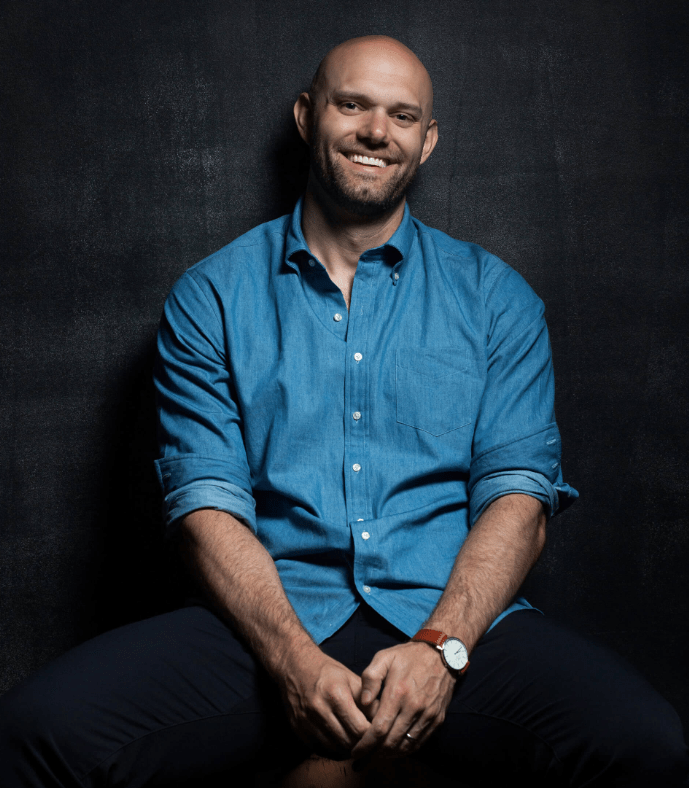
James Clear
Writer
33
APPEARANCES
25
PODCASTS
Oct 16, 2026

3:31

So before we get into team productivity, when you set out to write this book and to conquer this problem, what was kinda the biggest myth or trap that you were trying to break, that you really wanted to, to just bust it right out the gate?
James ClearGUEST
I think there are probably two things that people struggle with most or, like, common pitfalls that you see.
James ClearGUEST
Uh, the first is very straightforward, just starting too big, uh, and you could also define that as, like, selecting the wrong habit.
James ClearGUEST
Uh, you can imagine someone who wants to build the habit of doing 100 pushups a day, which is actually a very popular challenge for a certain segment of people, and then another person who decides they wanna build a habit of doing one pushup per day, and, uh, the activation energy required to get those two habits going is very different.
James ClearGUEST
And, you know, sure, maybe when you're motivated and feeling high energy and have a good day, you can fit in 100 pushups throughout the day.
James ClearGUEST
But on the days when you're stressed and tired and exhausted and don't have much capacity, you can at least do one right before bed.
James ClearGUEST
Uh, and so the difference in selecting the right habit there and choosing something that's maybe smaller than what you had hoped initially but allows you to gain a foothold and to advance from there, I think that's a really crucial thing.
26 MINS LATER
30:08
What's the one thing that you would like them to do that you think could help them, uh, feel better, do better or- Create a habit, be a little more productive?

James ClearGUEST
effort? Probably high school was the first time that I started actually thinking about it, but not in the way that I like write about it in Atomic Habits.
James ClearGUEST
And so I got into this little habit of doing that when I was a sophomore or junior or whatever.
11 MINS LATER


Nathan BarryHOST
That's a little wild to think about how different things might have played out.

James ClearGUEST
I ultimately the reason I did it, uh, was because, well it was kind of twofold.
James ClearGUEST
One, um, I decided that I was gonna try to hit the list and at that point now sometimes still very, very hard a self-published book can get on.
James ClearGUEST
Um, and so I thought, "All right if I want from a business standpoint I could self-publish future books and I'll try to s- uh, to traditionally publish this one, be it become a New York Times bestseller and then I can have that status symbol for the rest of my career rather than doing the inverse and self-publishing 20 and then 15 years from now, you know, trying to be a, a best-selling author." So I thought, "All right probably better to try to get the status symbol earlier." 'Cause that was, that was part of the thinking.
Tiffany SheltonAUDIENCE
... without dragging out the writing?

speaker_2ADVERTISER
Terms and conditions apply.
James ClearGUEST
For example, I know that if you were maybe the maybe the question to start with is when you live a good day, when you feel dialed in, when things are like rolling along well for you, what tends to be part of that day? Sleep, you know, OK, great.
James ClearGUEST
I would say getting my workout in and usually reading and writing are part of it.
8 MINS LATER
speaker_2ADVERTISER
Sponsored by Chumba Casino.

James ClearGUEST
Um, a- and I, I, I don't appreciate the speakers that are out there telling, uh, trying to teach a lesson when they haven't done it.
James ClearGUEST
And I felt like I would be a hypocrite if I told people that you can get up and you can do one more.
James ClearGUEST
And, and I felt like our team needed to show up and do one more, because on your journey when you're broken and when you are at your limit, I promise you, you can get up and you can do one more.
James ClearGUEST
And I don't know how many times you're gonna have to get up and do one more by yourself, but I promise you, you can get up one more.


Greg OlsenHOST
But for, for our followers, whether they're coaches, whether they're parents, like, when you talk about delaying gratification, and it's not about, you know, that moment in time, but it's about stacking those moments over time How do we get, in this world where it's highlight reel culture-
Greg OlsenHOST
How, what is a practical approach for parents, teachers, coaches, leaders to get young people to understand this is a, this is a long-term play, don't cheat the moment now to sacrifice what you say you or really want down the road?
James ClearGUEST
Well, I think first of all, I think just saying out loud some of the things you just said is helpful.
James ClearGUEST
I certainly will be saying that to my kids, you know? Like, they, they're very young right now, but when, as they get older and get into sports, like, that's something that they need to hear, you know? So I think some of it is that.
James ClearGUEST
But, uh, more broadly, there is a huge cultural emphasis on position, and what I'm trying to get across when I talk about 1% better each day is I'm trying to shift that focus from being focused on position to being focused on trajectory.

James ClearGUEST
And so figuring out all of those things is something that once you're a month or two in, you've crossed all, you've, you know, you've fought all those battles, and now you know how to do it.
James ClearGUEST
The other thing is you start to build friendships, you start to build connections, you start to know the people there, you feel comfortable there.
James ClearGUEST
There's this concept Steven Pressfield talks about where, um, you know, if you have a wolf and it's roaming around, uh, eventually it starts to feel like it has its territory.
James ClearGUEST
And early on in a process, a creative process, writing a book or whatever, you go into the office for the first time to write the first chapter of the book, and you kind of feel uncomfortable.
10 MINS LATER

Steven BartlettHOST
So, I mean, that, that must mean getting rid of certain people in one's life, and sometimes those people are hard to get rid of because they're families, their moms, their dads.


James ClearGUEST
Kind of the-- One of the first things that I always think of is environment design or kind of reorganizing or rearranging the spaces that we spend a lot of time in each day.
James ClearGUEST
I think one interesting question you can ask yourself is, either in the context of your own habits, what's one habit I'm trying to build? Or in the context of, um, your kids, maybe, you know, what's one behavior I'm trying to get them to do more consistently? And then you walk into the rooms where you spend most of your time each day and have that habit in mind, and look around and ask yourself, "What behaviors are obvious here? What behaviors are easy here? What is this space designed to encourage? And can I reshape things a little bit or reorganize things a little bit to encourage the behavior that I'm trying to get?" And you'll see that a lot of, a lot of places like kindergarten classrooms, for example, they use this kind of thinking a lot, where-
13 MINS LATER
James ClearGUEST
Um, but with that in mind, th- just to get on the same page for habits and identity- The way I view it is that your habits are how you embody a particular identity.
James ClearGUEST
So every day that you make your bed, you embody the identity of someone who's clean and organized.
James ClearGUEST
If you study biology for 20 minutes on Tuesday night, you embody the identity of someone who's studious.


James ClearGUEST
But something I say occasionally is habits are for everyone, you know? And so I try to write about topics that are timeless and universal.
James ClearGUEST
If it's a really broad market, if there's enormous demand for it, I don't need to win everybody over.
James ClearGUEST
You know, I can just have a small segment and still have a successful business.


Jim KwikGUEST
Tienen este progreso, logran la meta deseada, pero luego, ¿cómo es que no se mantuvo?
James ClearGUEST
Es una buena pregunta, es algo complicado, algo difícil, pero voy a darte un par de razones potenciales.
James ClearGUEST
Hay una historia que cuento en el libro sobre los soldados americanos durante la guerra de Vietnam.
James ClearGUEST
Están en Vietnam y dos congresistas descubrieron que el consumo de heroína entre las tropas era increíblemente alto.
James ClearGUEST
Creo que primero pensaron que era el diez o el quince, pero luego vieron que era el veinte por ciento.
James ClearGUEST
Así que una de cada cinco tropas es adicta o la prueba mientras está allí y dicen: «Esto es un gran problema, tenemos que resolverlo».
13 MINS LATER
James ClearGUEST
I, you know, I was one of the early meetings that, uh, Madeleine and Don, Nina had and, um, I, I think y- I came across, you know, your radar because I was asking for a lot of [laughs] the things that you were trying to solve for.
James ClearGUEST
You know, like I was one of those authors who wanted this and I, you know, traditional publishing, um, it's a setup that I think worked well for a long time, uh, but that was like pre-internet, and we're very obviously post-internet now, and the enormous shift that everyone has seen and felt for the last 10 or 15 years is that the author owns the audience now.
James ClearGUEST
They, they have a direct connection with them and the author's power has grown basically every year, uh, since then.
James ClearGUEST
And if you talk to people who are in, have been in publishing for a long time they'll kind of lament the fact that in the '80s or the '90s we could sort of make a book a bestseller.
James ClearGUEST
We could influence which books, you know, were gonna be hitting the list and doing really well because we had this such strong relationships with where the audience was, which at that time was through all the retailers.
James ClearGUEST
Um, and then they'll say, you know, "We can't really make books a hit now like we could before." And I always push back and say, "Well, it's not totally true.
12 MINS LATER
James ClearGUEST
So first of all, I think there's no reason that you can't be really ambitious, right? Like I consider myself to be a very ambitious person.
James ClearGUEST
I think it's just that you're oscillating or switching between these two modes.
James ClearGUEST
You know, like when you're in planning mode, when you're in strategy mode, sure, you can be very ambitious and be very aggressive and, you know, stretching yourself and reaching.
James ClearGUEST
But when it comes time to take action and execute, you have to scale it down to something that you can achieve that day.
James ClearGUEST
You know, like in one sense, the biggest unit of time you could ever do something is about a single day because then you got to go to sleep, you know, and then you have to wake up again and do it the next day.
James ClearGUEST
The story that I like to tell, and this is something that I kinda kicked Atomic Habits off with, is the story of the British cycling teamAnd, uh, you know, for many years, British cycling was very mediocre.
James ClearGUEST
And they brought this new performance coach in named Dave Brailsford, and he had this concept that he called the aggregation of marginal gains.
James ClearGUEST
And the way that he described it was the one percent improvement in nearly everything that we do related to cycling.
James ClearGUEST
active.The story that I like to tell, and this is something that I kind of kick Atomic Habits off with, is the story of the British cycling team.
James ClearGUEST
And they brought this new performance coach in named Dave Brailsford, and he had this concept that he called the aggregation of marginal gains.


James ClearGUEST
So I have this reader, his name's Mitch, and, uh, he lost a bunch of weight, he's kept it off for over a decade, but for the first, um, six weeks that he went to the gym, he had a rule for himself where he wasn't allowed to stay for longer than five minutes.
James ClearGUEST
So he'd get in the car, drive to the gym, get out, do half an exercise, get back in the car, drive home.
James ClearGUEST
You're like, "Obviously this is not gonna get the guy the results that he wants." But if you take a step back, what you realize is that he was mastering the art of showing up, right? He was becoming the type of person that went to the gym four days a week, even if it was only for five minutes.
10 MINS LATER
20:05
Of course it is, but it's what doing those habits regularly does for you and how you think about yourself.
James ClearGUEST
So first of all, I think there's no reason that you can't be really ambitious, right? Like I consider myself to be a very ambitious person.
James ClearGUEST
I think it's just that you're oscillating or switching between these two modes.
James ClearGUEST
You know, like when you're in planning mode, when you're in strategy mode, sure, you can be very ambitious and be very aggressive and, you know, stretching yourself and reaching.
James ClearGUEST
But when it comes time to take action and execute, you have to scale it down to something you can achieve that day.
James ClearGUEST
You know, like the in one sense, the biggest unit of time you could ever do something is about a single day because then you got to go to sleep, you know, and then you have to wake up again and do it the next day.
10 MINS LATER

Ed MylettHOST
So talk about that from just the concept for everyone to just, they can take control of their life right now by just the establishment of a habit, right or wrong?


Jen HatmakerHOST
Um, if I were being like really self-honest and I'd like to hear you talk about that a little bit more.
James ClearGUEST
No, in many areas of life, in many domains of life, the winners and the losers have the same goals.
James ClearGUEST
So if you've have a job opening and a hundred people apply, um, Presumably every candidate has the goal of getting the job, right? Or if you look at the Olympic games, presumably every Olympian has the goal of winning the gold medal.
James ClearGUEST
And if the winners and the losers have the same goals, the goal cannot be the thing that makes the difference in your performance.
James ClearGUEST
So what is that? And as you said, my argument is you don't rise to the level of your goals.
18 MINS LATER

James ClearGUEST
You know, it, it's only a story once it's like, "Man loses 100 pounds." You know, it's only once it's a result that people talk about it.
James ClearGUEST
Or like, there's never gonna be a story about, "James writes 500 words today." You know, it's like only a story once...
James ClearGUEST
And so because the results are the thing that gets discussed so much, and it's not...
6 MINS LATER

Lewis HowesHOST
I'm gonna go every day for the next year, and I'm not gonna miss a day, and I'm gonna eat chicken and salad every day."

Jonathan FieldsHOST
But I think so many people have this firestorm of opposing mental chatter that pulls you away from that trust.
James ClearGUEST
I have had plenty of experiences where I've performed poorly and have been a victim of that myself.
James ClearGUEST
You know, I think I had a coach in high school, basketball coach said something just, I don't know why, but it struck me in one practice where he said, confidence is just displayed ability.
James ClearGUEST
And so his point was like, if you want to be a confident free throw shooter, then go shoot free throws until you've made 10 in a row or 20 in a row or 30 in a row.
20 MINS LATER


James ClearGUEST
Um, and the more that you do that, I think it's just, to me it's like which story are, are you emphasizing? You know? There, there are good things and bad things that happen in every day.
James ClearGUEST
And we're all gonna have our time when it's your turn, and life comes for you, and things get challenging.
James ClearGUEST
But what story are you choosing to emphasize? And what I want is for them to emphasize the day going well, or for them to emphasize the positive moments.


James ClearGUEST
And I think if I could write it again, I would even expand it, because it's- it's even bigger than I think I realized.
James ClearGUEST
And if people have to choose between, "You know, I have habits that I don't really love, but I fit in, I belong, I'm part of something, I'm supported," or, "I have the habits that I want to have, but I'm cast out, I'm ostracized, I'm criticized."...
20 MINS LATER


James ClearGUEST
Just one comment on what you mentioned before that about being this positive disruption.
James ClearGUEST
And I think a lot about how can I work backwards from the magical outcome? You know, people say, Oh, you only launch one book a year.
James ClearGUEST
It can't work this way, whatever, you know, the state, this is the way we normally do it.
James ClearGUEST
Well, let's, let's work backwards from the thing that we, the ideal outcome, the magical outcome, and then see what, you know, what comes out of that.
16 MINS LATER


Andrew HubermanHOST
Since I woke up this morning, I'm like, "I, I gotta ask James this question." Do you think there's a way that we can kind of toggle flow and fight?
James ClearGUEST
First thought is, um, for a long time, I wrestled with this question of, do I have to be dissatisfied to be driven? D- d- is, is that part of it? Is th- is part of it that I have this vision for where I want to be or what I want to accomplish, and then I look at my current state and I realize there's a gap between where I am and where I want to be? And that dissatisfaction with that gap is what drives you forward.
James ClearGUEST
It's the, it's the drive to close the gap that gets you to show up and work hard or take the test or do the thing, you know? Um, and I think certainly there are many times in my life when that has been the driving force.
James ClearGUEST
But, uh, the healthiest response I think that I've come up with, or the, the counterpoint is, i- imagine that, like, an acorn falls from a tree.
1 HR 52 MINS LATER

James ClearGUEST
Early on, like when I was a kid, the main areas where I learned about habits were through sports and through school, and I liked both of those things, but I wasn't thinking about it in any way that I would describe now.
James ClearGUEST
And then in high school, I had this really serious injury where I was hit in the face with a baseball bat, and it was an accident.
James ClearGUEST
The bat slipped out of my classmate's hands and struck me right between the eyes, and it shattered both eye sockets, broke my nose, broke my ethmoid bone, which is a little deeper inside your skull behind your nose, and I sort of stumbled back into school.
James ClearGUEST
And I started answering questions at the nurse's office, but I wasn't answering them very well, you know? They'd be like, "What year is it?" And I would say, "1998," but it was actually 2002.

Adam GrantHOST
Go to sleep in your workout clothes, [laughs] and then wake up in the morning and maybe you'll exercise," right? I'd never seen somebody so systematically, perhaps not coincidentally [laughs] say, "We actually need to look at how these habits fit together and compound over time."

James ClearGUEST
you know different habits are attractive to us at different times so timing is is part of it um but the more that you view a habit as attractive the more likely you are to feel motivated to do it and i think one important area to focus on here is social environment so we've talked a little bit about physical environment and how that can prompt your habits but social environment often determines what habits we find attractive so You know, everyone is part of multiple tribes.
James ClearGUEST
Some of the tribes that we're part of are really big, like what it means to be American or what it means to be French or what it means to be Buddhist or Christian or whatever.
James ClearGUEST
And some of the tribes are small, like what it means to be a member of your local CrossFit gym or a neighbor on your street or to volunteer at your local school.
James ClearGUEST
But all of these tribes, large and small, have a set of shared expectations, a set of shared behaviors that are part of them.
7 MINS LATER
Scroll for more appearances