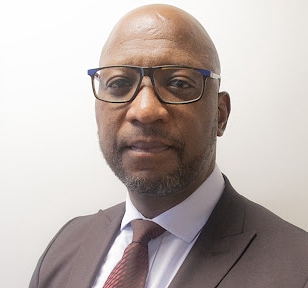
James Aphane
General Manager: Electoral Matters at the Independent Electoral Commission (IEC) of South Africa
5
APPEARANCES
4
PODCASTS
Oct 20, 2026


Africa MelaneHOST
I suppose what obligation are the digital platforms promising South Africans in protecting us from really good quality AI generated sources of dis and misinformation?

James AphaneGUEST
I think the first one you're spot on because we have what we call a deep fake mouth.
James AphaneGUEST
such that people might not make a distinction if they are truly listening to an eye on radio now because it could have been an AI-generated conversation.
James AphaneGUEST
So now the platforms are helping us with speed because this thing can happen at a very fast pace and can spread very widely.
James AphaneGUEST
particularly as we say South Africans are gullible and they can easily be able to scroll and share and this is why we also partnered with them and also educate the public in general to from now on to pause before a person shares to be able to you know quickly check and may not agree with you sometimes you might not know it but the most important thing is to also rely on you know truthful sources of information such as the IEC's website We also have got the real 411 digital platform, wherein you can send such information if you think it is suspicious, and our colleagues at Moxie Africa who are behind that platform will be able to make an assessment and inform us accordingly.
Africa MelaneHOST
How has that impacted on your process to get ready for the local government elections?
James AphaneGUEST
Okay, thanks very much for the question, and I think it's a key interesting question for everyone out there.
Africa MelaneHOST
Do you read this as a heightened interest in the upcoming local government elections in South Africa?
James AphaneGUEST
Yes, it's that Africa, because we've seen it with the registration starting off, because we're sitting at 29.2 million people on our vote overall for this election.
James AphaneGUEST
And we've also seen it in terms of the candidate participation, which is over 137,000.
James AphaneGUEST
But I must add, it's also because as the IEC, we've been innovative in making sure that people have got access.
James AphaneGUEST
For instance, when you apply for a special vote, voting station visit, all you had to do was to SMS your ID number.
James AphaneGUEST
And because you are already on the certified segment of the voter's hall for your own voting district, it was automatic approval.
Africa MelaneHOST
What are we doing to ensure that this will be a safe election process for South Africans and those contesting the elections?

James AphaneGUEST
That's very key because, you know, in the last NPE, we're dealing with about 19 elections.
James AphaneGUEST
In this local election, and I want to underscore the word local because it's a world-based election, you're going to have over 4,000 different ballots.
James AphaneGUEST
And this requires you to be able to identify the person that you want to vote for the ward ballot, which is the first-past-the-post system, where the winner takes all.
James AphaneGUEST
And then the other type of ballot will be the PR ballot, proportional representation ballot.

Bongani BingwaHOST
And importantly, there mustn't get tainted water or contaminated water, right? How are you dealing with misinformation and disinformation?

James AphaneGUEST
Yes, John, we have seen a lot of interest in taking advantage of existing platforms of registration besides the fact that people can register.
James AphaneGUEST
That's why the figure has increased from 27.7 when we last had the national and provincial elections to 28 million.
James AphaneGUEST
And this is for the first time, John, because in previous elections, just before we do a big registration drive like this one, we would have had a deficit, meaning a negative growth on the voters as you compare it with the previous elections.

John PerlmanHOST
Do you use this as an opportunity to test systems, to test logistics? And if so, what kind of tests would you run?


Bongiwe ZwaneHOST
So is it something that you would say as the IEC is going to assist you in addressing what we've termed the digital divide when it comes to rural and low-income voters, for example?
James AphaneGUEST
Well, not necessarily, but it actually tries to equalize because we still have the the yeah it's an opportunity is one of the mechanisms we have and we we we also have by the way the ability for people to visit our offices from eight in the morning until about five in the afternoon depending on the the office itself but we're also going to be opening voting stations in the locality of where people live on the 20th so the reason we have this facility is because it's convenient can be done at any time and we have since improved the journey through this facility in terms of click-throughs or a number of clicks that people must do we improved the ability to quickly verify the id that's got uploaded there to ensure that you are an eligible person so this is the mechanism that we we extend yes in terms of how many options are available out there When it comes to rural areas, obviously, there's still issues regarding the digital divide as we picked up.
James AphaneGUEST
And this is now where we bring the IEC closer to the people in opening almost 24,000 voting stations nationwide.
James AphaneGUEST
All of those transactions, because it's a journey, once you get into a facility, obviously you put in your ID number, you put your cell phone number, and the next will be to upload an ID, which is the step you are referring to.
James AphaneGUEST
If you upload something that is bad quality, chances are our AI engine might not be able to decode or pick up the ID number there.
James AphaneGUEST
And we've got people that are watching all of those records that could not succeed.