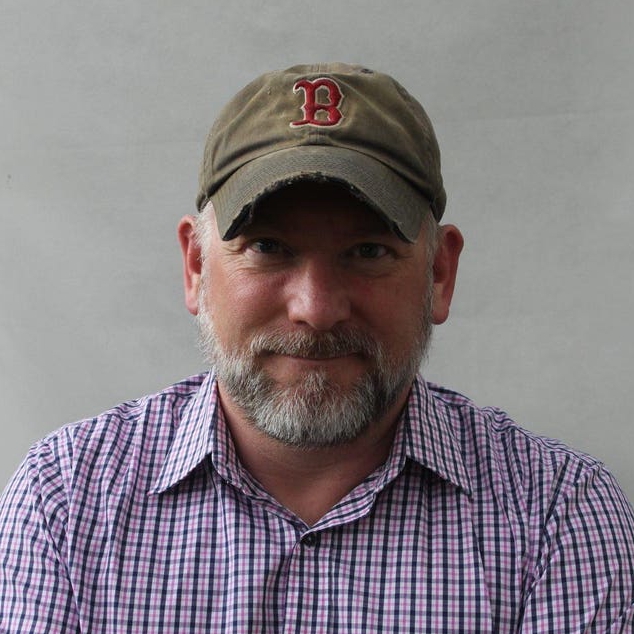
Jake Messier
Stage IV metastatic male breast cancer advocate known as "The Guy with Stage 4 Breast Cancer," Komen-affiliated patient advocate and husband/father diagnosed in 2023.
8
APPEARANCES
8
PODCASTS
Oct 21, 2026

JeffHOST
Yeah.

Jake MessierGUEST
That, that's a great question because I, and one I get asked a lot because I think women are taught when they're very young, when they're girls, right, when they go to health class in sixth grade or whenever that is, right, they, they're taught that if you find a lump in that region, you go and tell somebody, right? But men and boys are never taught that, right? We're never taught that if you find a lump you go tell somebody.
Jake MessierGUEST
And so when I was 52 years old, um, which was three, almost three and a half years ago-
8 MINS LATER
RyanHOST
Yeah.
Jake MessierGUEST
Right? Because you just don't know what's gonna happen, right? But I'm really excited that, uh, my wife and I are gonna be going on a big trip.

JimHOST
Okay.
Jake MessierGUEST
And so 2017, I decided to launch my own agency and we grew it to the largest agency for nonprofits, marketing for nonprofits in new England.
Jake MessierGUEST
We were the, we had, you know, 14 employees, which, you know, I tell people all the time, but my little business of 14 employees, there were big agencies out there that had their nonprofit department was bigger than our entire agency.
Jake MessierGUEST
But because this was all we did and we really cared about nonprofits, this is all we did, right? We knew how to do all the functions of a nonprofit because that's all we did.
17 MINS LATER
JimHOST
Very,

Laura SabaHOST
But men don't get told this, so I just, I just wanna hear it from your own words, and I just want our listeners to pay really close attention to what Jake is saying.
Jake MessierGUEST
So, uh, you know, much like most guys on this podcast listening right now, they're like, "Wait, guys can get breast cancer?" And, and, and, and I was too, and so I wanna make sure that that's clear.
Jake MessierGUEST
There's stats out there that's like 93%, and, and I'm gonna talk American stats 'cause that's where we are, but 93% of the American public don't know that guys can get breast cancer, right? And so it's a massive deficit, right? So I'll just give you basic breast cancer stats, and then I'll give it to me real fast.
Jake MessierGUEST
Women are one in eight women, which that's a crazy, scary number, right? I know way more than eight women.
7 MINS LATER


De'Ann RichterHOST
And so maybe you would be open to just sharing with our audience a little bit more about your story and your diagnosis and how that brought you to where you are today.
Jake MessierGUEST
So if we go back to the summer of 2018, Um, I had a level four, um, ischemic stroke.
24 MINS LATER
De'Ann RichterHOST
That's not true, but what are some other myths or misconceptions about male breast cancer that you've come across that you maybe want to try to dispel?


Jake MessierGUEST
get treated? Either one of those have to do with the disease being more aggressive or anything to do with the disease.
Jake MessierGUEST
It has to do with society and culture and not checking and early screenings and all the things that go into it, right? Yeah.
Jake MessierGUEST
are never taught like young girls are in sixth grade health class that if you find a lump, you tell somebody, right? That's a very basic thing that young girls are taught.
Jake MessierGUEST
Boys and men are never taught that unless it's on your ball sack, right? They're never taught that, right? Really, it's never taught that.
Jake MessierGUEST
And so when guys do get lumps, and Steve, you had a lump, and I get so many guys that write to me on social that are like, hey, I found a lump.
Jake MessierGUEST
And what I try to do is really encourage them that it's likely, and I mean this likely as in odds, the odds are that it's not breast cancer, right? 99% of breast cancer cases are women, 1% are men, right? There's about...
12 MINS LATER


14 MINS LATER


Jake MessierGUEST
So at the time, you know, for right now I'm environmental and, but you get thrust into this world.
Jake MessierGUEST
And, and, and I think it's, That is the same regardless of your gender, right? You get thrust into this breast cancer world, right? And there are, you know, but I think some of the differences is that like on the first time, the first meeting I'm having with my oncologist and my nurse navigator and my wife is there and we're frantically trying to write down everything because we're, you know, we're sure we're going to forget it, right? And, but you know, the packet, they're like, here's your packet and they deliver it to me.
Jake MessierGUEST
And it's all the, the brochures and the, and the reading materials and all this stuff.
10 MINS LATER


Jake MessierGUEST
The reason why they're not combined is because when you are stage zero to stage three, right? W- when you stick a bunch of metastatic people in there, we represent their worst nightmare, right? We represent everything that they [laughs] are terribly afraid of.
Jake MessierGUEST
So, so many places will have a breast cancer support group and then a metastatic breast cancer support group.
Jake MessierGUEST
It's literally [laughs] to keep us separated so that we don't, you know, send the breast cancer support group down a, down a, down a hole.
Jake MessierGUEST
So, but I was told that I couldn't join either one of these organizations, because they were both for women, right? And, you know, this was just a local cancer nonprofit that was near me, and I was just trying to go sit in a room with other breast cancer patients, right? Regardless of gender.
Jake MessierGUEST
I just wanted to go sit in a room and commiserate, you know? There's, it, there's, I can do this on Zoom all day long, right? But sitting in a circle with a facilitator and just, it's different, right? Doing it in person.
7 MINS LATER

Michael FernandoHOST
But at the time when you were going through both the, you know, the, the diagnostic uncertainty, the discrepancies in, um, you know, a, a approach from support groups between, uh, men and women for, for breast cancer, and then the, um, the second diagnostic uncertainty with this hip lesion, um, I guess the obvious question is how did you cope? How did you manage with that? Because that sounds like something that no one person, regardless of sort of what else is going on, can deal with.