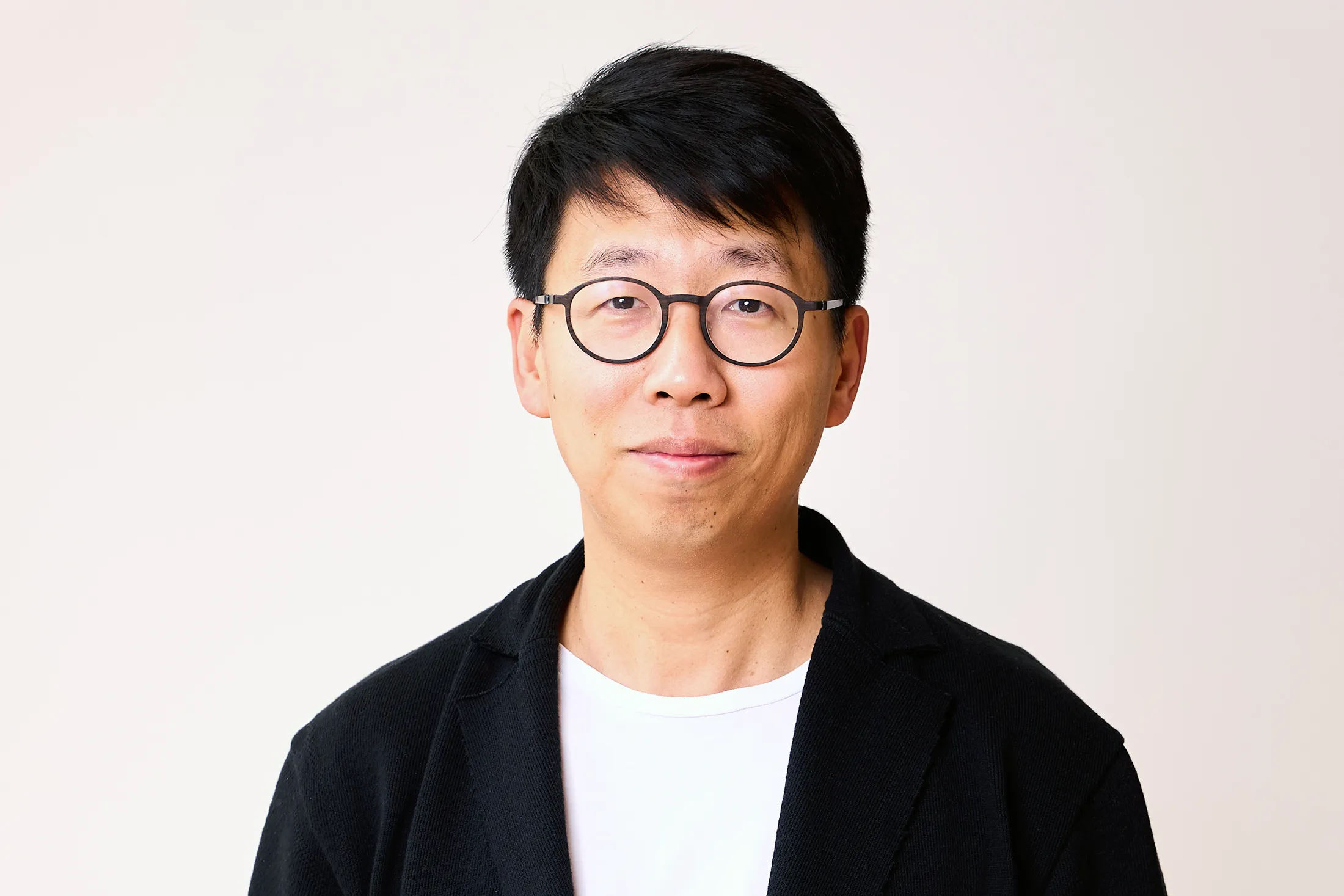
Jack Zhang
CEO of Airwallex
8
APPEARANCES
8
PODCASTS
Aug 29, 2026

Diane BodenHOST
So I'd love for you to talk about like why the expectations are set so high, and how your book helps to combat that.
Jack ZhangGUEST
So, uh, having a whole meal prepared can be very scary, right? Especially if you're trying to do it with your young child 'cause, you know, it gets messy.
Jack ZhangGUEST
So I think the whole title of the Weeknight Winners is that these meals don't take forever, you know? They...
Jack ZhangGUEST
I think most of these meals will come together in about half an hour or so, you know.
9 MINS LATER

Jack ZhangGUEST
And the first video I remember that people just really gravitated towards was I made, like, seared scallops.
Jack ZhangGUEST
[laughs] Uh, and he was literally not even three yet, in a high chair, and I, I served it to him, and then just got his reaction.
Jack ZhangGUEST
You know, I, I, I didn't know if he was gonna like it or, you know, what, what if...
Jack ZhangGUEST
I had no idea what was gonna happen, and he just was so curious, and immediately his reactions toward the dish was just so genuine and, like, so adorable, and I think that's how it, it got started.
Jack ZhangGUEST
People were like, "What's going on?" Like, "Never seen a, a, a two-and-a-half-year-old eat this type of dish before." So I started to cook more and more, you know, extravagant meals for him, um, in the beginning, and just serving it right in his high chair and seeing, like, what his reaction would be, right? And kinda talking through the, the dish with him, like explaining what this is, and, "Oh, maybe you should give that a try." Um, and from that, I think it just encouraged me to, to, like, oh, maybe I'll include him in the cooking, because he, he started to show an interest, um, maybe, like, just after he turned three, he started to want to help out.
31 MINS LATER


James ChessellHOST
But how do you, how do you get, get the balance right and ensure that employees can have some form of work-life, life balance, but also work at the cadence that you want them to work at?

Jack ZhangGUEST
at?Yeah, I think we are extremely sort of, um, vision and mission driven company, right? We wanted to build this global, uh, financial platform that, uh, is, uh, is frictionless, is real time, and is empowering, um, businesses around the world, uh, to, to grow globally.
Jack ZhangGUEST
It's a very ambitious idea, you know, not a-- you know, it's not like every day there's someone come up say, "Hey, I wanted to build the largest global bank in the world," right? So I think first of all, that from a recruitment, we wanna, we wanna be very upfront.
Jack ZhangGUEST
This is where you can make real impact and, and to attracting that sort of ambitious people, uh, to kind of wanted to really operating at a, at a quite an intense pace to creating outcome for our customers, uh, for growth and, and for the economy.
Jack ZhangGUEST
Uh, you know, like also like with sort of, you know, now with the kind of paradigm shift to AI, there's really kind of a short period of window to kind of, um, build and then win, uh, and, and in terms of what we do globally.
10 MINS LATER


20 MINS LATER

Jack ZhangGUEST
Yeah, I think partly it's driven by customer demand, right? So that when we build the infrastructure, when we build the business account, on top of that, that we have customers asking, oh, you know, if you already help us managing banking and financial operation globally, can you also help us to managing my corporate card and managing my expenses and procurement, reimbursement, all that? And, you know, we see a lot of customers using Stripe or RDN to process online payment, but When they're doing cross-border online payments processing, they're sacrificing 2%, 3% of that GMB on FX and then cross-border settlement.
Jack ZhangGUEST
There's a demand of having a single platform to managing sort of the money in, money out, and also where the money is sitting and how they're managing the cash flow and treasury of that.
Jack ZhangGUEST
So there's like, there's obviously a first principle element is also sort of customer demand side.
Jack ZhangGUEST
And also that we, you know, there's a, we talk about pivotal moment that is, it's in, you know, very sort of important for the company.
12 MINS LATER

Chris CorbishleyHOST
Do you think you've had more impact than, say, a Stripe, than sort of more generic payments, kind of corporate cards player, for example?


Immad AkhundHOST
In the US, most businesses in the US are not forced to have international markets from early on, whereas in europe at least and i'm not as familiar with apac but maybe also true for apac uh and australia uh most businesses even when they're like relatively small end up wanting to do things internationally uh so you have this like kind of global banking need very early on uh where yeah before the likes of air wallex it was just kind of a pain in the ass to use banks and get ripped off on like three percent fx fees and and it's just like really hard to make those payments uh So, yeah, do you think, do you kind of view it like that, Jack, that like there was this kind of huge opportunity and wedge and now you've expanded from that or is that kind of like an incorrect statement? And if you think about these kind of wedges, like do you think there's other wedges for fintechs or do you think like, you know, we've really explored the most obvious ones?
Jack ZhangGUEST
We definitely started with FX, international payments, to expand everywhere in APAC and Europe, and even Canada and Latin America.
Jack ZhangGUEST
I think the US is very unique, as the US dollar is the dominant currency of the world, and most of the US businesses don't transact in multi-currency by default, and they're apparently losing a lot of money from that.
Jack ZhangGUEST
For example, if you're using Stripe to process payments in Europe as a US merchant, and Stripe will charge you 2%, 3% on FX and settle US dollar.
Jack ZhangGUEST
And if you have staff in Europe and UK, and you have to convert in the money to pay them in local currency again.
Jack ZhangGUEST
But US businesses generally just insensitive to those high FX costs because they've been just get used to operating in that US dollar denominated currency and a US dollar denominated economy.
Jack ZhangGUEST
But if you're looking at the history, so the rise of the global businesses is actually the biggest trend in the last 30, 40 years.
23 MINS LATER
Immad AkhundHOST
I can kind of, you know, don't have to deal with Keith Roblox tweets from now on.


Vidit AgarwalHOST
Because I think you did tell me the other day that you've rebuilt the business three times, right? So when was that first reinvention, I guess, that you were like, okay, we haven't reached product market fit, we need to reinvent? Yeah.
Jack ZhangGUEST
Well, we did the peer-to-peer algorithm and we used that to raise venture funding, but that never comes to reality because we didn't have the scale and the volume to do that, to make the algorithm work.
Jack ZhangGUEST
And then we got lucky that we co-called an equity provider to get interbank liquidity and then to work with a company that had nothing.
Jack ZhangGUEST
Then we got the infrastructure to get the best FX rate for our customers and we also build an invoicing, like a bill pay platform on top of that for SMEs in Australia.
Jack ZhangGUEST
And that's sort of the second time we're building the product, try to try product market fit.
Jack ZhangGUEST
And we also failed miserably because we can't find enough customers making international payment in the limited corridors that we have payment rails to.
Jack ZhangGUEST
I think at that time, initially, we can only pay out to Hong Kong, and then a few like Asia countries.
14 MINS LATER
Vidit AgarwalHOST
And are there any founders that you've met them and you're like, wow, they are very impressive that inspire you?


Jack ZhangGUEST
I was like, "Let's build something that can support NFC payments and let's go in to build this, uh, you know, uh, point of sale system and payment system, uh, for offline merchants." And he's like, "Oh, no, no, like, I think QR gonna take over the world." I mean, because he, he at the time was started a company in China in AI, uh, and he, you know, it was...
Jack ZhangGUEST
he's just started the AI business 10 years too early, and he's like, "You know, I don't believe this whole NFC thing." He's like, "QR gonna take over the world.
Jack ZhangGUEST
I mean, this is, like, a very China thing, and I don't think so." And then we kind of just debated, then we end up just can't agree, uh, on that idea and then we let it go.

Harry StebbingsHOST
I want to change payments." And at that point, before you build products, do you go and raise money?