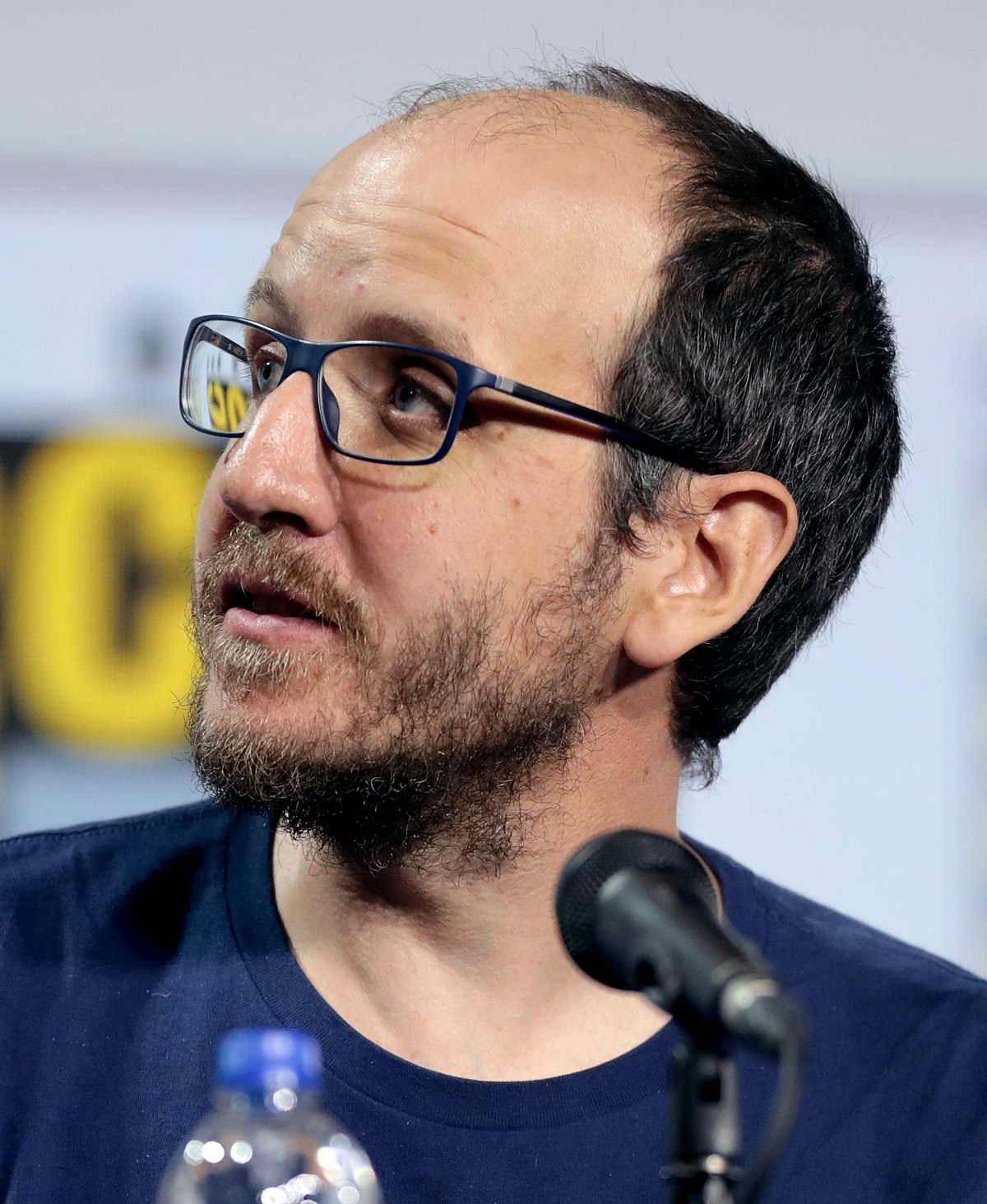
Jack Thorne
British playwright and screenwriter
12
APPEARANCES
11
PODCASTS
Sep 14, 2026


Jack ThorneGUEST
And the problem with scraping is that scraping involves taking little pieces of all sorts of work.
Jack ThorneGUEST
And so there's all sorts of cases ongoing at the moment between different copyright holders and, and AI, AI companies.
Jack ThorneGUEST
Um, but in that, it's proving very difficult to prove what exactly these, these machines have taken.
Jack ThorneGUEST
And, uh, and so what-- one of the things that Baroness Kidron was arguing for very strongly was full transparency.
Jack ThorneGUEST
So when, when, when AI produces a piece of work, that it should have at the bottom of that piece of work where that work has been originated from.
6 MINS LATER


Matt NegliaHOST
So what was one challenge that you knew was coming? And then what was one that took you by surprise?
Jack ThorneGUEST
So the challenge that I knew was coming was the meeting scenes, which were very, very difficult and remained very difficult through the entire process.
Jack ThorneGUEST
That thing of having to construct a scene where you're doing justice to four or five different viewpoints, where you're doing justice to a lot of text.
Jack ThorneGUEST
You know, the meeting scenes in the books last a long time and you can't spend too long on them because you'll lose your audience.
Jack ThorneGUEST
Jack, I was always excited about delving into nikki or piggy i i felt i was a gift and and he remains a huge gift you know particularly the way david mckenna plays him he's just glorious i think and ralph is fascinating and fascinatingly enigmatic and uh and his his moral decision making through the whole thing you know i was following golding's template and golding's golding writes ralph so delicately Simon, because he is an outsider, because he doesn't actually contribute much in many conversations in the book, was someone that had to be constructed from little threads.
11 MINS LATER
Matt NegliaHOST
I can almost see some thematic ties to adolescence here in some regard, but would love to hear from you.

Jack ThorneGUEST
So because my son was quite attached to his mum, the responsibility for bedtime and then crying became mine.
Jack ThorneGUEST
Because if he was with her, his anger would be even greater because it wasn't just I'm angry.


Jack ThorneGUEST
Thankfully, I was seeing development all through that time, and I was able to move, and I was able to find ways of dealing with the condition.
Jack ThorneGUEST
But as part of that, there's a theater company in the UK called Graeae Theater Company, uh, which is a wonderful theater company, and they had an open day for disabled, uh, artists within the industry.
Jack ThorneGUEST
I'm gonna go." I was really struggling at the time, and I was like, "I think this might be interesting." And I went along, and I asked a woman, I said, a partially sighted woman called Alex Bulmer, she's an amazing writer, and I said to her, "I'm not sure whether I belong here." And she asked me what was going on, and I talked about what was going on with me, and she said, "Of course you belong here.
13 MINS LATER
Jack ThorneGUEST
I think we caught a weird moment in the news cycle, and I think we caught a story that people hadn't properly explored yet.
Jack ThorneGUEST
Um, I think if it were coming out now, we would probably have much less of a response to it.
Jack ThorneGUEST
Sometimes you're lucky enough to catch the beginning of something rather than the middle, and, and we caught the beginning of something that clearly concerns an awful lot of people.
Jack ThorneGUEST
In terms of the prime minister, when we, when we went into Downing Street and we did all that stuff, and, and, um, and with schools too, I don't think it was ever about, oh, everyone needs to watch this 'cause it's important.

Jack ThorneGUEST
... with insomnia, 'cause I had insomnia that it's quite bad insomnia at that age, and I was, like, 11 years old, and I was just sort of going, "Golding understands me," because I felt like Simon.
Jack ThorneGUEST
And I remember the moment when I just kind of, uh, because Simon's death is so confusingly written, you're not actually sure he is dead, and then he talks about his body drifting out to sea.
Jack ThorneGUEST
And I, I, I literally remember the visceral feeling of that moment, that the sort of heart being pulled out of, out of me.
Jack ThorneGUEST
And then I read it in my 20s, and I felt a bit more like Ralph and a little less like Simon.


Jamie LaingHOST
The reason why, and maybe it's not, the reason why he isn't looking at someone like Andrew Tait is because is that too obvious?
Jack ThorneGUEST
Yeah, and that there's elements to Andrew Tate's diatribes which he would just be able to see past.
Jack ThorneGUEST
The manosphere is a very complicated place and it's not like it's a single being.
Jack ThorneGUEST
And in cell culture isn't that aggressive and isn't necessarily part of that more sort of posturing community.
Jack ThorneGUEST
The idea in incel culture that 80% of women are attracted to 20% of men would be a very powerful idea for Jamie to hear.
19 MINS LATER

12:00

We were able to accept all the praise and take that, not take it on board, but, you know.
Jack ThorneGUEST
You know, like, you know, you're at the back and you're able to see things and you're able to see the wonderful creation.


Jack ThorneGUEST
... of the decisions that Matt and Phil were making, Matt Lewis, our brilliant DOP.
Jack ThorneGUEST
And, um, the first episode we shot was episode three, which is the episode with, um, uh, uh, Jamie in a, in a, in a training center.
Jack ThorneGUEST
And, um, and watching them make the decisions as to where the camera pointed during conversation, because that, that was possibly the m- the hardest episode to shoot, because normally in those situations you would be shooting ...
Jack ThorneGUEST
It's, it's exactly the same situation we're in now, and there would be a camera shot on you, and then they'd turn the camera around and shoot on me, and then they'd do a two shot, and then they'd do another two shot, and then they'd do probably some sort of clever shots.
23 MINS LATER

Jack ThorneGUEST
I- I mean, I don't think he's...I hope what we were doing in this show was that he's a product of many things, and I hope we're not, what we're not saying is that, uh...
Jack ThorneGUEST
And there was one quote in the article that I, I miswrote slightly so that it seemed like I was suggesting that, uh, Jamie was solely a product of incel culture, solely a product of the manosphere, which is a very, very complicated, uh, and, and not easy to understand place at the best of times.
Jack ThorneGUEST
But when we were writing it, Stephen had this rule that he didn't want to make it about, "Ah, it's because he had an abusive dad," or, "Ah, it's because he had, uh, uh, an alcoholic mom." What we instead, uh, arrived at was that there were these sorts of spheres of blame.
Jack ThorneGUEST
I couldn't quite find enough that made it compelling for me, and then someone that worked with me, Mariella Johnson, said, "I think you need to look at incel culture." And as soon as I started looking there, I felt like I had a story that was more interesting, and then I started to build it out, tried to understand it, tried to read as much as I could, tried to look as much as I could in unexpected places, and ultimately found some answers to some things which I knew if I was consuming at that age, particularly the 80/20 rule, which is 80% of women are attracted to 20% of men, if I was consuming at that age, if I was told, "You are going to have an abnormal life because of the way you look, um, because of the way you feel about yourself," I, I, I, I feel like it would have taken me down a chaotic path.
25 MINS LATER

Kara SwisherHOST
What do parents not know about what their kids are doing online, from your, each of your perspectives, and what we can do about that? I'm gonna start with you, Jack, because that parent episode was sort of the parents weren't understanding what was happening.

Jack ThorneGUEST
My mum resigned her membership of the Labour Party when Harriet Harman sent her kid to a grammar school.
Jack ThorneGUEST
And that night, I went to a party at our neighbor Yvonne's house and a woman called Stevie talked to me there.
Jack ThorneGUEST
And Stevie said, "Your mum's left the Labour Party, so now it's time for you to join." I was 15, 16 years old, and she gave me this whole speech about, you know, "You're better inside the tent than outside the tent." And I did.
Jack ThorneGUEST
I joined, and I became Young Labour officer for Newbury Constituency Labour Party, and ended up going to the Young Labour Conference in 1997.
Jack ThorneGUEST
I ended up being part of a walkout with Young Labour Left of, um, uh, Tony Blair's speech.

Lauren LaverneHOST
That was thanks to Graeae, the theater company that puts deaf and disabled artists center stage.


Emily MaitlisHOST
but do you feel that there is a call to action here? And if there is a call to action, wh- what is that?
Jack ThorneGUEST
It's interesting you use the phrase "call to action" 'cause that's a very popular phrase amongst the manosphere.
Jack ThorneGUEST
I hope it's the beginning of a discussion, and listen, w- we don't have any answers here, and we're not saying this is some sort of documentary that takes you inside.
Jack ThorneGUEST
What we wanted to do with this drama was pose a question and we wanted to understand violence towards girls by boys, you know, specifically I'm saying, not men towards women, boys towards girls.
Jack ThorneGUEST
And we wanted to get inside that problem, and we wanted to make it as complex as possible.
Jack ThorneGUEST
Stephen had one stipulation right at the beginning of the writing process which is, we're not gonna blame the parents.
9 MINS LATER
Emily MaitlisHOST
Eddie has asked, "Was it deliberate to have little focus on the girl that was killed, Katy? Her friend was really upset, but that theme was just left in midair."