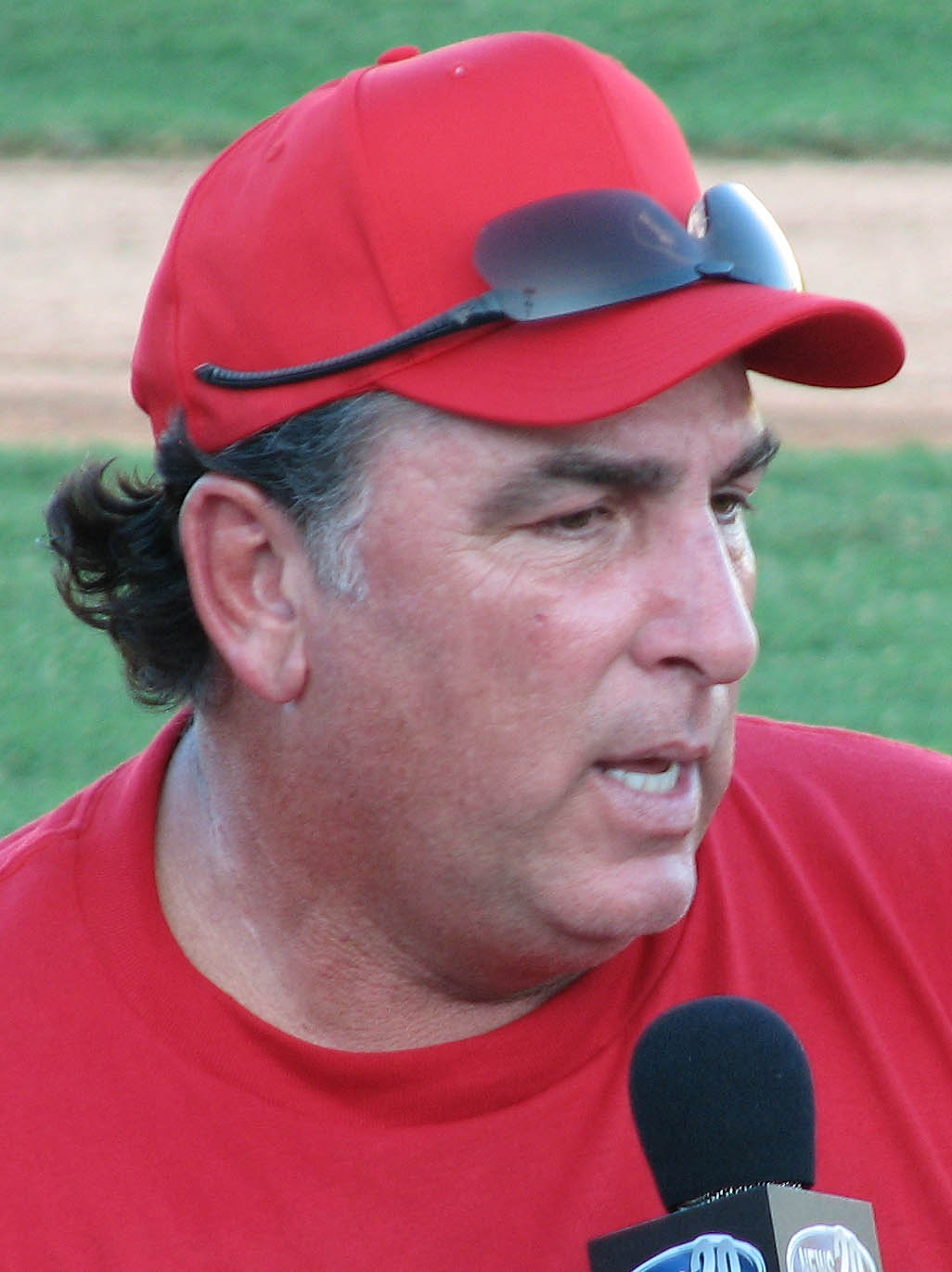
Jack Clark
American baseball player
23
APPEARANCES
22
PODCASTS
Nov 20, 2026

Gita BhattCORRESPONDENT
Are you worried about that? And what is it again for society and ethics?

Jack ClarkGUEST
We can individually take actions here, right? Like I write this weekly AI newsletter None of it's written by AI, it's all written by me.
Jack ClarkGUEST
And the practice of the newsletter is me reading research papers and seeing what I've understood from them, writing summaries, and then I use AI to say to the AI, hey, have I understood this paper correctly, et cetera.
Jack ClarkGUEST
but also because it is a way of every week exercising my ability to have attention, to be able to read long things without any intermediary, and to be able to think for myself outside sort of the tool domain of like, what does this mean? So that's what I do individually.
Jack ClarkGUEST
I think the question is how we get that to happen generally, because when I explain this to people, they're like, cool, strange hobby, not very common.
Gita BhattCORRESPONDENT
But what are other near-term risks that you see? And what should policymakers do then?

Steven KolkenUNKNOWN
Thank you.
Jack ClarkGUEST
What I thought I'd do to open this conversation is talk very briefly about, I think the, the both technical and usage trends that have happened in the AI industry for maybe the last 15 years.
Jack ClarkGUEST
I was at OpenAI from 2016, which is the year it was, it was founded roughly, to, to 2020 when I left.
Jack ClarkGUEST
And before that, I was a, a technical journalist that specialized in writing about artificial intelligence in, you know, 2011, 2012.
Jack ClarkGUEST
And I think that from that perspective, I can give us some context on what's happening now and what the technology trends are and what they might mean.
10 MINS LATER
Ben GraffickMODERATOR
Where are those benefits? How do you see them and understand them?

James KamarasamyHOST
Jack Clark, he's a co-founder and head of public benefit at the company, and he says that while Anthropic would like to see more industry-wide regulation, the company is already addressing many of the safety concerns.
Jack ClarkGUEST
We've taken actions which exercise our agency, like putting third-party evaluators in.
Jack ClarkGUEST
We have published some of the best science on how to control and prevent these things.
Jack ClarkGUEST
There is a huge amount to do, and there is lots of work that has been done here.
Jack ClarkGUEST
So don't, don't take from this it is the industry saying, "Oh, no, like a really bad thing is coming and there's nothing we can do." That's the opposite of the message.


Tim FranksHOST
How had he, Jack Clark, Anthropic, and the whole sector let AI develop to the point that insiders were warning of a one in ten chance of human extinction?
Jack ClarkGUEST
What's happened is the technology has got substantially more powerful and those risks which were once academic or theorized, we can now see the early signs of them.
Jack ClarkGUEST
Which is why we spent this weekend writing this essay about the need to pace the frontier and basically get our arms around this technology so that it's not just industry making all of the decisions about it, but it's industry and government with greater oversight of the industry itself.
Jack ClarkGUEST
AI systems for a while have been useful tools with specific skills like translation or coding or being able to label what's going on in an image.
Jack ClarkGUEST
And then in the last few years, people have successfully put all of these skills together into single systems which have started to become much more intelligent and much more general.


Nick GillespieHOST
How do you put hedges on that? How do you build in breaks? Because this is part of the doomerism and the apocalypticism, is that AI realizes, it's not just that it doesn't need humans or shareholders, but they're in the way.
Jack ClarkGUEST
Well, it's a harder problem, but of similar form to what we're currently dealing with things like cyber and buyer, which is you have some property of the system that you're worried about.
Jack ClarkGUEST
You need to know how to potentially control it, make it so that the system can sometimes not be capable of AI R&D.
Jack ClarkGUEST
And you need to probably demand transparency out of the places which are building this, because you as society might say, This is great, and it's going to drive loads of strategic and important stuff in our economy and national security.
Jack ClarkGUEST
And we probably don't need it to go thousands and thousands of times faster than any human can hope to govern it.
13 MINS LATER
Nick GillespieHOST
Do you worry about a reserve army of unemployed recent college grads? Or is it that, as you were saying, the data so far, there seems to be a softening of hiring recent college grads or younger people in certain positions? Overall, the sector is growing.


Jack ClarkGUEST
So recursive self-improvement is what happens if we build AI systems that rather than just assisting researchers in their own creation, which is the case today, we build systems that might be able to invent their successor, come up with the ideas that helps Claude 10 build Claude 11 without any researchers involved, only you give it the, the care and feeding of compute and data.
Jack ClarkGUEST
We think there's a, there's a chance this happens this decade, and if I had to put a year on it, it would be in 2028 or so.
Jack ClarkGUEST
We'd enter some regime where suddenly the progress of AI and science more broadly would be defined not only by humans, but by humans and something else, which has never really happened before.
Jack ClarkGUEST
And I think the world after that can become increasingly hard to think about, so sometimes people call that the, the singularity.
31 MINS LATER
Alana LeboAUDIENCE
So, um, my name is Alana Lebo, and I'm curious what is needed in how AI is built so that AI can partner and support communities and organizations in how they partner and build the trust and outcomes that would not be created otherwise?

Jack ClarkGUEST
So by technological pessimist, I mean I thought the technology would keep getting better, but I didn't think it would get better in the, like, maximalist sense that some of my colleagues did.
Jack ClarkGUEST
I didn't think that we would have, say, functionally automated all of coding right now.
Jack ClarkGUEST
But basically, over the last few years, and I worked at OpenAI before Anthropic, I was just hit repeatedly over the head with what computer scientist Richard Sutton calls the bitter lesson.
Jack ClarkGUEST
And the bitter lesson is this concept that the more compute and resources we dump into these relatively generic neural networks, the smarter they get and the more emergent properties they have.
Jack ClarkGUEST
And your specialized system or your ability to be pessimistic about future AI progress loses versus just scaling compute and scaling systems.
20 MINS LATER

Tracy AllowayHOST
What does Anthropic actually do with this data? Does it somehow feed back to your engineers who are developing frontier models? Do they do anything differently?

Jack ClarkGUEST
So by technological pessimist, I mean, I thought the technology would keep getting better, but I didn't think it would get better in the like maximalist sense that some of my colleagues did.
Jack ClarkGUEST
I didn't think that we would have, say, functionally automated all of coding right now.
Jack ClarkGUEST
But basically over the last few years, and I worked at OpenAI before Anthropic, I was just hit repeatedly over the head with what computer scientist Richard Sutton calls the bitter lesson.
Jack ClarkGUEST
And the bitter lesson is this concept that the more compute and resources we dump into these relatively generic neural networks, the smarter they get and the more emergent properties they have.
Jack ClarkGUEST
And your specialized system or your ability to be pessimistic about future AI progress loses, versus just scaling compute and scaling systems.
44 MINS LATER


Faisal IslamHOST
Uh, what, and what sort of jobs, therefore, are under risk, likely to be replaced in this world of AI agents that can actually kind of improve themselves without human input?
Jack ClarkGUEST
So as we say in this report, I think there are open questions about whether AI systems can be truly creative, you know, truly, um, come up with interesting, off-the-wall ideas.
Jack ClarkGUEST
And what we see it, it happening with work at Anthropic is we're now limited more by the ability to generate good ideas than the ability to do the engineering to turn those ideas into reality.
Jack ClarkGUEST
So everyone who generates a bunch of ideas, is creative, has kind of entrepreneurial ideas, is going to be advantaged by this.
Jack ClarkGUEST
And if you're in rote jobs, highly repetitive jobs, jobs that in the past would have been at risk of automation in, say, things like factory work in, in previous generations, now that same phenomenon is going to play out in knowledge work.
Jack ClarkGUEST
And we need to figure out, how do we help people change their mindset about what sorts of work they're doing and move to these more kind of creative jobs where they're gonna be able to get a lot more done?
Faisal IslamHOST
Well, give, can you give us a sense of that? An AI agent very quickly in the next, before 2030, could replace a lawyer, an accountant? A copywriter?

CalumHOST
How do you start getting that freelance work? So like this
Jack ClarkeGUEST
So it allowed you to sort of like put on like bits and bobs of what you're working on.
Jack ClarkeGUEST
A bit like Instagram is like or was at one point where you'd be putting on some like a picture that you really liked.
Jack ClarkeGUEST
Like Dribbble was a bit like a... showcase of your work you could put on some work in progress or something that was done and that was like your little portfolio of like stuff that you'd done so I was quite active on there put quite a few things on there and mainly just word of mouth some other designers and local people this guy's done this for me he's done a good job like he's really creative I was very I really enjoyed the website side of things because I could back in the day like code a little bit and put something like something together You did your year.
34 MINS LATER
CalumHOST
So what was your
Rob YoungHOST
Jack Clark is one of the firm's co-founders and has been speaking to our economics editor, Faisal Islam.
Jack ClarkGUEST
Right now, it's like the AI industry has a gas pedal, but it doesn't have a brake pedal in the car.
Jack ClarkGUEST
And what we're saying is we want to do some of the work required to build that brake pedal so we in the world have an option.
Jack ClarkGUEST
It's not obvious today that you want to do that, but absolutely, as you say, at some point in the future, you might say, "Let's get all of the benefits we can for, say, biology and medical research, and let's, let's take a, take a pause or take a moment on AI research while we can absorb the societal changes implied by this."
speaker_12UNKNOWN
For people watching this who are sort of hearing about the potential pitfalls and perils, and at the same time, you know, due to your suc- commercial success, your company's gonna be worth apparently a trillion dollars in the next few weeks officially, the, there's a bit of a disjunction here that you're creating a system that is now the world's problem.

Jack ClarkGUEST
Right now, it's like the AI industry has a gas pedal, but it doesn't have a brake pedal in the car, and what we're saying is we want to do some of the work required to build that brake pedal so we in the world have an option.
Jack ClarkGUEST
It's not obvious today that you want to do that, but absolutely, as you say, at some point in the future, you might say, "Let's get all of the benefits we can for, say, biology and medical research, and let's, let's take a, take a pause or take a moment on AI research where we can absorb the societal changes implied by this."
speaker_1UNKNOWN
Are you, are you worried for, for your kids if, if, if this message doesn't get out?
Jack ClarkGUEST
I am, um, worried for my kids if we as a society don't, don't, don't have a serious conversation about what the implications of AI's continued advances mean.

Jack ClarkGUEST
So today, when we want to do good in the world in areas like biology or medicine or robotics, you have to take these systems that mostly exist as digital AI systems and adapt them into this complex domain in the real world, and you do that by pairing with scientists to do itNow, an AI system capable of improving itself is also capable of going into domains like medicine, going into domains like biology, discovering what it needs to get smarter and more capable, and working with people to adapt itself to improve its performance there.
Jack ClarkGUEST
So I think what we're seeing is the potential for a dramatic acceleration in science in the coming years as these AI systems gain this capability and become much more like creative co-scientists than tools that scientists use, which would be a big change.

Anderson CooperHOST
Is that right? And 'cause what, I mean, what would that look like in practice, and how do you convince competitors to do that as well? Because obviously this is, you know, obviously it's been described as an arms race.
Jack ClarkGUEST
And in the coming years, that technology's going to start to do a lot of major things in the world in domains like science.


Jack ClarkGUEST
This gets to the point, right? The number of people who want to visit harm on others in the world is, is, is relatively small for this kind of, of, of horrendous act, and they typically aren't trained biologists.
Jack ClarkGUEST
And if they are, carrying out acts of terrorism or usually doesn't... requires you to not be a lone wolf.
28 MINS LATER


Patricia ClarkeCORRESPONDENT
Can you explain a little bit about how you're measuring economic data at the institute and, and what you are seeing?
Jack ClarkGUEST
So what we do is we can look in a privacy-preserving way at the sorts of tasks people ask Claude to do.
Jack ClarkGUEST
They might ask it to do legal tasks like reviewing the difference between two contracts, the sort of work that paralegals do.
Jack ClarkGUEST
They might ask it for advice about things like, you know, cooking to gardening or, or whatever.
Jack ClarkGUEST
You can look at these sorts of tasks, and you can then join it to a certain type of l- job classification label, which is called the O*NET classification scheme, which the Bureau of Labor Statistics uses.
7 MINS LATER
Patricia ClarkeCORRESPONDENT
What do you think that might do to, is doing to people's brains now and, and might do to us as a society in future?


Kenny MaloneHOST
It is overseen by a robot factory line, and AI is overseeing the robots, and then AI is also trying to imagine new types of products, and then if you just wanna read-
Jack ClarkGUEST
When new candidate products are found, it runs through a series of tuned expert systems, and if it gets a high enough score, simulates the product in a high-fidelity simulation.
Jack ClarkGUEST
If it passes these tests, then a candidate product is produced, airlifted by drone to a nearby human focus group, and if it satisfies their criteria, is sold on an eBay-like auction site frequented by the factory's thousands of distributors.
Jack ClarkGUEST
A bidding process takes place, and in a few days or weeks, data comes back about how the product succeeds in the market.
Jack ClarkGUEST
If it does better than the existing product, more parts of the factory are dedicated to creating new products in this style, and the improvisation line begins exploring the latent space of the new product.
5 MINS LATER
Jack ClarkGUEST
Y- I, I find myself, uh, staring into the, the face of, of change that we haven't experienced in perhaps a century, and I, I don't know how we'll respond.
Jack ClarkGUEST
Um, a hundred years ago, C.S. Lewis wrote a book called The Screwtape Letters, which is about, uh, a demon in hell whose job is writing letters to their boss, a senior demon, a manager demon, about their attempts to corrupt a person on earth.


Ezra KleinHOST
But is this world you're talking about a system where you have AI agents coding, AI agents overseeing the code, AI agents overseeing the meta-overseeing of it, right? Like, are we just talking about-Models all the way down?
Jack ClarkGUEST
And I think that the thing that we are now spending all of our time on is making that visible to us.
Jack ClarkGUEST
A year or two ago, we built a system that let us, in a privacy-preserving way, look at the conversations that people were having with our AI system.
Jack ClarkGUEST
And then we gained this map, this giant map of all of the topics that people were talking to Claude about.
Jack ClarkGUEST
And for the first time, we could see in aggregate the conversation the world was having with our system.
Jack ClarkGUEST
We're gonna need to build many new systems like that which allow for different ways of seeing.
31 MINS LATER
Ezra KleinHOST
You know, maybe you wanted to move over to data center construction, but actually now we don't need as much data center construct- Right? Like, you can think of it like that.


Derek ThompsonHOST
I mean, so h-how, how do you live with that tension, that balance between thinking that you're building something that contains the possibility of magic, but also, like, recognizing sometimes that the only honest way to speak about this technology is to, you know, uh, be clear about just how dangerous this thing might be?
Jack ClarkGUEST
We, we share what we, we feel about it and also set up things like the institute to share more information so that the rest of the world can work on the problem, problem as well.I don't think, though, this is unique to, to AI.
Jack ClarkGUEST
Um, almost a hundred years ago or so, there was a memo written by the British government worrying about the rise of civilian air travel.
Jack ClarkGUEST
And it w-- this memo, which we'll be able to send you after the show, had this dark vision of a world where, like, wars were entirely fought by, like, aircraft and, and terrorists in aircraft, like, bombing cities and killing people and, um, the whole of, like, life in, life on continental Europe would be disrupted by this, and we would live in kind of, like, unimaginable horror.
Jack ClarkGUEST
And planes should only be kept for, like, government purposes, and you shouldn't have them generally distributed because of the harm they could do.
Jack ClarkGUEST
Now, obviously, it got part of it right in that all of those things I just mentioned are done by aircraft today.
Jack ClarkGUEST
But we also have an entirely changed world due to civilian aircraft and transportation, which has unlocked, like, a vast, vast range of things.
17 MINS LATER
Derek ThompsonHOST
This is artificial general intelligence, the line that was promised to cross." Are they right? Are these, are these coding, are these agentsAre these agents what we five years ago would have called AGI?

Ezra KleinHOST
Either in Anthropic or more broadly, what are people doing with these systems that seems actually useful?
Jack ClarkGUEST
So this morning, a colleague of mine said: "Hey, I want to take a piece of technology we have called Claude Interviewer," which is a system where we can get Claude to interview people, and we use it for a range of social science, uh, bits of research.
Jack ClarkGUEST
He wants to extend it in some way that involves touching another part of Anthropic's infrastructure.
Jack ClarkGUEST
He Slacked a colleague, who owns that bit of infrastructure, and said, "Hey, I want to do this thing.
Jack ClarkGUEST
Here are the five software packages you should have Claude read before our meeting and summarize for you." And I think that's a really good illustration where this gnarly engineering project, which would previously have taken a lot longer and many people, is now going to mostly be done by two people agreeing on the goal and having their Claudes read some documentation and agree on how to implement the thing.
13 MINS LATER
Ezra KleinHOST
But is this world you're talking about a system where you have AI agents coding, AI agents overseeing the code, AI agents overseeing the meta-overseeing of it, right? Like, are we just talking about models all the way down?


Lewis GoodallHOST
Why is it different? Why is this different to that? Why would conventional economics be wrong in that analysis, in your view?

Jack ClarkGUEST
Speed is different and, uh, quantity is different, and AI has both of these properties.
Jack ClarkGUEST
So once a system gets better, it's not like people need to build some physical infrastructure to make use of it.
28 MINS LATER
Lewis GoodallHOST
And all of this, all of this has to be navigated in an international ecosystem of geopolitical competition which is incentivizing governments and states not to ask too many questions, where states don't know much about what AI companies are doing, where there is a profound asymmetry of knowledge, and where governments have an incentive to allow them to run free for fear that their geopolitical opponents will steal a march on them if they don't.Imagine if the Manhattan Project had been in the hands of Elon Musk and not FDR.


Ylli BajraktariHOST
What's your observation with the current state of models? And then my follow-on question would be, how do you see the next three to six months of this space evolving?
Jack ClarkGUEST
I think the most important thing to take away from where we are now is that language models are a lot more powerful than most of us think today.
Jack ClarkGUEST
We keep on having this phenomenon in AI research where we think to ourselves, huh, Could an AI model be good at, say, mathematics? And then we give it a test and we discover that it's actually far better at mathematics than we thought.
Jack ClarkGUEST
Additionally, language models today can take actions for you over large periods of time.
Jack ClarkGUEST
So a couple of years ago, if you asked a language model to do a task for you, like translate a sentence or take a simple bit of code and rewrite it into another language.
Ylli BajraktariHOST
What were some of the things that you have prompted that really was an eye-opening moment for you?


Jack ClarkGUEST
Yeah, and the reason that my numbers are more conservative is I think that we will enter into a world where there will be an incredibly fast-moving, high-growth part of the economy, but it is a s- a relatively small part of the economy.
Jack ClarkGUEST
And it may be growing its share over time, but it's growing from, like, a small base.
Jack ClarkGUEST
And then there are large parts of the economy, like healthcare or other things, which are naturally slow-moving and maybe slow in adoption of this.
Jack ClarkGUEST
I think that the things that would make me wrong are if AI systems could meaningfully unlock productive capacity in the physical world at a really surprisingly high compounding growth rate.
Jack ClarkGUEST
But even then, I'm skeptical, because every time the AI community has tried to cross the chasm from, like, the digital world to the real world, they run into, like, 10,000 problems that they thought were paper cuts, but in sum add up to you losing, like, all the blood in your body.
15 MINS LATER

Cory BookerMODERATOR
So-
Jack ClarkGUEST
I'll give one example, which is, I think when you start an AI company, you may not be interested in national security, but national security is interested in you.
Jack ClarkGUEST
And you end up building these very powerful systems that may have national security uses or misuses.
Jack ClarkGUEST
And for that, I think we do need to come up with tests that make sure that we don't, you know, put technologies into the market, which could unwittingly to us, like advantage someone or allow some non-state actor to commit something harmful.
Jack ClarkGUEST
Beyond that, I think we can mostly rely on existing regulations and law and existing testing procedures that exist, like the FDA or the FAA or other things, and we don't need to create some entirely new infrastructure.
7 MINS LATER
Cory BookerMODERATOR
Senator Clark, what are you doing?
Jack ClarkGUEST
I think you'd want to find ways to aggressively field like experimental technology and to Alex's point, get departments to actually use it.
Jack ClarkGUEST
Because at Anthropic, we discover that the more we find ways to use this technology, the more ways we find it could help us.