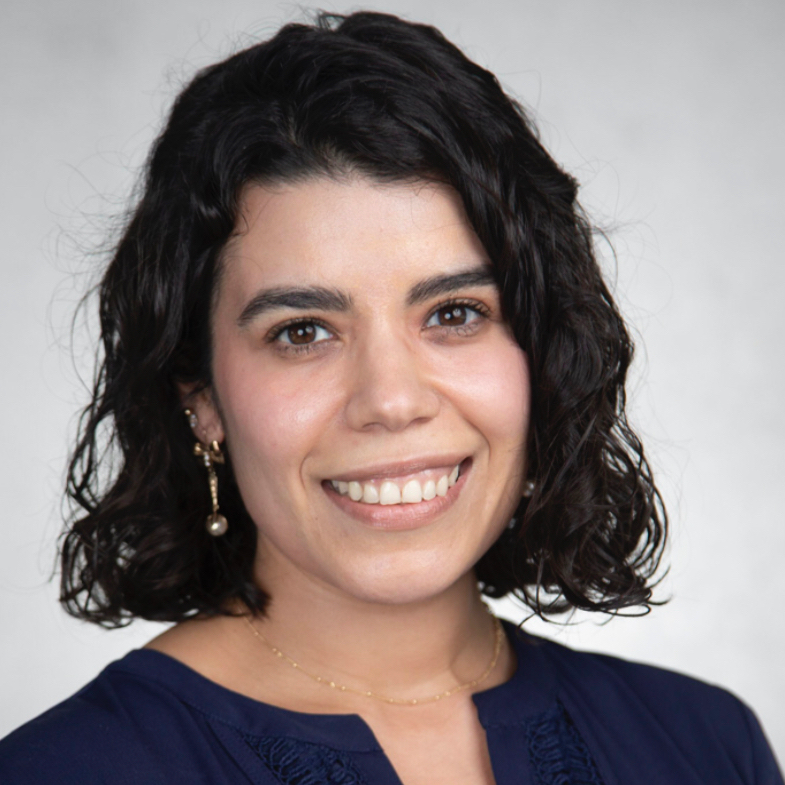
Iris Broce-Diaz
Assistant Professor of Neurosciences at UC San Diego School of Medicine, developing multimodal tools for early Alzheimer's detection
4
APPEARANCES
4
PODCASTS
Aug 6, 2026


Iris Broce-DiazGUEST
well thank you so much for inviting me yeah i'm iris and i'm in the department of neurosciences so um thank you for giving me the opportunity to talk like what for six seconds for the work that i'm doing and um So I have this grant that I just recently got awarded from the Wellcome Care Lead Program.
Iris Broce-DiazGUEST
And really, their whole focus is on Alzheimer's disease prevention in women.
Iris Broce-DiazGUEST
And so Alzheimer's disease is a progressive neurodegenerative condition that impairs your memory and cognition and affects millions of people worldwide.
Iris Broce-DiazGUEST
What I'm trying to do is develop these accessible, non-invasive, cost-effective tools that can help primary care and neurologists in an early detection of Alzheimer's disease.
Iris Broce-DiazGUEST
Really, to create a tool and deploy it in the clinics and make it accessible here and worldwide, we're starting with standard of care tools.
Iris Broce-DiazGUEST
um and so what's considered standard of care is very different in a high resource center versus a low resource center versus here versus latin america versus europe and that's really interesting but we are starting here at ucsd and diagnosing dementia really does start in primary care and so usually like a patient will report a concern or the family member And then the primary care, they don't have a lot of time, but they'll order some standard labs.
8 MINS LATER
speaker_4AUDIENCE
How do we get it that standard so that this actually makes a difference?

speaker_0NARRATOR
Visit uctv.tv/motherhood for more.
Iris Broce-DiazGUEST
So, um, thank you for giving me the opportunity to talk, like what, for six seconds for the work that I'm doing.
Iris Broce-DiazGUEST
[laughs] And, um, so, um, I have this grant that I just recently got awarded from the Welcome Care Leap program.
Iris Broce-DiazGUEST
Um, and really, their whole focus is on Alzheimer's disease prevention in women.
Iris Broce-DiazGUEST
And so Alzheimer's disease is a progressive neurodegenerative condition that really impairs your memory and cognition and, like, affects millions of people worldwide.
9 MINS LATER
speaker_5UNKNOWN
But how do we get it that standard so that this actually makes a difference?
speaker_0ANNOUNCER
Visit uctv.tv/motherhood for more.
Iris Broce-DiazGUEST
So, um, thank you for giving me the opportunity to talk, like what? For six seconds for the work that I'm doing.
Iris Broce-DiazGUEST
[laughs] And, um, so, um, I have this grant that I just recently got awarded from the Welcome Care Leap program.
Iris Broce-DiazGUEST
Um, and really their whole focus is on Alzheimer's disease prevention in women.
Iris Broce-DiazGUEST
And so Alzheimer's disease is a progressive neurodegenerative condition that really impairs your memory and cognition and, like, affects millions of people worldwide.
9 MINS LATER
speaker_5UNKNOWN
Like, how do we get it so every five years, um, some kind of risk tiering maybe based on family history or something like that? But how do we get it that standard so that this actually makes a difference?

Iris Broce-DiazGUEST
well thank you so much for inviting me yeah i'm iris and i'm in the department of neurosciences so um thank you for giving me the opportunity to talk like what for six seconds for the work that i'm doing and um So I have this grant that I just recently got awarded from the Wellcome Care Lead Program.
Iris Broce-DiazGUEST
And really, their whole focus is on Alzheimer's disease prevention in women.
Iris Broce-DiazGUEST
And so Alzheimer's disease is a progressive neurodegenerative condition that impairs your memory and cognition and affects millions of people worldwide.
Iris Broce-DiazGUEST
What I'm trying to do is develop these accessible, non-invasive, cost-effective tools that can help primary care and neurologists in an early detection of Alzheimer's disease.
Iris Broce-DiazGUEST
Really, to create a tool and deploy it in the clinics and make it accessible here and worldwide, we're starting with standard of care tools.
Iris Broce-DiazGUEST
um and so what's considered standard of care is very different in a high resource center versus a low resource center versus here versus latin america versus europe and that's really interesting but we are starting here at ucsd and diagnosing dementia really does start in primary care and so usually like a patient will report a concern or the family member And then the primary care, they don't have a lot of time, but they'll order some standard labs.
8 MINS LATER
speaker_4PANELIST
How do we get it that standard so that this actually makes a difference?