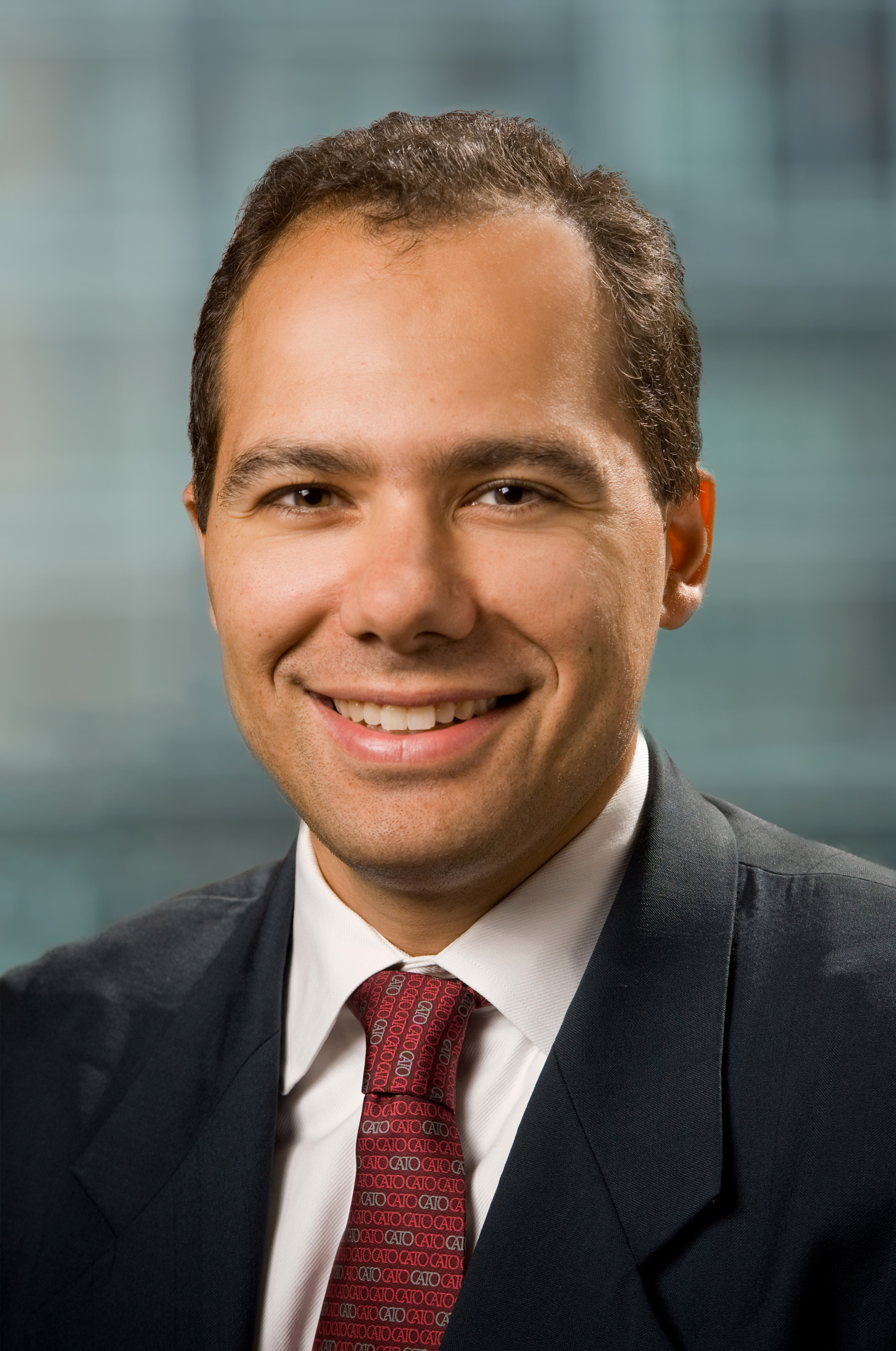
Ilya Shapiro
Professor of Law
29
APPEARANCES
18
PODCASTS
Oct 6, 2026

Ilya ShapiroGUEST
Is it, uh, co- operating Colorado law with claims that, uh, for various tort suits, uh, nuisance and, um, uh, consumer fraud and, and other state-based allegations, or has Congress already legislated in this area, and we have regulations from the EPA and the, the Energy Department, all the, the things that the federal government does, because we know through the Constitution that when state and federal law is in conflict, the federal law is supposed to trump.
Ilya ShapiroGUEST
And so the question here is whether the federal regulations over, um, you know, refineries and, and whatever else is involved, uh, trumps or prevents state regulations or state litigation over these claims.

Lars LarsonHOST
But how in the world could a state law or regulation supersede the federal laws when pollution does not stay within state boundaries?


Joe ThomasHOST
What is the peril of a four-four ruling, a split ruling in the Supreme Court on any case, but, uh, certainly in this one?
Ilya ShapiroGUEST
Well, four-four means that the decision being appealed stands without any, uh, opinion or, or, or precedent value, uh, from the Supreme Court.
Ilya ShapiroGUEST
So the Colorado Supreme Court's decision to allow this lawsuit to continue would, uh, would stand.
Ilya ShapiroGUEST
Um, you know, their, the, the oil companies are not gonna allow this to get litigated fully.
Ilya ShapiroGUEST
Uh, and, uh, there would be, uh, all these other lawsuits, uh, that are going on.
Joe ThomasHOST
You know, can, can, uh, can, uh, Ryobi tools be sued because somebody used a, a sledgehammer they built to damage my car? I mean, you know, that's, that's the kinda thing that it seems like this is setting up for.


Renee GiacchinoHOST
So I'm going to start by asking you, is that something that happens annually or is this something new in terms of polling about how people feel about the Supreme Court?
Ilya ShapiroGUEST
it's happened for quite some time gallup of course perhaps the most famous polling organization uh... has asked for decades about americans trust in institutions whether that's congress the presidency the police the military big business small business uh... organized religion i mean all these kind of the the big institutions the media in american life in the supreme court is part of that Supreme Court generally and continues to do better than All parts of the government except except the military and the police are way better than Congress and the presidency and things like that But we're at a time of generally low Societal trust in institutions and so the latest poll this past July found that only 33% of Americans approve of the job it's doing which is a record low in and since they've been asking this question and I think 26 years and uh... market law school uh... has done that has been doing i don't know for how long uh... a survey of specifically about the judiciary in the court that the law school uh... after all uh... little more nuance there that they they found that forty seven percent approve of the job the court's doing fifty three percent disapprove although curious finding most of the cases specific cases that they surveyed the public agrees with so maybe there's kind of a misperception of the court more broadly with with each particular case but overall what we're seeing isn't so much the court itself is in some kind of unique danger but all institutions have declined in trust And the big thing about the court is that there's a stark difference between Democrats and Republicans or liberals and conservatives.
Ilya ShapiroGUEST
And so there was a drop in the trust this year simply because conservatives slightly disapproved more this year than they did last year.
Ilya ShapiroGUEST
But the polarization that afflicts us in all areas of public discourse continues into views of the court.
5 MINS LATER
Renee GiacchinoHOST
Tell us about a couple of the other cases, either that you filed briefs in or that you're following very closely for this next term.
Ilya ShapiroGUEST
One involves the latest iteration of school choice and public funding of schools.

Ilya ShapiroGUEST
It's not like, uh, you know, the history of Latin America in the 20th century or, or Putinism or Erdogan or all of these things.
Ilya ShapiroGUEST
People can kind of conflate, uh, populist leaders, uh, even though our Constitution has stood the test of time and, uh, kept, uh, all these checks.
Ilya ShapiroGUEST
I think that's where Madison's grand vision, you know, Madison failed to foresee political parties and certain other things, uh, but the idea of ambition counteracting ambition and, uh, Federalist 51, my fa- my favorite Federalist Paper, should be everybody's favorite Federal, about man's non-angelic nature and how in utopia, angels, uh, you know, everything's perfect.
9 MINS LATER
Yael Bar turHOST
Mm-hmm.


Larry O'ConnorHOST
Is it possible the off-the-pitch distractions with this FIFA debate and the red card and whether the Trump administration or lawyers connected to President Trump actually had a hand in influencing that decision, could that have participated in the players sort of not being completely focused and on their game?

Ilya ShapiroGUEST
well look i'm a simple constitutional or not a psychologist but uh... that that seems to be the logical conclusion that all even though uh... uh... for unbounded and did not deserve that red card did not deserve the suspension i think it was uh...
Ilya ShapiroGUEST
it was just that the suspension b relieved all of that uh... did bad thing psychologically to the americans and and and motivated the belgians all of a sudden they can say that you know where you know, being, you know, strategized against.
Larry O'ConnorHOST
What what is next here? First of all, were you surprised that the decision came down, not from a statutory perspective, but actually on a 14th Amendment perspective?


Ben ShapiroHOST
Um, what, what did you make of the, the court's decision in, in the trans case today?
Ilya ShapiroGUEST
Uh, I liked it perhaps even more than his birthright citizenship opinion, but because it does call a spade a spade and says, "Look, uh, we're not playing Orwellian games here.
Ilya ShapiroGUEST
There are, there are two genders, and yes, there are exceptions for, uh, you know, people with multiple chromo- XX, XY chromosomes, and all of that sort of thing.
Ilya ShapiroGUEST
Uh, but, uh, we have to, we have to live in the world of, of truth and, and, and reality," and that was very, uh, powerful.
5 MINS LATER

speaker_0UNKNOWN
He says the court relied on everyday analogies to explain what the phrase "arrives in" really means.
Ilya ShapiroGUEST
There are some colorful examples that Justice Alito raised in his majority opinion.
Ilya ShapiroGUEST
You know, a running back does not arrive in the end zone by reaching the one-yard line, and a letter does not arrive in your mailbox if the mailman is waylaid by a dog, uh, on the way, things like that.
Ilya ShapiroGUEST
So, uh, basically, the interpretation was someone who was prevented from entering the United States, from literally crossing the border, has not arrived there, and therefore, that right to claim asylum is not triggered.
7 MINS LATER
Mary ReichardHOST
This one was seven to two, and the two in dissent aren't who you might expect.
Ilya ShapiroGUEST
Interestingly, the two dissenters were Gorsuch and Jackson, uh, sort of on opposite ends of the Court.
Ilya ShapiroGUEST
An interesting argument about whether there was any leeway for additional labeling or whether the, the federal law at issue left any wiggle room for, uh, additional labeling.
Ilya ShapiroGUEST
But, but nonetheless, Monsanto, uh, has won, and so, uh, its, you know, over-decade-long litigation, uh, has concluded.


Steve HermanHOST
Ilya, has the balance shifted too far toward Washington? And what would you say is the clearest example of that?
Ilya ShapiroGUEST
Absolutely, the balance has shifted, both in terms of, you know, recall the way that the great Madisonian insight or the insight of the framers was that you have to divide up power so that government has the ability to do what it needs to do to enable our pursuit of happiness, protect our rights and liberties, while at the same time obliging it to check itself.
Ilya ShapiroGUEST
And over the years, this is not something that's, you know, the last few years or anything like that.
Ilya ShapiroGUEST
Power has shifted towards Washington, towards the federal government, such that.
13 MINS LATER
Bill BernadoneHOST
What would a healthier federal state balance look like in practice in your estimation?


Ilya ShapiroGUEST
We had certainly heard of not, not just critical race theory, but critical legal studies, all, all of that stuff.
Ilya ShapiroGUEST
It, it, it had been something from the '80s and early '90s, uh, that had been, you know, a curiosity and then was relegated to some niche corner of the sociology department or maybe one professor or something like that.
Ilya ShapiroGUEST
You know, it's been almost 25 years since I graduated law school, and sometimes that feels like just yesterday.
Mary ReichardHOST
Does it matter to the justices, though? I spoke with constitutional law experts Josh Blackman from South Texas College of Law in Houston and Ilya Shapiro from the Manhattan Institute.
Ilya ShapiroGUEST
The executive order on birthright citizenship was signed his very first day, uh, back in office, and this is one of his signature, uh, issues, along, uh, with the tariffs, which he thought about attending that argument, ultimately did not.


Phil BredesenHOST
Is that kind of approach to things like executive orders? Is Trump the first one to do that? Have people in the past done that? Did FDR use that technique?
Ilya ShapiroGUEST
I mean, you don't have to just look at President Trump's immediate predecessors, Biden, Obama, Bush, who certainly used executive orders plenty.
8 MINS LATER

Bill HaslamHOST
What truly concerns you about protecting the Constitution and it being the guiding document for our country? At the end of the day, when you lose sleep over something related to the Constitution, what is it?
Ilya ShapiroGUEST
The practicalities, though, of Kavanaugh, I think, I think a, a, a majority will agree with Kavanaugh, uh, does agree with Kavanaugh that there are other methods of putting in other kinds of tariffs.
Ilya ShapiroGUEST
Um, you know, uh, uh, Roberts's majority opinion is very narrow in that sense.
Ilya ShapiroGUEST
We say nothing about anything else." Uh, Gorsuch was, was similar about that, and so Scott Bessent, the Treasury Secretary, now that we've been going on for months since the opinion, and it looked like that means that the tariffs were going down, he's been very publicly discussing all of these other alternatives, saying, "The sky isn't falling.
Ilya ShapiroGUEST
We can still impose various other tariffs." So that is probably less of a practical consequence.
Ilya ShapiroGUEST
But another point that Kavanaugh raises about our trade deals that are tied to the current level of tariffs, will those now be... need to be re-examined? A lot more uncertainty there, I think, than in those individualized tariffs that may remain or may, may, uh, uh, uh, now be put in place by the administration.
Ben ShapiroHOST
I think he is n- now going to have the legal tools at his disposal to be a lot more targeted in how tariffs are applied, as opposed to President Trump going out there with a poster board and declaring that penguins on the Solomon Islands are now going to be footing the cost for America's deficits.
Ilya ShapiroGUEST
I think a, a majority will agree with Kavanaugh, uh, does agree with Kavanaugh that there are other methods of putting in other kinds of tariffs.
Ilya ShapiroGUEST
Um, you know, uh, uh, Roberts's majority opinion is very narrow in that sense.
Ilya ShapiroGUEST
We say nothing about anything else." Uh, Gorsuch was, was similar about that, and so Scott Bessent, the Treasury Secretary, now that we've been going on for months since the opinion, and it looked like that means that the tariffs were going down, he's been very publicly discussing all of these other alternatives, saying, "The sky isn't falling.
Ilya ShapiroGUEST
We can still impose various other tariffs." So that is probably less of a practical consequence.
Ben ShapiroHOST
I think he is n- now going to have the legal tools at his disposal to be a lot more targeted in how tariffs are applied, as opposed to President Trump going out there with a poster board and declaring that penguins on the Solomon Islands are now going to be footing the cost for America's deficits.
Myrna BrownHOST
Here's Ilya Shapiro, director of constitutional studies at the Manhattan Institute.
Ilya ShapiroGUEST
The devil is in the details about what exactly is being targeted through immigration law, but it's, it is legitimate, uh, through immigration law to say, uh, "We don't want to admit people who, uh, disagree with these basic American precepts."
Myrna BrownHOST
That said, Shapiro is skeptical about the need to pass laws banning Sharia in the courts.
Ilya ShapiroGUEST
So already, under existing law, uh, the Constitution, federal statutes, treaties, are the supreme law of the land.
Ilya ShapiroGUEST
No religious legal system, be it Islamic, uh, you know, Jewish, Catholic canon law, or anything else, can override that.


Geoff BennettHOST
But at what point does expansive use of presidential power cross a line into abuse of power?
Ilya ShapiroGUEST
Well, I, I don't think that presidents get wide deference just by sake of being presidents.
Ilya ShapiroGUEST
And what we've seen in the last year, just in terms of court cases, especially what we've seen through the, from the Supreme Court, is that the president, uh, does get, uh, a lot of leeway in reorganizing the executive branch.
Ilya ShapiroGUEST
Uh, we'll see, I think the Supreme Court is gonna rule that he gets to remove the heads of executive branch agencies.
5 MINS LATER
Ilya ShapiroGUEST
That is the idea that Article II, the executive branch, there's only one official who's elected there, the president.
Ilya ShapiroGUEST
It could be small, it could be large, just that he controls what power there is, and I think that's right as a matter of originalism, that we've gotten accustomed since the New Deal to these so-called independent agencies which function as a fourth or fifth branch of government.


Mike PescaHOST
Even if you think that this one, I don't know, I'll let you have your say, even if you think this one is a slam dunk for the First Amendment and this administrator, what do you think in general of the spate of firings of people who weren't so protected by the law? But you take it away.
Ilya ShapiroGUEST
Well, look, w- we, we've been debating cancel culture for some years now, and there are very few people who say that you should never have... someone should never have negative employment consequences for anything they do outside of the workplace.
Ilya ShapiroGUEST
There can be consequences if you, you know, take whatever your worst thing is, you join the Nazi party, you start marching with the KKK, you, uh, join the, um, you know, the, the Young Communists.
Ilya ShapiroGUEST
I, I, I don't know, whatever your, your worst thing might be, um, and, and this is someone who's working for a private company, uh, that might be anathema, a bridge too far, like all of the big New York law firms, for example, that said that they're not gonna hire students that, uh, supported Hamas in the wake of its attack on, on Israel coming up on two years, uh, since that.
Ilya ShapiroGUEST
There, there's a problem when someone gets disproportionately mobbed, uh, for, uh, views, uh, or, or positions or a- affiliations that are, uh, within the Overton window of what used to be called polite society, kind of the mainstream of, of society.
Ilya ShapiroGUEST
That's where, and this is all accentuated by social media and the internet and, you know, all of that, that's where cancel culture starts becoming a problem.
15 MINS LATER


Jesse KellyHOST
... us? Do we have, we have a bunch of judges, like endless amounts of theirs and not that many of ours? What's the balance like?
Ilya ShapiroGUEST
Well, a- at any given time, about half the federal judiciary is appointed by Republican presidents, about half by Democratic presidents.
Ilya ShapiroGUEST
Um, I wouldn't call it judicial activism as your, as your, uh, uh, uh, thing on the screen said, because activism at this point just means a decision I don't like.
Ilya ShapiroGUEST
We take, uh, each ruling as it comes, and the thing is, we're at the culmination of a long trend where divergent theories of interpretation, views on the Constitution map onto partisan identification at a time when the parties themselves are more ideologically sorted and polarized than they've been since at least the Civil War.
Ilya ShapiroGUEST
And of course, parties challenging a Republican president will file in DC and Boston and Seattle.
Ben ShapiroHOST
They all have the ability to speak on things, and so it, it, you can't name a single organization funded by federal taxpayer dollars that could not make a First Amendment claim under the rubric created by this judge, could you?
Ilya ShapiroGUEST
I mean, remember the TikTok bill that Congress passed in a bipartisan manner? That was explicitly...
Ben ShapiroHOST
I mean, when do opinions, if they do, ever rise to the level of this judge should just not be on the bench anymore?
Ben ShapiroHOST
You can't name a single organization funded by federal taxpayer dollars that could not make a First Amendment claim under the rubric created by this judge, could you?
Ilya ShapiroGUEST
I mean, remember the TikTok bill that Congress passed in a bipartisan manner? That was explicitly, that wasn't just kind of defining terms so it'd only apply to one or several organizations.
Ben ShapiroHOST
And when do opinions, if they do, ever rise to the level of this judge should just not be on the bench anymore?
Ilya ShapiroGUEST
The Supreme Court does have nationwide or universal, uh, jurisdiction, but also we will see, uh, skirmishes in the lower court over class certification.
Ilya ShapiroGUEST
If you have class actions, that certainly binds much more broadly than just the, uh, specific individuals before you, as well as skirmishes over third-party standing.
Ilya ShapiroGUEST
That is, if states, as some states are involved in this birthright citizenship litigation, can they, you know, block policies just for that state? Would we end up with a patchwork, whether for birthright citizenship, or say, for rules of, of entry, for travel restrictions? Uh, can there be a different rule if you're flying into, say, uh, Atlanta International Airport versus JFK versus LAX? Those are going to be the battles going forward.
Ilya ShapiroGUEST
It could be that Justice Barrett, uh, when she was a professor was into civil procedure so knows this area of law very well with its respect to injunctions and the authority of- of district courts.
Ilya ShapiroGUEST
Uh, it could be that, uh, he saw that- that she could keep, uh, all her colleagues in line perhaps even more than the Chief himself could.


Paul GigotHOST
You didn't like the Burger Court, you didn't like the Rehnquist Court, you didn't like the... (laughs)
Ilya ShapiroGUEST
(laughs) The, the thing is, if a hallmark of the law is predictability and being able to understand the rules of the game, it's much more whether you like it or you don't what results are coming.
Ilya ShapiroGUEST
Based on oral argument, based on their backgrounds, you can understand what the court is doing.
Ilya ShapiroGUEST
It's not consulting your Ouija board or the bird entrails to see what Justice Kennedy is going to do at the end of the term, uh, or Justice O'Connor for that matter.
Ilya ShapiroGUEST
Now, there are some guesses and some cases, you know, more about some justices than others.
Ilya ShapiroGUEST
And you and I are in agreement that we don't like its non-delegation, uh, decisions.
Paul GigotHOST
What other areas of the kind of post-New Deal jurisprudence do you think that this court has a mind to clean up or to return to more originalist principles?


Ilya ShapiroGUEST
Well, if we're talking about good administration and what have you, that seems to be every- every president going back, I don't know how long, everyone gets worse, concomitant with the growth of the imperial presidency and the problems therein and the warping of power and Congresses.
Ilya ShapiroGUEST
You know, the- the- the great original sin of Madisonian political philosophy in thinking that Congress would be a jealous guardian of its own legislative powers, rather than the rise of the party system and just deferring, uh, both to its party leader, the president, uh, and seeing the incentive of passing the political buck so it wouldn't be held accountable ever more so in the era of the modern administrative state where you can just say, "I'm passing the, at best, the Truth, Beauty, and Goodness Act of 2025." And then when some deputy undersecretary of whatever, uh, uh, does something that harms a constituent, the constituent goes to their representative and says, "No, no, no.
Ilya ShapiroGUEST
Go sue him." And so all of that ends up in the Supreme Court, and it's just a huge, uh, warping of power, and that's kind of a, uh, seems to be a one-way ratchet administration upon administration.
25 MINS LATER

Jeffrey BrownCORRESPONDENT
But for many conservatives, the real free speech struggle on campus dates back further, and is rooted in a progressive ideology they say refuses to tolerate other voices or ideas.
Ilya ShapiroGUEST
Finally, the leaders of educational institutions are having their feet held to the fire, because I think for too long, they've been able to do whatever they want.
Jeffrey BrownCORRESPONDENT
He was eventually cleared of wrongdoing, but decided to resign from Georgetown anyway, while pointing to other controversial posts by progressive professors who he argues were largely protected by the university.
Ilya ShapiroGUEST
The permissible range of expressed policy views has narrowed and shifted, and people are afraid to express themselves or even discuss certain topics, uh, lest they be caught in the cancellation crossfire.
Ilya ShapiroGUEST
To say the least, this is particularly worrying in an educational environment, where you should be trying on different kinds of arguments to learn, to get at the truth.
Mary ReichardHOST
Ilya, good morning, and my first question is quite basic: Are judges above the law?
Ilya ShapiroGUEST
If, if, if a judge, uh, federal or state murders someone, they can be arrested and prosecuted.
Ilya ShapiroGUEST
Uh, the more interesting wrinkle is the federalism wrinkle, so here it's federal officials, federal prosecutors, uh, arresting a state judge.
Ilya ShapiroGUEST
Um, there's a doctrine called anti-commandeering, which says that the federal government cannot force states or their officials, uh, to enforce federal law.
Scroll for more appearances