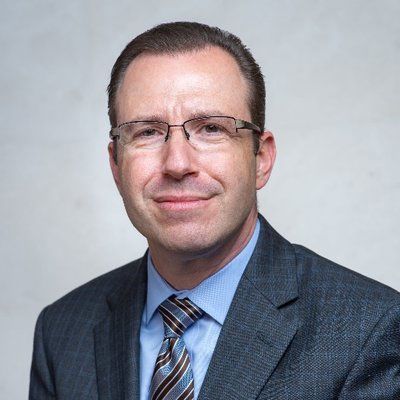
Ilan Berman
American lawyer
6
APPEARANCES
5
PODCASTS
Sep 25, 2026


Negar MojtahediHOST
So what does this mean? Who took power from whom? And what decisions can the guards make today that maybe they weren't able to make before the war?

Ilan BermanGUEST
And I think the proper context to think about this is to look at long term trend lines within Iran itself.
Ilan BermanGUEST
If you are looking at the relative power of the Revolutionary Guards, you know that over the last two decades over the last generation, certainly they have they are the most important strategic actor.
Ilan BermanGUEST
But up until now, up until comparatively recently, they have been very deferential to the clerical class in Iran.
Ilan BermanGUEST
And so, you know, the earlier pronouncements about the IRGC being in charge were proven to be manifestly false because electoral results, statements by IRGC officials about sort of, you know, hewing to the orders of the Supreme Leader, it was very clear that they were, at least at that time, they were willing to take a secondary role and sort of let the clerical elite sort of guide the ship of state.
11 MINS LATER
Negar MojtahediHOST
Do you see any signs that they're preparing for this? Because it seems like the Iranian regime is moving quite quickly.


Gary MarxHOST
But how did you view that? Did you think that that was the right call to put those two together? Or was that a mistake?
Ilan BermanGUEST
So I think it's both, actually, because it's the Iran addition, the addition of adding Iran to the legislation is a very late entrant.
Ilan BermanGUEST
It's very much, I think, a function of pressure from the executive branch, from an administration that is very interested in ratcheting up this, you know, Operation Economic Outcast or, you know, however they're terming this economic isolation of Iran.
Ilan BermanGUEST
What I fear is that it has the sort of the very natural effect of diluting the focus of what the bill is supposed to be, which is the bill is supposed to be a qualitative jump in the seriousness with which the U.S. government moves out as a unit, not just Congress.
9 MINS LATER

7:01

I think, I think we ought to just try to get a sense of where do we stand, and then maybe we'll, we'll try to dive in a little deeper after that.
Ilan BermanGUEST
No, I, I, I think that's right, and the, the answer is, uh, it's not quite clear.
Ilan BermanGUEST
Um, and, uh, it's, it's not a surprise, I think, uh, to you or to anybody, uh, who's watching or listening.
Ilan BermanGUEST
Uh, what we have is a lot of muddled messaging, uh, from the administration in terms of strategic objectives, right? Because we've gone from a conflict that was about, uh, effectively denuclearization, potentially even regime change, to a conflict that is about, uh, much more transactional about the reopening of the Strait of Hormuz.
Ilan BermanGUEST
The president said that, uh, we are, uh... you know, the regime change may be back on the menu.
10 MINS LATER


Newt GingrichHOST
Could you describe your new publication, why you're doing it, why people might want to subscribe and be part of it?
Ilan BermanGUEST
This is all me because I'm heading up the project, but thank you for the advanced promotion.
Ilan BermanGUEST
The idea that we had, and we've been gestating this for a couple of years, is the fact that as the American political environment and as American thought on national security and foreign policy unfortunately becomes more and more partisan, it also becomes more and more siloed.
Ilan BermanGUEST
People don't read as widely as they should, and people in positions of power aren't really hearing the compelling arguments that they need in order to make decisions properly.
15 MINS LATER
Newt GingrichHOST
How serious is the current level of demonstration in Iran, and what should we do? Is it practical for us to try to help the people of Iran take their country back, and would the value be worth the risk that might be involved?
Newt GingrichHOST
I mean, there is no European country that could match any of these three countries in scale of investment.
Ilan BermanGUEST
And I think your point about rebuilding the arsenal of democracy is exactly right.
Ilan BermanGUEST
I do hope that that latter part is not silent, right? That these countries, as robust as their economies are, understand that the United States......
Ilan BermanGUEST
benefits and the strategic partnership with the United States benefits, not just from the trade deals, but from them aligning with us, not on every value, but on some values, and aligning with us in terms of our vision for regional security.
Ilan BermanGUEST
And that's why I made the point about this being about assurance also, because simultaneously the president is making a very risky, high-stakes play to try to hammer out some sort of deal with the Iranian regime.
5 MINS LATER
Newt GingrichHOST
And I worry that they will gradually talk themselves into accepting a paper agreement that's not real.


Malcolm HoenleinHOST
Have we essentially helped enshrine Turkey's control which brings them up to Israel's border in a common attempt to limit Iran? Or do you see that Iran can still exercise influence, um, with Bashar al-Assad, who's, as you said, his personal reckon? When you look at Idlib, which he ruled, uh, people, the women did, th- they were cut out of schools and they, they wore the forced dress codes and everything in keeping with, uh, T- ISIS traditional behavior.
Ilan BermanGUEST
Um, I was just, uh, in North Africa and the Middle East until late last week, and what I heard, uh, throughout my trip was this idea that, um, you know, the, the Syrian pendulum can swing, uh, either way, right? Turkey clearly made a very successful strategic play.
Ilan BermanGUEST
It underwrote the Hayat Tahrir al-Sham, uh, offensive, renewed offensive that ended up toppling Bashar al-Assad.
Ilan BermanGUEST
They still retain a lot of influence, i- in particular over, uh, the Syrian Alawite and Shiite communities, which, by the way, demographically have grown over the last decade, because, uh, Iran made it a point of repopulating Syria and shifting the demographic balance in that country as part of its support for the Assad regime.
Malcolm HoenleinHOST
So, how do you assess the impact on the future of the Abraham Accords with the president's strong declaration that it was his dream to see Saudi Arabia joining, uh, even making the reference to, to Syria? Do you think that his, his trip will see an advancement of the accords or will people remain hesitant seeing that they were able to get away with things without having to make the ultimate steps and concessions?