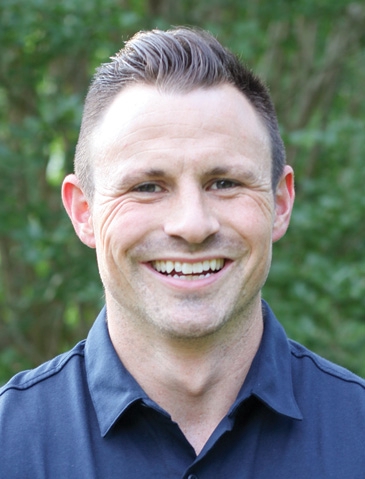
Ike Miller
Lead pastor and church planter of Bright City Church in Durham, NC; PhD theologian and author of "Theology That Heals" and "Seeing by the Light."
5
APPEARANCES
5
PODCASTS
Sep 30, 2026


Kristin FitchHOST
And maybe you want to share that story, but it's like, What could be the best that God wants for us? And are we trying to align with that?

Ike MillerGUEST
So kind of the story that I share is I think when it comes to freedom, a lot of us think of kind of going to a grocery store and going down the aisle with all of the cereal on it.
Ike MillerGUEST
But the more biblical notion of freedom that I think of is more of the freedom from sin, the freedom to choose God's way.
Ike MillerGUEST
And the example that I give of that, the story I share is how, especially in college and right after college, I had a real problem with ice cream.
19 MINS LATER
Kristin FitchHOST
But so what would you just share with us since we just talked about what we just talked about?

Ike MillerGUEST
It's not a one size fits all, but there are some similarities that are seen as you do this work.
Ike MillerGUEST
And so the way that Janet Hagborg and Robert Gulick, they kind of created this, the way they lay it out is sort of the first stage is that moment of coming to a life-changing awareness of God and discovering who God is and what Jesus has done for us and what that means for us.
6 MINS LATER

Ellen KrauseHOST
Well, as we start to wrap things up here, Ike, for the woman listening who knows she needs healing but doesn't know where to begin, what are some practical ways that she can start inviting Jesus into her pain and allowing him to bring restoration into her life?

Ike MillerGUEST
I wanna tell you a story, because I think this narrates it well, but it kind of takes a moment, which is I, I, I know someone who had experienced extreme chi- um, trauma as a childhood, in their childhood.
Ike MillerGUEST
And during that time, I think they didn't really know, what does this mean for God now that I'm out of that context? And so they went to some, some counseling for it, and they were told, "You just need to repent.
Ike MillerGUEST
If you'll acknowledge your sin in this, it will fix it." And that's a beautiful idea.
5 MINS LATER
Kirby KellyHOST
Are there any last encouragements or thoughts or things that you wanna say to everybody before we wrap up the pod today?

28:37

So will you walk us through just a little bit of that part of your life?
Ike MillerGUEST
So this was early in the pandemic and kind of going through the journey of just navigating the challenges of being a pastor during that time.
Ike MillerGUEST
The number of decisions that just had to be made was, they talk about decision fatigue during that time about, you know, whether do you gather in person? Do you gather in person outside, inside? Do you do the radio thing into the cars? Do you wear masks? Do you not wear masks? All of those decisions.
Ike MillerGUEST
Then, you know, with the racial division in our country, the political division in our country, navigating that time was just, as you know, extremely overwhelming.
Ike MillerGUEST
And so during that time, I began to take some anxiety medication to kind of help navigate that season, which I firmly encourage.
17 MINS LATER
46:19
So do you have any hope that we can find healing like... as a nation, as a world, as supposedly one body of Christ, like before Jesus comes back at the end to reconcile it all?


Esau McCaulleyHOST
And what is good about that? And what do you think that misses out? I know that's part of the book, but when you said you were fatigued about it, but what is the traditional way that we think about it? What's good about it? And what is the church missing out if it doesn't have other elements or models as well?
Ike MillerGUEST
Which is to say there is what you might call the traditional, and then there's the predominant in our culture.
Ike MillerGUEST
And I would say in this sense, I'm talking about the predominant in our culture, which is penal substitution.
Ike MillerGUEST
That is the one that it's like, that we sin and what we deserve for that is punishment.
5 MINS LATER
MikeHOST
And it feels like what you're trying to get at with this book is like, it's just not so simple either way, that like a better view of church and theology kind of acknowledges the pain and suffering on both sides of the aisle here while trying to paint a different path forward.