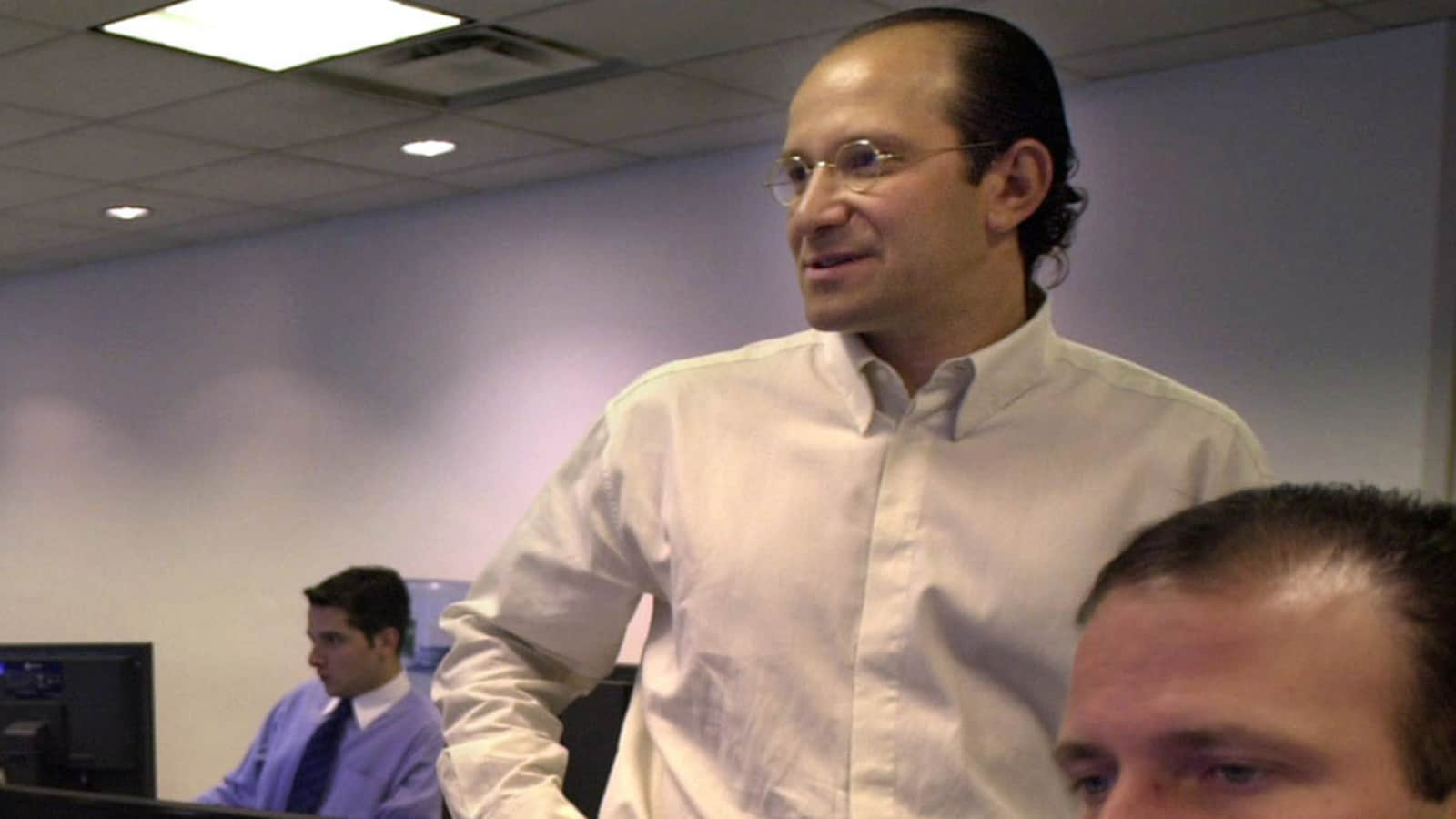
Howard Lutnick
United States Secretary of Commerce
60
APPEARANCES
25
PODCASTS
Oct 21, 2026


1 HR LATER
Donald TrumpSOUNDBITE_SPEAKER
But I think what I'll do is I'll say, Howard, why don't you give us the honor of announcing what you're going to announce? Go ahead.

Howard LutnickGUEST
So the president had as one of his fundamental objectives was to bring semiconductor manufacturing home to America, right? It's all made in Taiwan, right? And that's just too far away for America.
Howard LutnickGUEST
It is basically the foundation of semiconductors, and they're going to build it right here in North Carolina.
Donald TrumpSOUNDBITE_SPEAKER
That's work.
41 MINS LATER
Donald TrumpSOUNDBITE_SPEAKER
But I think what I'll do is I'll say, Howard, why don't you give us the honor of announcing what you're going to announce? Go ahead.
Howard LutnickGUEST
So the president had as one of his fundamental objectives was to bring semiconductor manufacturing home to America, right? It's all made in Taiwan, right? And that's just too far away for America, so he's bringing it home.
Howard LutnickGUEST
It is basically the foundation of semiconductors, and they're going to build it right here in North Carolina.

Howard LutnickGUEST
So two months ago, I'm spending time with President Trump, and he says, "We've got to build the greatest pipeline in the United States of America in Alaska." [crowd cheering] So he says, "Howard, go get it done." And what happened is the president has created the greatest trade deals in the history of economies, the history of the United States of America.
Howard LutnickGUEST
And so the Koreans, because the president has federalized this project, the Koreans, the Republic of Korea, has committed fifty point one billion dollars to build the line in Alaska.
speaker_1CORRESPONDENT
Build the line
Howard LutnickGUEST
So with Dan Sullivan, a couple of weeks ago, we announced that project in the Oval Office, which is every time you go in the Oval Office with President Trump, it is so cool.

Donald TrumpSOUNDBITE_SPEAKER
Alaska."[crowd cheering]
Howard LutnickGUEST
So he says, "Howard, go get it done." And what happened is, the president has created the greatest trade deals in the history of economies, the history of the United States of America.
Howard LutnickGUEST
And so the Koreans, because the president has federalized this project, the Koreans, the Republic of Korea, has committed fifty point one billion dollars to build the line in Alaska.
Donald TrumpSOUNDBITE_SPEAKER
Build the line.
Howard LutnickGUEST
So with Dan Sullivan, a couple of weeks ago, we announced that project in the Oval Office, which is every time you go in the Oval Office with President Trump, it is so cool.
Howard LutnickGUEST
And he says to me, the president says to me, "Howard, you gotta make it better." So all week, we were working with the Taiwanese government, and they agreed to buy thirty percent of everything produced on that line, and they will invest four point four billion dollars on top of the Koreans to make sure this line gets built.


Howard LutnickGUEST
Well, you try to think back and, like now, I'm, because I'm here, I, like, I physically have goosebumps standing here because all behind you, these are all my people.
Howard LutnickGUEST
It- it's just such a part of me, and I- I still, I can't believe it happened, right? How can you lose everybody you work with? And by the way, if you lose everyone you work with, you don't know how much you care about them.
Howard LutnickGUEST
But if I took everybody you work with away from you, you know what you'd do? You would cry, and you'd cry for years.
Howard LutnickGUEST
Well, you try to think back and, like now, I'm th- because I'm here, uh, like I physically have goosebumps standing here because all behind you, these are all my people.
Howard LutnickGUEST
And it just, it, it's just such a part of me, and I, I still, I can't believe it happened, right? How can you lose everybody you work with? And by the way, if you lose everyone you work with, you don't know how much you care about them.
Howard LutnickGUEST
But if I took everybody you work with away from you, you know what you'd do? You would cry, and you'd cry for years.


Joe MathieuHOST
Secretary, if it's memory, if it's beyond that, but what are you preparing to unveil? Well, remember, the Trump
Howard LutnickGUEST
And if Intel can be successful, which it's clearly on the way to be, we can get to 50% domestic.
Joe MathieuHOST
Secretary, if it's memory, if it's beyond that, but what are you preparing to unveil?
Howard LutnickGUEST
Well, remember, the Trump administration has always said, if you build here, there's no terror.
Howard LutnickGUEST
And you know, we set out as one of our key things that when the Trump administration walked in the door and I walked in the door, we had like 1% production of semiconductors.
Howard LutnickGUEST
And if Intel can be successful, which it's clearly on the way to be, we can get to 50% domestic.


Howard LutnickGUEST
So Mark Carney talked to President Trump, let's say, a week before I was in the room with him.
Howard LutnickGUEST
Remember, Canada came to us about seven, eight weeks ago and said, come on, let's get a deal done.
15 MINS LATER


Larry KudlowHOST
This has to be a major factor in the boom from manufacturing We haven't seen anything like this in 20 years, Howard.
Howard LutnickGUEST
You know, I leave here tonight and tomorrow morning I go back to Houston, Texas.
Donald TrumpSOUNDBITE_SPEAKER
Howard, please.
Howard LutnickGUEST
If we want to lead in advanced manufacturing, AI, semiconductors, energy defense, we can't depend on our foreign adversaries for the materials that underpin our industries.
Howard LutnickGUEST
And that's why the president tasked us to rebuild the supply chain and make it a top priority of his administration and my department.
Donald TrumpSOUNDBITE_SPEAKER
amazing,
Donald TrumpSOUNDBITE_SPEAKER
Everybody, Republican, Democrat.
32 MINS LATER
Donald TrumpSOUNDBITE_SPEAKER
Howard Lutnick.
Howard LutnickGUEST
President Trump is bringing in more jobs, more investment, and more factories and more production than anybody ever dreamed.
Howard LutnickGUEST
And it is an honor to run the secretary, be the secretary of commerce for the greatest president of all of our lifetimes, Donald Trump.

Howard LutnickGUEST
I mean, I think that globalization, right, and the idea of global supply chains and finding the lowest cost, I mean, that is just not the way to take care of your auto workers, right, who are in Ohio and Michigan.
Howard LutnickGUEST
We started auto tariffs, we started working on it in March, and we finished in November.
5 MINS LATER
Jonathan FerroHOST
Do you think there's a risk here that we damage the economic relationship with the Europeans in the same way we do with the Canadians, and for that matter, derail the conservative movement in Europe that's well underway?

Howard LutnickGUEST
I mean, I think that globalization, right, and the idea of global supply chains and finding the lowest cost, I mean, that is just not the way to take care of your auto workers, right, who are in Ohio and Michigan.
Howard LutnickGUEST
So think about this, when we were done with, we started auto tariffs, we started working on it in March, and we finished in November.
Howard LutnickGUEST
And we were done, the last day when we finished, General Motors and Ford stocks each went up 10%.
Jonathan FerroHOST
Do you think there's a risk here that we damage the economic relationship with the Europeans in the same way we do with the Canadians? And for that matter, derail the conservative movement in Europe that's well underway?


Brian SullivanHOST
Do you expect there will be other investments in the United States made as part of that $250 billion plus $250 billion?
Howard LutnickGUEST
SO WHAT WE DID IS WE GAVE TAIWAN $100 BILLION CREDIT BECAUSE TSMC CAME IN WITH THAT $100 BILLION IN 2025 WITH THE TRUMP ADMINISTRATION.
Howard LutnickGUEST
YOU HAVE TO REMEMBER, YOU HAVE TO REMEMBER, YOU HAVE TO REMEMBER, YOU HAVE TO REMEMBER, YOU HAVE TO REMEMBER, YOU HAVE TO REMEMBER, YOU HAVE TO REMEMBER, YOU HAVE TO REMEMBER, YOU HAVE TO REMEMBER, YOU HAVE TO REMEMBER, YOU HAVE TO REMEMBER, each chip has a translator in it right what connects the power to the chip what connects the chip to what you see on your screen right all those bits and parts they all need to come here and so we're going to have hundreds of companies coming here we're going to build giant semiconductor industrial parks in america and we are going to bring semiconductors home TO AMERICA.
Howard LutnickGUEST
THIS IS A $500 BILLION DOWN PAYMENT ON LET'S BRING THOSE SEMICONDUCTORS HOME.
Brian SullivanHOST
Secretary, this expected buildout, not just in Arizona, but across the country.
Unknown podcast
Howard Lutnick: How America Can Hit 6% GDP Growth in 2026
Jan 9 · 1h 27m

53 MINS LATER
61:25
Can you just double click into what that means, how you're going to go after it, and is it at the federal level, at the state level? Just kind of give us the rough game plan, what you can say.

13:20
What were the puts and takes and how did you come up with the decisions you made? And then if you could just reflect back on what went right, what would you want to redo, and what was maybe, and still is, misunderstood?
Howard LutnickGUEST
So, the president in his first term, um, he's been talking about tariffs and how the trade deficit of the United States of America is really a ripoff of America.
Howard LutnickGUEST
That, uh, people who don't weigh in very deep say, "Well, you have a, a trade deficit with the supermarket," right? You know, I mean, "You're always buying from the supermarket, so you have a trade deficit with the supermarket." That's- that's just silly, right? If you think about it, let's say there are two islands, right? One produces and one invents.
Howard LutnickGUEST
So the inventor lets the other island produce and keeps buying it from that other island.
Howard LutnickGUEST
Pays them the money and then that other island uses the money to buy the inventor's island.
Howard LutnickGUEST
And over a period of time, the producer owns the inventor's island, and the inventor works for the producer because he ran an infinite trade deficit and kept paying his money away.
16 MINS LATER


Howard LutnickGUEST
They, um, currently think they need to go to all electric cars by twenty thirty, and they don't even make a battery.
Howard LutnickGUEST
So thank God we've got President Trump in the White House who understands it and is quickly changing it.
7 MINS LATER
Howard LutnickGUEST
They currently think they need to go to all electric cars by 2030, and they don't even make a battery.
Howard LutnickGUEST
So thank God we've got President Trump in the White House, who understands it and is quickly changing it.
7 MINS LATER

Howard LutnickGUEST
Well, you know, the CHIPS Act set a structure of some money to go for advanced manufacturing of semiconductors and some for R&D.
Howard LutnickGUEST
And the Biden administration had literally sent out $7.4 billion into some fraudulent company called Natcast and it was trying to steal the money we recaptured all the money and now we can use that money to invest in companies that will advance manufacturing in america so x-light as an example is trying to augment the way semiconductors are made right and move to the next level right now it's called extreme ultraviolet that's how you paint sort of the chips, the electronic chips, right? Silicon comes in and then they paint it with extreme ultraviolet light.
Howard LutnickGUEST
and do it with other technologies, and we are always open for that, but we do lots of diligence, we have lots of experts, and we sort of help.
Howard LutnickGUEST
If it's going to help America, and companies are backing it and behind it, then we're interested in being involved, because we need to make sure America stays at the forefront of technology and chip production.
Lisa AbramowiczHOST
Secretary Lutnick, what's the threshold in terms of reducing certain regulations in Europe on US tech companies that's required in order to create some sort of framework for this deal?
Howard LutnickGUEST
Well, what, what the European Union does is they say, "Well, our, our digital rules, they, they only touch companies above a certain threshold." Of course, the only companies above those threshold are all American companies, so come on.
Howard LutnickGUEST
Let's, let's settle the outstanding cases against Google and against Microsoft and against Amazon.
Howard LutnickGUEST
Let's come up with a reasonable framework where these companies can grow and build, and then those companies will agree to invest hundreds of billions of dollars of data centers here.
Lisa AbramowiczHOST
Are you seeing any sort of relenting from them as you've been pushing it? Does it seem like they would agree to you on this point?
Jonathan FerroHOST
Secretary Luttnick, what's the threshold in terms of reducing certain regulations in Europe on U.S. tech companies that's required in order to create some sort of framework for this deal?
Howard LutnickGUEST
Well, what the European Union does is they say, well, our digital rules, they only touch companies above a certain threshold.
Howard LutnickGUEST
Of course, the only companies above those thresholds are all American companies, so come on, that can't be the rule.
Howard LutnickGUEST
Let's take it off, let's settle the outstanding cases against Google and against Microsoft and against Amazon.
Howard LutnickGUEST
Let's come up with a reasonable framework where these companies can grow and build And then those companies will agree to invest hundreds of billions of dollars of data centers here.
Howard LutnickGUEST
So the idea is if they take their foot off this regulatory framework and make it more inviting for our companies, they can get the benefit of it.

Annmarie HordernHOST
Are you seeing any sort of relenting from them as you've been pushing it? Does it seem like they would agree to you on this point?

David FaberHOST
He's very outspoken saying, hey, it's not clear to me that we're going to be selling our automobiles anywhere except in the United States, given the rise of BYD and other Chinese competitors, for example, that are so aggressive.
Howard LutnickGUEST
People learn from us that you've got to block their cars because those are not competitive cars.
7 MINS LATER

Sara EisenHOST
Who's paying the tariffs? Who do you think? Because as I've been pointing out, it's not showing up in consumer prices like all the economists were worried about.

Becky QuickHOST
There have been some questions about some weakness kind of popping up in the labor market at this point what do you see.
Howard LutnickGUEST
Well, the fact is the Donald Trump economy is just beginning, right? I mean, he's convinced all these companies to come in using his tariff policy to just come on in and build here way over $10 trillion of investment.
Howard LutnickGUEST
The end of this year starting and look a year from today, you're going to see employment numbers that you never imagined because what it's going to do is it's going to take the 6.9 million Americans who are capable of working, who are sitting on the sidelines now because they just haven't had the jobs they were looking for.
Howard LutnickGUEST
They're all going to come into the workplace because we're going to train them.
Becky QuickHOST
The Supreme Court could go either way, Howard, and I guess the question is, What's the backup plan? Just because so much is riding on this, what happens if they strike that down? Do you go to the Senate and say, give us the power to do this? Are there plans in place to do those things? Is there a plan to give back the tariff money to the companies that have been paying it to this point? How does it work?
Scroll for more appearances