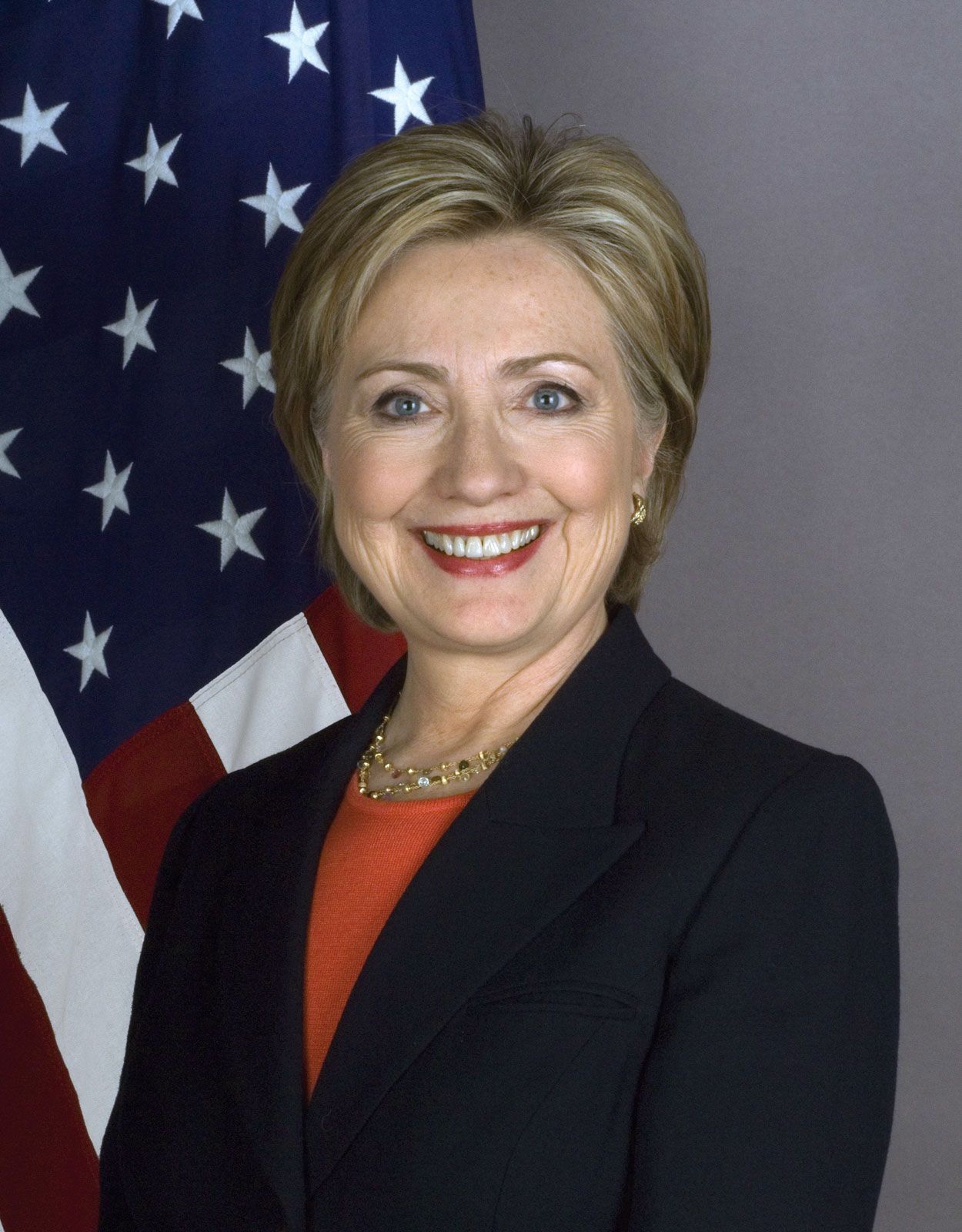
Hillary Clinton
Lawyer and former United States Secretary of State
32
APPEARANCES
27
PODCASTS
Nov 6, 2026


Hillary ClintonGUEST
Well, let's start with the down ballot races, because I think we also flipped maybe 10, 11 state legislatures.
Hillary ClintonGUEST
Both because we took majority, but we also broke super majorities in a lot of places.
Hillary ClintonGUEST
We had margins that were shocking if you'd asked me three months ago, would we win by that kind of margin in Georgia or Texas? Would we win South Carolina? I mean, those were reaches.
Hillary ClintonGUEST
There were some races, particularly for Congress, where where the Democrat was outspent 10, 20, 30, sometimes 50 to one.
30 MINS LATER


Scott GallowayHOST
What do you think the Democratic Party needs to do or Democratic leadership? What are two or three things you think they need to do immediately such that we can turn this into something enduring going into 28 instead of just them flipping back in 24 months?
Hillary ClintonGUEST
If the Democrats don't go in with an agenda and have the discipline to enact that agenda, then they're going to lose the kind of support that they're going to gain in this election.
Hillary ClintonGUEST
What's going to be in that? I think there are several things, one of which is health care costs.
Hillary ClintonGUEST
But there also can be even more fast tracking of, you know, housing starts, taking a hard look at how we can shift the burden on fossil fuel costs from consumers to the oil and gas companies, which have recorded record profits.
Hillary ClintonGUEST
So I think that there's a lot of good work being done right now to put together an affordability package.
8 MINS LATER


Anderson CooperHOST
I'm wondering, A, what your perspective of it was and the wandering around in particular, but also how do you think he has, as a candidate, When you see the guy you debated then and you see the person now with the press conference he gave today outside the reflecting pool and the plans and the redecorations and the crafting projects, how different is he?
Hillary ClintonGUEST
And I knew what he was doing, which was to try to intimidate me, but also sending a message that he was the alpha male in the room.
Hillary ClintonGUEST
I was in my head kind of racing through, what do I do? How do I respond to this? And I was trying out all kinds of things while I was trying to answer your questions and the town hall questions all at the same time.


Hillary ClintonGUEST
I mean, if you look at the numbers that Trump has, he's, you know what, 30, 32, 33 percent favorability.
Hillary ClintonGUEST
I do think people may not be as outspoken, but I hope their votes will speak for them, that we want to turn the corner.
Hillary ClintonGUEST
There's a lot of things I don't agree with, you know, all kinds of folks in politics.
Hillary ClintonGUEST
But let's have that debate, and let's try to put it in the context of, okay, let's look at the evidence, let's actually believe in facts, and let's try to find common ground and get something done for people.
5 MINS LATER


Chris WallaceMODERATOR
In this round, you go first, Secretary Clinton.
Hillary ClintonGUEST
And so my plan is based on growing the economy, giving middle class families many more opportunities.
Hillary ClintonGUEST
I want us to have the biggest jobs program since World War II, jobs in infrastructure and advanced manufacturing.
Hillary ClintonGUEST
New jobs and clean energy, not only to fight climate change, which is a serious problem, but to create new opportunities and new businesses.
50 MINS LATER
Chris WallaceMODERATOR
Secretary Clinton.
Anderson CooperMODERATOR
Secretary Clinton, do you want to respond?
Hillary ClintonGUEST
Like everyone else, I've spent a lot of time thinking over the last 48 hours about what we heard and saw.
Hillary ClintonGUEST
You know, with prior Republican nominees for president, I disagreed with them on politics, policies, principles, but I never questioned their fitness to serve.
Hillary ClintonGUEST
I said starting back in June that he was not fit to be president and commander in chief.
Hillary ClintonGUEST
What we all saw and heard on Friday was Donald talking about women, what he thinks about women, what he does to women.
1 HR 11 MINS LATER
Beth MillerUNKNOWN
What would you prioritize as the most important aspect of selecting a Supreme Court justice?


Hillary ClintonGUEST
but i think it's a good idea to have like an annual gathering but when i talk to kids who've been adopted or been in foster care that's what they miss they miss that sense of family i had a young man when i was in the senate who I took on as an intern and then I took on as an employee, he had been in 16 foster homes as a child.
Hillary ClintonGUEST
He really became a lawyer and then he wanted to defend the interests of foster kids because he felt like you know, it's a double whammy.
Hillary ClintonGUEST
And sometimes it's so obvious and justified and you have to move quickly because there's danger in the home.


Sali ChristesonHOST
What was the expectation for, we're skipping a lot, but what were expectations of women at that stage of your career, how they should look or behave in the spaces that you were navigating, and did you find yourself following on expectations?

8:58
So I went to Wellesley College and partly because I'd gone to a huge co-ed high school.
13 MINS LATER
Hillary ClintonGUEST
Well, in the really tight districts, the so-called purple districts, or even the red districts that we think we have a chance of flipping, you know, let's remember, people are used to voting for Republicans, uh, more often than not.
Hillary ClintonGUEST
And so if enough money is used to really turn out the hardcore Trump base, which is down to about 30% of the electorate, so that they actually get out and vote, which right now I think is kind of in question because, you know, they're, they're feeling a little disillusioned, uh, themselves, from what I'm seeing in research, then yeah, on the margins, it could make a difference.
Hillary ClintonGUEST
And what I'm, you know, thinking about as to why Elon Musk is spending all this money with the super PAC, spending all this money with getting, you know, canvassers, what's their message? You know, if you're knocking on somebody's door in Texas and you're ha- you're in a red district that is, uh, at threat of being flipped, what are you telling those people at the doors? What is your message? I would love to know what the canvassers Musk is paying for are given in terms of a script, because are they saying, "You gotta stick with Trump"? Are they saying that, you know, Texas is doing so well that you gotta stick with the Republican establishment, even the corrupt, you know, Paxton, uh, and the inept, uh, Abbott, who can't seem to protect, uh, you know, the, the citizens from either, you know, storms or data centers? I mean, what, what is it you're telling voters? So I, without knowing that message, frankly, I'm not sure it's gonna have much impact, even though it's a huge, huge amount of money.
10 MINS LATER
Hillary ClintonGUEST
I think that El-Sayed's, uh, response is more comprehensive and, uh, actually puts, uh, the finger on the real problem.
Hillary ClintonGUEST
Now, you know, we have to get oil, gas, fertilizer, everything moving through the Strait of Hormuz again.


Hillary ClintonGUEST
So when the Iranians made that request, the United States and Russia together made a joint response, and we said, uh, that we would be, um, willing to take out the 1,200 or so kilograms of known, uh, low enriched uranium, have it reprocessed, and then have it returned to fuel the research reactor.
Hillary ClintonGUEST
The Iranians accepted that in principle and continued to be very favorably disposed, uh, toward it at the first meeting on October 1st.
Hillary ClintonGUEST
And so it appeared as though there would be a meeting of the minds, which would be immensely reassuring to the world, uh, that if Iran were willing to do this, it would demonstrate good faith on their part.
speaker_1ADVERTISER
Visitez cadillacanada.ca. D'après les données de S&P Global Mobility sur le nombre total d'immatriculations de véhicules neufs au Canada pour l'année civile 2025, selon la définition du marché du luxe définie par Cadillac.
Hillary ClintonGUEST
Well, I think that the question really is how best to define the mission so that we and our allies, our publics and the world understand what we're trying to achieve.
Hillary ClintonGUEST
There was a lot of talk during the prior administration that came pretty close to nation building, transforming Afghanistan.
Hillary ClintonGUEST
We wanted to be sure that we stripped down and focused on what is most important.
Hillary ClintonGUEST
I mean, we fight wars to protect America, our values, our interests, our allies.


Amna NawazHOST
What do you remember about that moment in history? What stays with you all these years later?
Hillary ClintonGUEST
Um, obviously, on the day of the attack, I was in Washington on my way to my Senate office.
Hillary ClintonGUEST
Uh, I was going to attend a hearing, uh, that featured Laura Bush testifying about, uh, the Bush administration's proposals for education.
Hillary ClintonGUEST
We couldn't understand how a plane could have literally run into, uh, in- an incredibly tall building in the middle of New York City.
Hillary ClintonGUEST
Uh, began to reach out for information, and then of course, when the second plane hit, it became abundantly clear to everyone that this was not an accident.
Amna NawazHOST
Someone at the White Hou- Hou- White House had to call or send an email and tell the EPA, "Don't tell the truth." You said, "I wanna know who that is." Did you ever find that out? Will we ever find that out?

Amna NawazHOST
What do you remember about that moment in history? What stays with you all these years later?
Hillary ClintonGUEST
Obviously, on the day of the attack, I was in Washington on my way to my Senate office.
Hillary ClintonGUEST
I was going to attend a hearing that featured Laura Bush testifying about the Bush administration's proposals for education.
Hillary ClintonGUEST
We couldn't understand how a plane could have literally run into an incredibly tall building in the middle of New York City and began to reach out for information.
Hillary ClintonGUEST
And then, of course, when the second plane hit, it became abundantly clear to everyone that this was not an accident.

Amna NawazHOST
What do you remember about that moment in history? What stays with you all these years later?
Hillary ClintonGUEST
Um, obviously, on the day of the attack, I was in Washington on my way to my Senate office.
Hillary ClintonGUEST
Uh, I was going to attend a hearing, uh, that featured Laura Bush testifying about, uh, the Bush administration's proposals for education.
Hillary ClintonGUEST
We couldn't understand how a plane could have literally run into, uh, an, an incredibly tall building in the middle of New York City.
Hillary ClintonGUEST
Uh, began to reach out for information, and then of course, when the second plane hit, it became abundantly clear to everyone that this was not an accident.
Amna NawazHOST
Someone at the White Hou-Hou- White House had to call or send an email and tell the EPA, 'Don't tell the truth.'" You said, "I wanna know who that is." Did you ever find that out? Will we ever find that out?

Amna NawazHOST
What do you remember about that moment in history? What stays with you all these years later?
Hillary ClintonGUEST
Obviously, on the day of the attack, I was in Washington on my way to my Senate office.
Hillary ClintonGUEST
I was going to attend a hearing that featured Laura Bush testifying about the Bush administration's proposals for education.
Hillary ClintonGUEST
We couldn't understand how a plane could have literally run into an incredibly tall building in the middle of New York City and began to reach out for information.
Hillary ClintonGUEST
And then, of course, when the second plane hit, it became abundantly clear to everyone that this was not an accident.


Brian LehrerHOST
Could you reflect for our listeners on the moral and military questions that he, and perhaps you as First Lady, if he confided about these particular things, faced at those times, and how you look back at them after 9-11?
Hillary ClintonGUEST
You know, this is one of the very important questions that we have to keep, you know, asking ourselves and digging into.
Hillary ClintonGUEST
Um, and the nine 11 commission, Brian did an exhaustive, uh, study of what anybody knew and when they knew it.
Hillary ClintonGUEST
I don't, I don't know everything, but what I do know is that, um, my husband signed what's called a finding, directing our government to seek out and kill bin Laden.
Hillary ClintonGUEST
And there were two attempts made, one in Sudan and then one in Afghanistan, where a training camp that intelligence thought bin Laden would be visiting led to the decision by Bill to bomb that camp The camp was bombed, but no bin Laden.
Hillary ClintonGUEST
So there were at least two efforts that I know of, and there were other efforts that are probably still classified that were going on.
Brian LehrerHOST
I'm curious if you see it that way at all, and are there lessons for democracy for the future from that history today?

Brian LehrerHOST
Could you reflect for our listeners on the moral and military questions that he, and perhaps you as First Lady, if he confided about these particular things, faced at those times, and how you look back at them after 9-11?
Hillary ClintonGUEST
You know, this is one of the very important questions that we have to keep, you know, asking ourselves and digging into.
Hillary ClintonGUEST
Um, and the nine 11 commission, Brian did an exhaustive, uh, study of what anybody knew and when they knew it, I can, you know, not go into everything that I don't, I don't know everything, but what I do know is that, um, my husband signed what's called a finding, directing our government to seek out and kill bin Laden.
Hillary ClintonGUEST
And there were two attempts made, one in Sudan and then one in Afghanistan, where a training camp that intelligence thought bin Laden would be visiting led to the decision by Bill to bomb that camp The camp was bombed, but no bin Laden.
Hillary ClintonGUEST
So there were at least two efforts that I know of, and there were other efforts that are probably still classified that were going on.
Hillary ClintonGUEST
And in addition to that, the person in charge of counterterrorism in that administration, a very experienced gentleman by the name of Richard Clark, prepared a very detailed report about terrorism.
Brian LehrerHOST
I'm curious if you see it that way at all, and are there lessons for democracy for the future from that history today?


Hillary ClintonGUEST
... you know, I teach at Columbia, and I teach a course called Inside the Situation Room, and the dean and I were on your show when we published, um, a textbook called Inside the Situation Room.
Hillary ClintonGUEST
And we look at crisis decision-making, and yesterday we had two panels about 9/11, and the first one were two former officials from the Bush administration, uh, Matt Waxman and, and Michael Chertoff, and Jane Harman, who was, uh, at the time, head of the Intel Committee.
Hillary ClintonGUEST
The first decision that was made was very consequential, and, and, you know, Michael Chertoff talked about it.
Hillary ClintonGUEST
What was this thing that just happened to us? Was it the biggest crime in the history of our country, or was it a war? And the conclusion was to treat it as a war, and it became labeled as the war on terror.
Hillary ClintonGUEST
And it was treated as a war because treating it as a crime would have been really difficult to, you know, track down people, make connections, and all the rest of it.
Hillary ClintonGUEST
So we were on a war footing as of the da- uh, you know, the day after 9/11.
24 MINS LATER

Hillary ClintonGUEST
I know, and what they've done to the Justice Department, I don't think most people who are not lawyers or don't follow this closely realize what the perversion of justice means.
Hillary ClintonGUEST
You know, I've heard you and Scott talking, uh, about what are the, the real pillars of the American success, our political success, but especially our economic suc-success over, you know, two hundred and fifty years.
Hillary ClintonGUEST
Well, part of that was, you know, look, with exceptions, a rule of law, a Justice Department that we thought was, you know, mostly on the level, uh, a, a legal system with judges who were more interested in following the law than currying favor, uh, to the president who appointed, uh, them.
Hillary ClintonGUEST
That is a key to whether or not we have a confidence in our economic system as well as our political system.
Hillary ClintonGUEST
So what they've done to destroy confidence in the justice system has far-reaching implications.
Hillary ClintonGUEST
It's not just about Trump trying to get immunity from having his taxes, uh, ever audited.
9 MINS LATER

Hillary ClintonGUEST
When the Voting Rights Act was passed and literally I rank President Johnson's speech promoting the Voting Rights Act is one of the greatest speeches I personally have ever experienced.
Hillary ClintonGUEST
I remember being glued to our little black and white TV, watching him make the case for this legislation to protect the voting rights of all Americans, particularly black and other minority Americans.
Hillary ClintonGUEST
That was always a flashpoint for the anti-civil rights movement Mentality that was not just in the South, but heavily located in the South.
Hillary ClintonGUEST
And remember, Johnson said with the passage of this bill, along with the 1964 Civil Rights Act, the Democratic Party has lost the South for a generation.
8 MINS LATER

Marc EliasHOST
What, what do you, like, where are, like Donald Trump seems to be elevating this to a whole other level.


16:18
It's a memorandum of understanding, which we haven't even seen the details of.
22 MINS LATER

49:21
[audience laughs] Well, it's not for lack of trying that I'm not, that, um, they, you know, they continue to, uh, you know, not only go after me, but go after all kinds of, you know, people that Trump considers, uh, his, quote, "enemies." I'm not worried about it if the law matters and if the facts matter, I have nothing to worry about.
49:51
And, and what I've been slightly reassured about in the last couple of months is the way the courts are actually enforcing their orders.
50:16
Our big problem has been the Supreme Court, and the Supreme Court has enabled and approved so much of what he's done on the so-called shadow docket.

Scott GallowayHOST
Can you talk a little bit about the war there and what it means for the West?
Hillary ClintonGUEST
Look, I think it means the difference between a peaceful, uh, secure Europe and what that means for a peaceful, secure United States and a further opening of a door to Russian aggression if we are not, uh, on Ukraine's side.
Hillary ClintonGUEST
It is one of the great, uh, tragedies, uh, of modern, uh, history that we have a president who doesn't support the Ukrainian people.
Hillary ClintonGUEST
But the Ukrainian people have demonstrated through their own sacrifice how worthy they are of everybody's support, and what they have done in building up their own military industrial complex in the midst of a war is short, nothing short of remarkable.
Hillary ClintonGUEST
I mean, the only thing I can think of, Scott, that is even comparable is when the Blitz started against, um, Great Britain, you know, when the, uh, Luftwaffe planes were, you know, bombing the heck out of London and other sites.
Hillary ClintonGUEST
They didn't have the kind of, uh, air force to fight back, but boy, did they put it on a fast burner, and pretty soon, you know, within months, they were, you know, sending up fleets of, you know, airplanes to do battle, uh, with the German, uh, aircraft.
12 MINS LATER
Scott GallowayHOST
What are you optimistic about and what are you worried about in terms of the midterms?


Hillary ClintonGUEST
Well, for example, supporting Russia's invasion of Ukraine, both in an affirmative way by very rarely criticizing Putin for the brutal war that he has waged on the Ukrainian people.
Hillary ClintonGUEST
And then attempting to try to coerce the Ukrainians into accepting a negotiated ceasefire and peace deal that would be, by any objective measure, leaving them vulnerable to further Russian activity.
Hillary ClintonGUEST
So I think that there's a lot that needs to be reviewed and looked at from the perspective of what are the long-term consequences.
Hillary ClintonGUEST
And I just find that very often it's difficult to wrap your arms around what is the objective.
24 MINS LATER
Scroll for more appearances