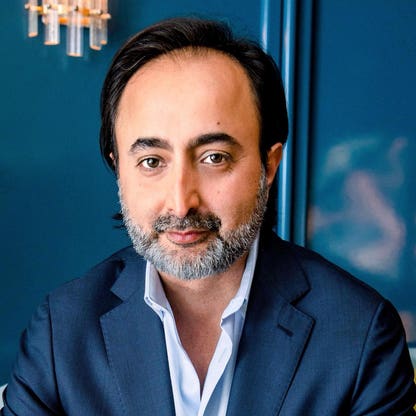
Hemant Taneja
CEO of General Catalyst Partners
15
APPEARANCES
13
PODCASTS
Nov 19, 2026

Hemant TanejaGUEST
And so, so look, I think one of the priorities that hasn't changed with our belief in responsible innovation, that values and scale, doing things the right way actually helps you win.
Hemant TanejaGUEST
You know, we have deep conviction that on an area like AI that's ultimately going to matter because capitalism is a privilege and you want society allowing you to do this and these values matter.
Hemant TanejaGUEST
The thing that changed was, and this happened when I came back from holidays in January, which is like a decade ago now, my first conversation with the team was that we had to recalibrate around scale.

John CooganHOST
So you might not see these 10 X's that quickly, but what, what's your overall thinking around biotech as an opportunity? How do you guys know,


Packy McCormickHOST
How do you think about, maybe take me inside one or two of them, what do you do differently than a big PE firm coming down and saying, we're going to buy companies and apply AI? Because you've grown up in tech, what do you do differently?

Hemant TanejaGUEST
When a great founder starts a company, their ambition generally is to go change some industry.
Hemant TanejaGUEST
And our view is that when you want to transform an industry, no single company can do it.
Hemant TanejaGUEST
And I said this when we were deep in the healthcare work in the COVID era, and it was like the Amazon of healthcare is not going to be a... trillion-dollar company is going to be a trillion-dollar ecosystem.
Hemant TanejaGUEST
So our theory, for example, if I go to healthcare for a second, let's take the Summa as a living lab, which is the Akron-based system that we bought.
Hemant TanejaGUEST
Our belief is that if we want a proactive, affordable, accessible healthcare system, we have to turn These local institutions, these hospitals, which are poorly run, they're all teetering on bankruptcy into AI-native hospitals that are profitable, that can invest in their communities, and can drive that proactive care.
8 MINS LATER

Hemant TanejaGUEST
I mean, our laser focus, whether we, uh, invest at seed or we invest, you know, uh, in, in the latest round of Anthropic, um, uh, or anywhere in the middle, is very much about are these founders that are building companies that have the potential to be power law companies, can we bring unfair advantages to them to be highly successful, and do we believe there is extraordinary, uh, compounding opportunity from the moment, the point we got in? And so those criteria and, and the characteristics of those companies don't really change when you go from seed to, uh, you know, late stage.
Hemant TanejaGUEST
You're still believing in that there is incredible appreciation and compounding and, and venture return from when you're entering.
Hemant TanejaGUEST
And that's just, uh, frankly, the fact that we can say that and write a large, uh, check into a company at a multi-hundred billion dollar valuation just speaks to the concentration of the opportunity behind certain kinds of companies.
Hemant TanejaGUEST
But our ethos is very much, uh, uh, you know, uh, focusing on, uh, the best founders, making sure as long as our values align, you know, we're going in, uh, to go build power law companies, that shouldn't change.
14 MINS LATER

Molly O'SheaHOST
Can you walk through the math around that? So even if a company scales and gets to fifty percent EBITDA, they could still be a loss to LPs.


Miriam GottfriedHOST
Where have you seen it most successfully integrated, and why do you think that was success?
Hemant TanejaGUEST
So, so I think first thing when we talk about enterprise diffusion of AI, you have to understand what are all the things that have to happen, uh, for this to really work.
Hemant TanejaGUEST
So from our standpoint, uh, you need your data infrastructure to be ready, which is a lot of the draft behind Databricks and companies like that.
Hemant TanejaGUEST
You need the models to be adapted to your language, your secret sauce, your understanding of the business.
Hemant TanejaGUEST
And then you have to think about this immense workforce transformation because you're gonna have human beings and AI agents all working together.
Hemant TanejaGUEST
There's a fundamentally different organizational structure of a company that's gonna get run.


Steffen PaulsHOST
How is this game developing in your view? Are we going to see a few new Apples and Metas and Microsofts? Or will there be, you know, basically the incumbents, the Magnificent Seven and others, from the large tech companies, will they eat most of the pie?
Hemant TanejaGUEST
If you look at the level of investment, the capital expenditure is going on into AI.
Hemant TanejaGUEST
I mean, the United States is virtually making a venture capital bet on AI, right? And that's happening in an analogous way in China and to a smaller degree in other parts of the world.
Hemant TanejaGUEST
The fundamental premise of how do you recover a return on that amount of investment is that AI productivity is going to eat into labor spend.
Hemant TanejaGUEST
Now, if you think about the transformation of the labor spend into AI productivity, and you think about a service job in Philippines, it is going to become an AI subscription for some US company or maybe a European company.
7 MINS LATER
Unknown podcast
Why AI will dwarf every tech revolution before it: robots, manufacturing, AR glasses from CES 2026
Jan 8 · 51m
Hemant TanejaGUEST
So look, I would say we very much view ourselves as a venture capital for AmeriCorps and a seed venture capital for AmeriCorps.
Hemant TanejaGUEST
Because our true north for the 25 years we've been around has been meeting founders where they are.
Hemant TanejaGUEST
And what that means is essentially help them navigate ambiguity in the past when they're sort of beginning and the business isn't clear, all the way to figuring out how to scale in the complex markets that they go into.
Hemant TanejaGUEST
So everything we've done has been in that context of creating these catalysts, the flexible capital they need, the policy capabilities they need, the market access they need, and there's sort of relationships globally to actually build a nearing company.
24 MINS LATER

Jason CalacanisHOST
What would the world look like in 2026 in terms of self-driving and then any second and third order impacts of those, and then do the same for robotics?


Hemant TanejaGUEST
I would say, um, uh, we very much view ourselves as a venture capital firm at our core and a seed venture capital firm at our core because our true north from, for the 25 years we've been around has been meeting founders where they are.
Hemant TanejaGUEST
And what that means is essentially help them navigate ambiguity in the past when, when they're sort of beginning and the business isn't clear, uh, all the way to figuring out how to scale in the complex markets that they go into.
Hemant TanejaGUEST
So everything we've done has been in that context of creating these catalysts, the flexible capital they need, the policy capabilities they need, the market access they need, uh, and those set of relationships globally to actually build enduring companies.
24 MINS LATER
Jason CalacanisHOST
the world look like in 2026 in terms of self-driving, and then any second and third order impacts of those, and then do the same for robotics?

Hemant TanejaGUEST
Valuations are a tricky topic, and I feel like they always prove out to be right or wrong in hindsight.
Hemant TanejaGUEST
But if you break down the kinds of companies that get funded today, there's a ton of dollars going into a handful of big research projects.
Hemant TanejaGUEST
It really is about ownership, and that's enough to incentivize the teams because they're research projects.
Hemant TanejaGUEST
You don't know when they're going to become businesses or if they're going to become businesses.
Hemant TanejaGUEST
And then there's companies where there are real use cases, applied AI use cases.


Halle TeccoHOST
But I'm just curious why you really wanted to distance yourself from it looking like a private equity takeover.
Hemant TanejaGUEST
Well, first of all, because we're not doing it out of a private equity or a venture capital fund.
Hemant TanejaGUEST
The second is, I think private equity playbook, which does have good financial impact on businesses, obviously, that's why this asset class is so large, is very much about financial drivers being the reasons why you offer the goods and services or not offer them.
Hemant TanejaGUEST
And when you're talking about a societal good like healthcare, that can't be the only driver.
Hemant TanejaGUEST
So you have to think about, okay, making sure everybody, affordability and accessibility in addition to proactive care are actually met.

JordiHOST
Is there, is there an equivalent for you, or do you pull from a variety of sources?
Hemant TanejaGUEST
You know, um, my, my longest standing LP relationship was with, uh, Andy Golden, who used to run the Princeton Endowment, who's, who retired last year.
Hemant TanejaGUEST
And I used to always look at, "Hey, we want to be one of the elite." This was when I was in Boston.
Hemant TanejaGUEST
"We want to be one of the elite venture firms." Which I don't know if no one would consider us purely venture capital, even though seed is our core.
Hemant TanejaGUEST
And he would always say, "Run your own race." And, uh, that really stuck with me.
Hemant TanejaGUEST
There are like, there, there's so many smart people, so many creative people here doing interesting things.
JohnHOST
Sure.


Akash PasrichaHOST
How do you square that with your comment that there's a lot of opportunity in the renewable space and in
Hemant TanejaGUEST
look first of all my framework for advanced energy that i really will get deployed at scale it's got to be clean affordable secure it can't be just clean but then expensive and i do think we need we need to use this new demand to drive towards sustainability uh so i do believe in that but in the short term uh you know if if the us is faced uh with the choice of be environmentally friendly or win AI, which I think is really the choice that's in front of us.
Hemant TanejaGUEST
If you think about most of the growth in the US, most of the investment, it's all...
Hemant TanejaGUEST
The United States is making an enormous bet on artificial intelligence, like a venture bet we're making in what creates our next phase of prosperity when you really think about everything that's going on as a country.
5 MINS LATER
Akash PasrichaHOST
What is the strategy behind all these expansions into buying a hospital chain and moving into wealth management? Just talk about what you're trying to do here with this strategy.


Hemant TanejaGUEST
The first thing is I think technology is moving really fast, which is your point.
Hemant TanejaGUEST
And so the question is how do you build this next generation of companies that's avoid technology obsolescence as a risk for those who adopt them? Because half of them are gone already.
Hemant TanejaGUEST
So I think if you look at companies like Palantir with this forward deployed engineering model, a lot of that is it sort of insulates you from technology changing.
Hemant TanejaGUEST
My point in the book is actually about how do you create these systems? What is the healthcare system going to look like? What is the energy system going to look like? what are these supply chains gonna look like that are actually resilient? That to me is about the innovation partnerships, the ecosystems of companies that need to be created and how they interoperate.
Hemant TanejaGUEST
Your point is actually about each of these companies, what is the durability given technology is moving so fast? I think they're like sort of two separate dynamics and how you set these ecosystems up.


Harry StebbingsHOST
It's like 95% actually doesn't actually have much impact and I read and I'm like, "God, this is a bit of a downer." So what are you seeing?
Hemant TanejaGUEST
When you think about transforming an enterprise with AI, you actually have to do four things correctly.
Hemant TanejaGUEST
First is you have to get your data infrastructure ready so that your techn- your company can adopt AI.
50 MINS LATER
Harry StebbingsHOST
... lovely and nice, but does it change drastically when you move across products?


Brian SozziHOST
What are some of the biggest changes you're seeing? And then secondarily, how are you investing in some of those changes?
Hemant TanejaGUEST
Yeah, so first of all, why healthcare? I mean, if you think about what happened with COVID, Before that, everybody was like, health care is broken.
Hemant TanejaGUEST
I mean, you know, the rural systems ended up going out of business in a lot of places.
Hemant TanejaGUEST
And a lot of the health systems are looking for bailouts because of the misalignment of the business model.
Brian SozziHOST
I mean, take us through some of the foundational things that I think would blow some viewers' minds in the healthcare space on how AI is impacting things.
Brian SozziHOST
I mean, take us through some of the foundational things that I think would blow some viewers' minds in the healthcare space on how AI is impacting things.
Hemant TanejaGUEST
First of all, when ChatGPT happened, we're like, wow, this thing is hitting the zeitgeist.
Hemant TanejaGUEST
Every CEO in every company, in every industry, in every country is figuring out what to do with AI.
Hemant TanejaGUEST
And we're like, well, where is the early adoption going to be? And the initial instinct was, well, it's not going to be healthcare.
Hemant TanejaGUEST
But for all the reasons I described and how challenging the system is, the workforce embraces, the health systems embrace it.
Hemant TanejaGUEST
So I would actually argue healthcare is one of the places where it's the fastest adoption of AI happening today.
19 MINS LATER