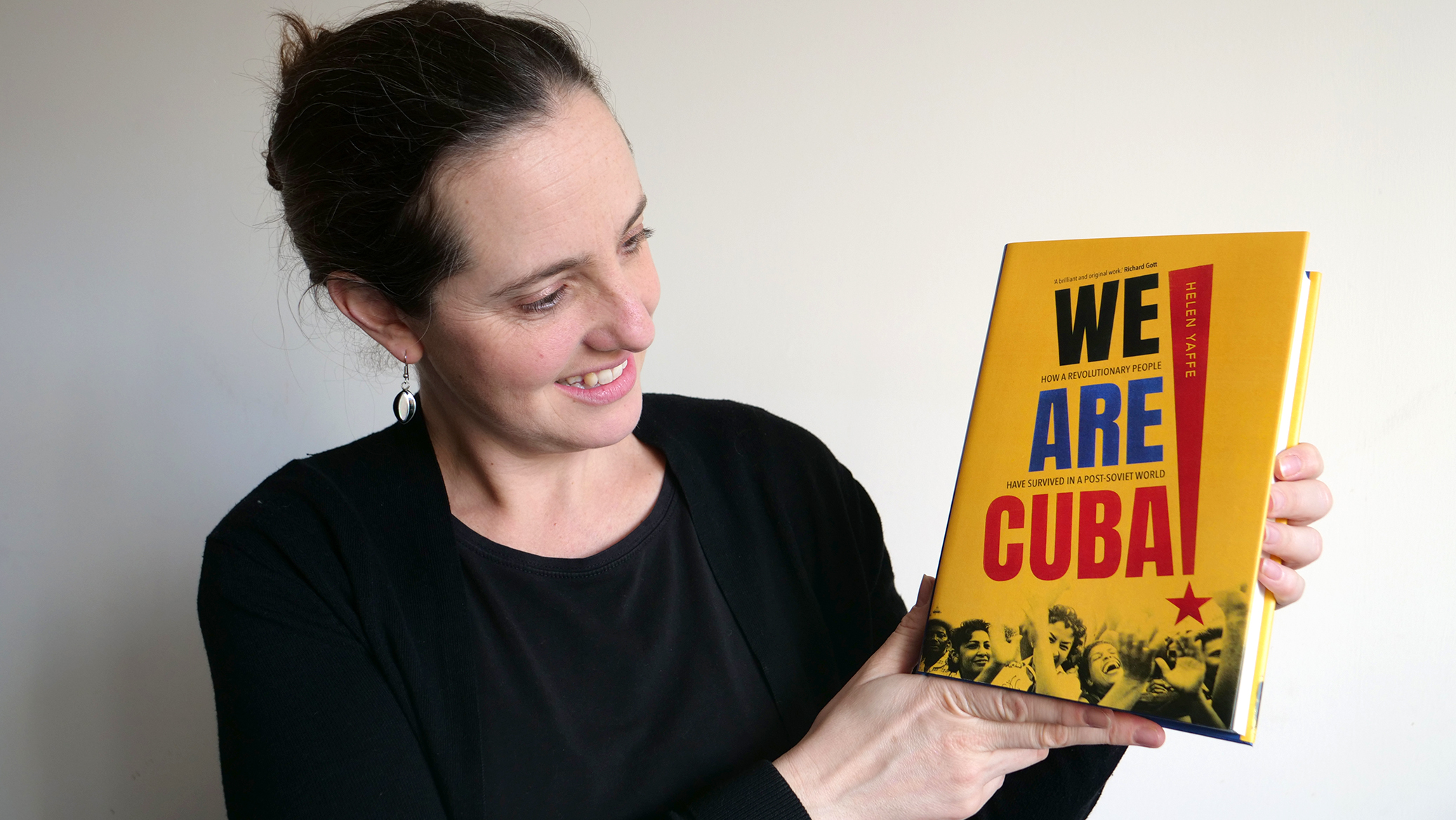
Helen Yaffe
Writer
3
APPEARANCES
3
PODCASTS
Sep 24, 2026

speaker_1MODERATOR
I'd say about a quarter to a third of the room, actually.

Helen YaffeGUEST
And so I'm imagining the rest of you know something about Cuba, know at least what's going on.
Helen YaffeGUEST
So you will have heard the absolutely disgusting and shocking statements that have been coming from particularly President Trump, US President Trump.
16 MINS LATER
speaker_1MODERATOR
OK,

Helen YaffeGUEST
I mean, the one thing that we can say about Trump is that he is very open about his intentions, and in some ways the mask has fallen of saying, "We want to see democracy and human rights in Cuba," because it's almost impossible to sustain an argument about human rights when you've implemented an oil blockade since the 29th of January 2026, which means that hospitals have had to close to all but emergency treatment.
Helen YaffeGUEST
And we're hearing terrible heart-rendering stories about the babies in the incubators in ICU units.
Helen YaffeGUEST
And when the electrical system goes off 'cause there's a blackout, they have a generator, but there's a lag between, you know, when the generator can come on, and the medics have to rush to these incubators and hand pump, you know, manually the ventilators to keep these poor babies a-alive.
Helen YaffeGUEST
I think it's very difficult to talk about your concern for the Cuban population or its human rights when this oil blockade also affects 85% of homes in Cuba which rely on electricity to pump water into them, when transport is almost paralyzed except for the electric vehicles that have been very quickly getting into Cuba in response.
Helen YaffeGUEST
So Trump has been clear, he said he expects to have the honor of taking Cuba, which is quite an astonishing statement in the context.
Helen YaffeGUEST
But Trump has also made clear that he would like the old elite to turn to Cuba and redeem their power and their property, and that is something that the Cuban population, whatever their view on the current government or socialism as a concept and, or anything else, they are...

Tessa FlemingHOST
He said, "I think the majority of Cubans want to be capitalist, not communist." What's your own take on that and whether or not there's any truth to that statement?


Emma VigelandHOST
It was difficult, of course, I would imagine, for Cuba to kind of, uh, reset after the fall of the Soviet Union and say, like, "How can we make our economy resilient in spite of this blockade right off our shores and the US trying to ice everybody out from doing business with us?" Like, what, what were the difficulties? What were the different paths discussed, and where does that bring us today?
Helen YaffeGUEST
So I mean, the first thing to understand about Cuban socialism and, you know, its resilience, why they continued when the Soviet bloc collapsed, is that for Cuba, socialism is the system that they've adopted in order to struggle against underdevelopment and for real sovereignty, right? So social justice and sovereignty are the keys that link the Cuban struggle for independence to the post-1959, um, socialist, the development of socialism.
Helen YaffeGUEST
And it's that commitment that sees the Cubans even today, you know, even Cubans in the street today who maybe don't support the government, maybe are full of criticisms, don't regard themselves as socialists, but they, um, you know, really are committed to sovereignty and social justice.
Helen YaffeGUEST
So with that in mind, the first point is that when the Soviet bloc collapsed, the Cubans, um, made a decision that they would stick with socialism.
Helen YaffeGUEST
How were g-they going to do that when eighty-seven, eighty-six percent of all of their trade and investment was with the socialist countries? And remember that the United States had worked hard in the early 1960s, as it is again today, to make sure that all the governments of the Americas cut off relations with Cuba.
Helen YaffeGUEST
Now, Cuba has, uh, made great progress in, in reversing that situation, but we're seeing, uh, the same happening today.
5 MINS LATER
Emma VigelandHOST
But, um, th- that's I guess where I, I would-- I'm wondering if you could, uh, help us understand better, like, the depth of the humiliation that Cuba inflicted upon the United States and how Rubio, who seems to be driving policy here on this issue, um, is viewing American foreign policy in that light.