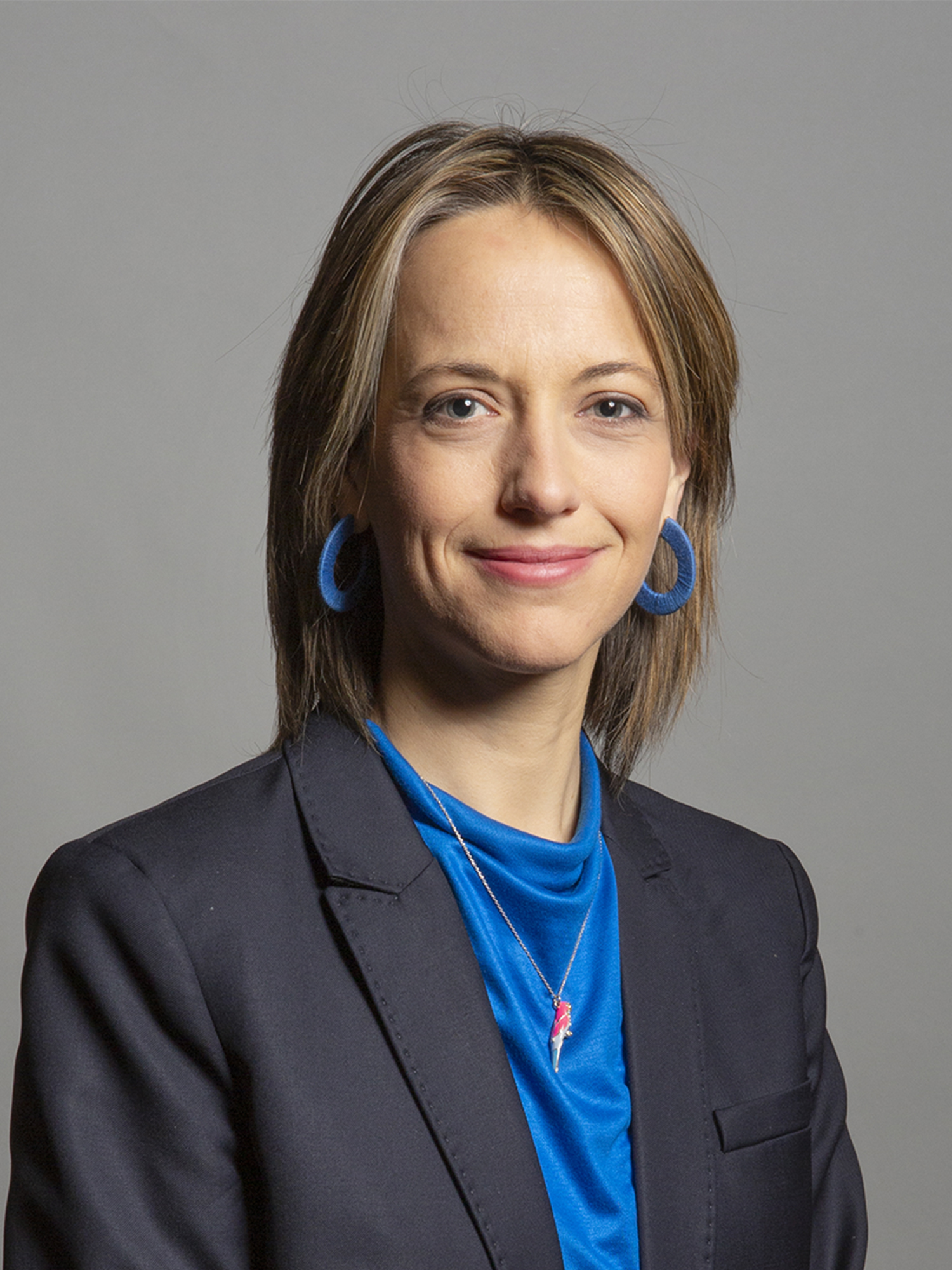
Helen Whately
Shadow Secretary of State for Work and Pensions of the United Kingdom
10
APPEARANCES
7
PODCASTS
Oct 6, 2026


Iain DaleHOST
Now, how much of a difference will that make, A, to young people and B, to potential employers?

Helen WhatelyGUEST
That's one of the things I've been working on as well alongside some of the policies.
Helen WhatelyGUEST
But if you're a young person coming on to benefits from day one, you have to get involved with a get to work programme.
Helen WhatelyGUEST
But the other side of that equation, in essence, is there have to be the jobs for young people to go to.


Tom PopeHOST
What's your vision for how a Conservative government would want to be supporting people who are out of work due to ill health or disabilities?
Helen WhatelyGUEST
I mean, the sta- the starting point is clearly that the system that we have isn't working.
Helen WhatelyGUEST
Uh, it's not working for those who are seriously sick and disabled, who are often really struggling.
Helen WhatelyGUEST
It's also not working for those who are less, uh, sick and disabled, but finding that, uh, having an income through a combination of Universal Credit, Universal Credit Health, uh, and PIP, uh, even though, of course, as you just said, Helen, that PIP is a benefit that you can get whether you are in or out of work.
Helen WhatelyGUEST
The reality of it is that people really worry that they will lose, uh, their PIP if they do work, and there are examples of people, in fact, for whom that has happened.
29 MINS LATER

Tom PopeHOST
What's your vision for how a conservative government would want to be supporting people who are out of work due to ill health or disabilities?
Helen WhatelyGUEST
I mean, the sta- the starting point is clearly that the system that we have isn't working.
Helen WhatelyGUEST
Uh, it's not working for those who are seriously sick and disabled, who are often really struggling.
Helen WhatelyGUEST
It's also not working for those who are less, uh, sick and disabled, but finding that, uh, having an income through a combination of Universal Credit, Universal Credit Health, uh, and PIP, uh, even though, of course, as you just said, Helen, that PIP is a benefit that you can get whether you are in or out of work.
Helen WhatelyGUEST
The reality of it is that people really worry that they will lose, uh, their PIP if they do work, and there are examples of people, in fact, for whom that has happened.
29 MINS LATER

Helen WhatelyGUEST
Exactly as you picked up on that, we have a big, big problem as a country of one million young people not in education, employment or training, the NEETs, and it's been getting worse under Labour.
Helen WhatelyGUEST
What we're seeing is young people coming out of education, coming out of school and going straight on to benefits and being left there, sitting at home, maybe firing off some applications, maybe not, but not making any progress.
Helen WhatelyGUEST
That is not okay for people so young when they should be starting off in work and getting somewhere, earning their first paycheck, sitting at home and instead getting used to claiming benefits.
10 MINS LATER

Mark SidwellHOST
But do you think going in with a message of cuts and this sort of fiscal realism can win voters over, can get you up in the polls, can sort of succeed in being a popular message?

Helen WhatelyGUEST
Yes, so this is my policy to tackle the NEETs crisis where we have one million young people not in education, employment or training.
Helen WhatelyGUEST
And you've got young people leaving school, leaving education and going straight on to benefits and being stuck at home.
Helen WhatelyGUEST
So what we're going to say is if you're a young person aged between 18 and 24 and you haven't held down a job and you turn up and you want to claim benefits, you are going to have to get onto our Get to Work programme.
Helen WhatelyGUEST
And only as a result of fully participating in that will you get a Get to Work allowance.

Ian CollinsHOST
But things will have to go a whole lot further in that department, won't they? Because this thing is going to fall apart quickly.


Fiona BruceHOST
Um, Helen, why don't you kick us off? Why don't you explain what this policy is and, and maybe why you didn't introduce it when you were in power?
Helen WhatelyGUEST
I mean, fundamentally, we have a problem that our welfare bill is out of control, and we can't afford it as a country.
Helen WhatelyGUEST
We also have a problem of people long-term unemployed, and I'm talking here about people who could be working, who should be working, but aren't.
Helen WhatelyGUEST
The policy we announced today is about for people who, uh, for the first six months of job seeking, you can claim universal credit as usual.
18 MINS LATER

Jeremy KyleHOST
And I get the feeling in the country that that's a gathering feeling, that people, you know, hard-working Brits, Helen, have had enough really, and, and they want change.
Helen WhatelyGUEST
I have a lot of conversations like this with people who are really frustrated.
Helen WhatelyGUEST
Their taxes have gone up, and they see people, and they know people who are claiming benefits, particularly the sickness benefit system, and this is where we've seen this PIP system, the number of claims going up and up and up.
Helen WhatelyGUEST
So we've got millions of people now claiming sickness benefits, particularly this rise in claims for low-level mental health problems, anxiety, and ADHD.
Jeremy KyleHOST
Because more than anything, that gets you out of bed, gets something on the CV, and motivates you, doesn't it?
Helen WhatelyGUEST
Well, well, I dis- disagree with what you've just said there, and I hear it, and I hear it from people I speak to all the time, clearly out and about at my constituency, who are very impressed by Kemi Badenoch as the leader of our party and see that she's clearly different from some of the leaders we've had before.
Helen WhatelyGUEST
Um, what's interesting is that what we're also seeing is, you know, to the extent that people are choosing between, say, Reform and Conservatives, actually Reform are copying us on quite a few policies.
Helen WhatelyGUEST
But we first announced this policy last autumn as part of our announcement of twenty-three billion pounds worth of savings from the welfare bill, and we said that we'd stop benefits for foreign nationals, which, uh, we said will save us seven billion, and we also announced this policy at the time.
Helen WhatelyGUEST
Today, we're putting out more detail about the policy including, for instance, the number of homes that we envisage would be freed up for British citizens to move into.
Helen WhatelyGUEST
On many occasions, we've seen Reform copying our policies, as I said, often getting them wrong and doing it in a different way from us.
Ian CollinsHOST
But have you ever, seriously, as a, as a, a, a minister, as a shadow minister, as a constituency MP, when you're pounding the beat down there in Faversham at the weekends and wherever, have you ever met anyone that seriously thinks that the Conservatives own the conversation over Reform on immigration?


Helen WhatelyGUEST
Uh, well, I would start off with first the question, should we have, uh, both the National Health Service and a National Care Service? I think we should have a National Health Service.
Helen WhatelyGUEST
I think the idea that we would turn what is currently a local, uh, service, locally commissioned by local councils, but delivered by often family businesses, lots of small care agencies, yes, some bigger companies, uh, charities, all sorts of organizations, into a big national thing, well, I don't see that as being the right way forward for our social care system.
Helen WhatelyGUEST
It's not something, if you look at the best countries around the world are doing social care, they don't do it that way.
24 MINS LATER
speaker_7UNKNOWN
Does that mean-
Iain DaleHOST
07:34 on LBC. Now, the Work and Pensions Secretary has set out plans to, she says, fix the broken benefits system and to tackle the perverse incentives driving people to depend on welfare. Liz Kendall said the changes would create a more proactive pro-work system for those who can work while protecting those who cannot. Eligibility for disability payments will be restricted to those with the greatest need. And the test to qualify for the extra Universal Credit payment for health conditions will be replaced. The health-related top-ups will also be frozen for current claimants and nearly halved for new applicants. A package of measures ex-, um, external is expected to reduce benefits spending by more than £5 billion a year by 2029/30. And the government has not given a breakdown of where it expects the savings to come from. Well, joining me on the line is Helen Whately, the Conservative Shadow Work and Pensions Secretary and MP for Faversham and Mid Kent. Helen, very good evening. Now, a lot of these things are things that people imagine a Conservative government might do. So presumably, you welcome them.
Helen WhatelyGUEST
Good evening, hi, Iain, very good to be on your show. Uh, and in fact, yes, during the statement in the chamber when I responded to the Secretary of State, I did indeed welcome several of the things that she announced today, in part because a lot of what she announced was actually re-announcements of things that we had already announced and, indeed, that were either already government policy or consultations in train at the point of which the last election was called. So for instance, two of the things you just mentioned, one, the changes to PIP eligibility, uh, that was one of our policies, and then the other, getting rid of the assessment to, uh, get onto sickness benefits and using what's called a PIP assessment as a gateway, that was, uh, that was also something in train. And in fact, we'd already announced we were getting rid of that Work Capability Assessment, though she's put that back a year. So in fact, my main criticism of the government on this is that they are not being bold enough in their reforms. The benefit bills due to go up, forced costs to go up to £100 billion by the end of this decade. And at a time when we need to be spending more on defense, that is not something that we can afford. And also, in fact, to be able to continue to make sure that there is a safety net there for people, uh, who are severely disabled, we need to make sure that the money goes where it's most needed. And I think bigger, bolder reforms are needed.
Iain DaleHOST
But if you say they're too little too late and you want them to be bigger and bolder, you must have an idea of how to be bigger and bolder and not be too little. I mean, I, I appreciate you're going to have all these policy commissions, um, but surely you can give our listeners an idea of where you think they could be bolder.
Helen WhatelyGUEST
Some specific examples of things that I think that they have, uh, overlooked or, um, haven't, uh, taken on at this point. Um, and, and I can also, uh, yeah, but, but I don't want to preempt the hard work that, th- that we would do in opposition between now and 2030. So some specific examples of things that I think they have missed out on is tackling what are called sickfluencers, where we know that there are people putting videos, making videos, posting online with instructions of how you can defraud the benefit system, uh, and get a greater level of benefits than you necessarily need. And we have said, and in fact table an amendment to the Fraud Bill, that that should be turned into an offense and they should be cracking down on that. That's something that they, uh, uh, have completely overlooked. Another area is where there's been significant coverage about the, um, abuse of the Motability Scheme, where people are getting top of the range cars, uh, without having a, a good case, uh, for it. And another area, and this is, uh, significant and should be discussed sen- sensitively, is where we are seeing a lot of the increase in claims is due to mental health. And it's particularly, for instance, we're seeing it amongst young people who are being signed off sick, for instance, for things like anxiety. Now that is often very real, but actually there's a lot of evidence that with that kind of mental health, um, uh, challenge, people are often much better off in work. And that's something which the government doesn't look like they have really, uh, uh, focused on and taking the action that I think is needed.