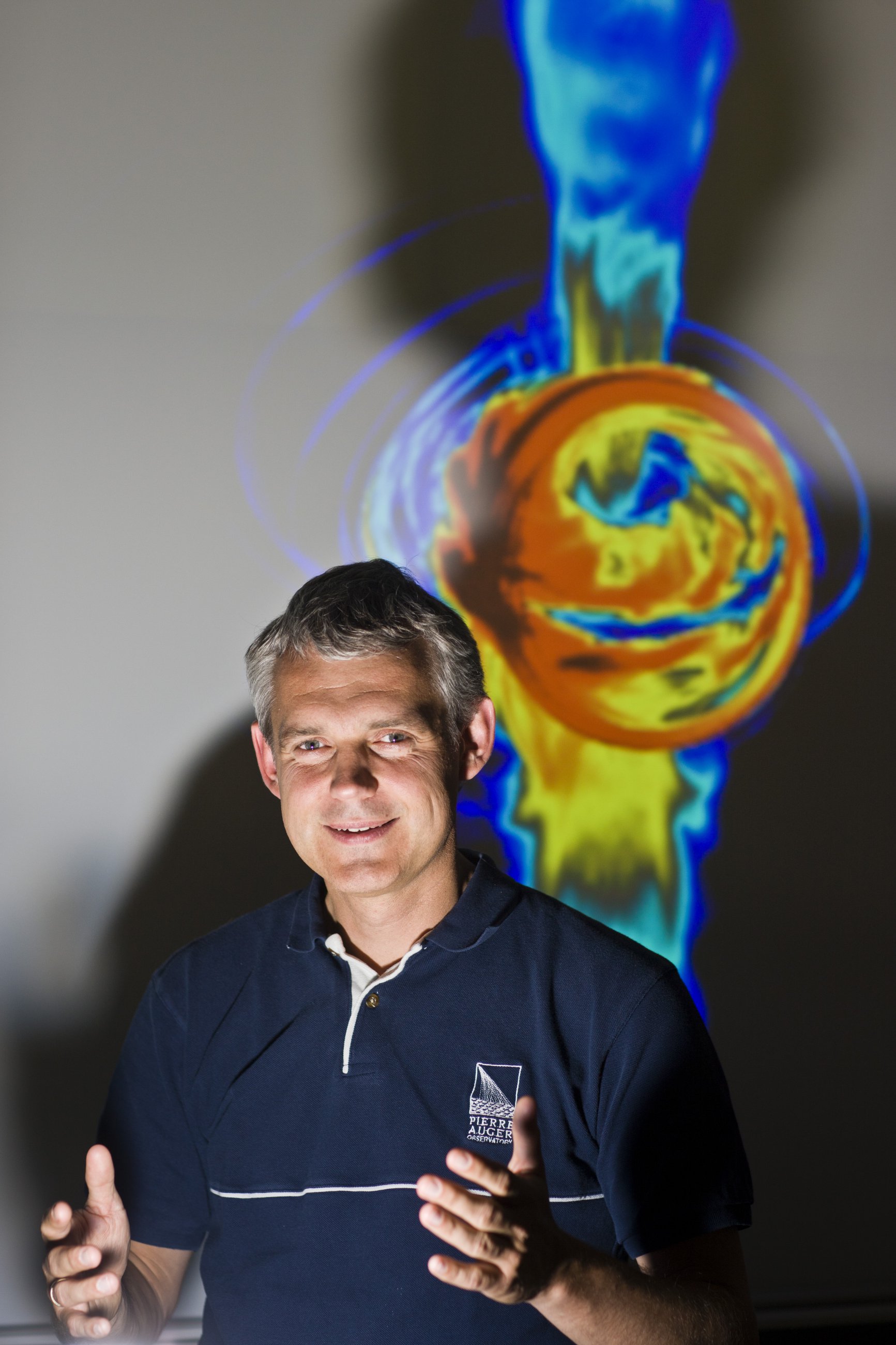
Heino Falcke
German professor
2
APPEARANCES
2
PODCASTS
Sep 30, 2026


Matze HielscherHOST
Versuchst du dann eigentlich im Grunde dei, das Le-, dein Leben lang zu gucken, wo liegt eigentlich die Grenze?

Heino FalckeGUEST
Also wenn da 'ne Grenze ist, versuche ich daran zu rütteln, aber ich kann auch akzeptieren, dass sie da sind.
Heino FalckeGUEST
Und tatsächlich, wenn du dir die Physik anguckst der letzten 100 Jahre, dann haben wir natürlich unfassliche, äh, Entwicklungen mitgemacht.
Heino FalckeGUEST
Also wir können heute Bilder sehen, die keine Generation vor uns jemals sehen konnte.
1 HR 38 MINS LATER


Gregory McNiffHOST
Briefly, before we get to EHT, could you talk about radio astronomy and how the very long baseline interferometry telescope works?
Heino FalckeGUEST
Yeah, I mean, radio astronomy, I think, has a special role because it was sort of developing in the 30s.
Heino FalckeGUEST
Krawczynski in the US, you know, found there was, he was investigating radio, for radio communication, and there was some noise, and he figured out that this noise was coming from the Milky Way.
Heino FalckeGUEST
That was the first time that we were doing astronomy in a color that's not visible to the naked eye, so to speak.
Heino FalckeGUEST
And radio is light as the light we see with our naked eye, just at a much lower frequency.
13 MINS LATER
Gregory McNiffHOST
Could you talk about that and the role of Fourier transform in producing an image from this data?