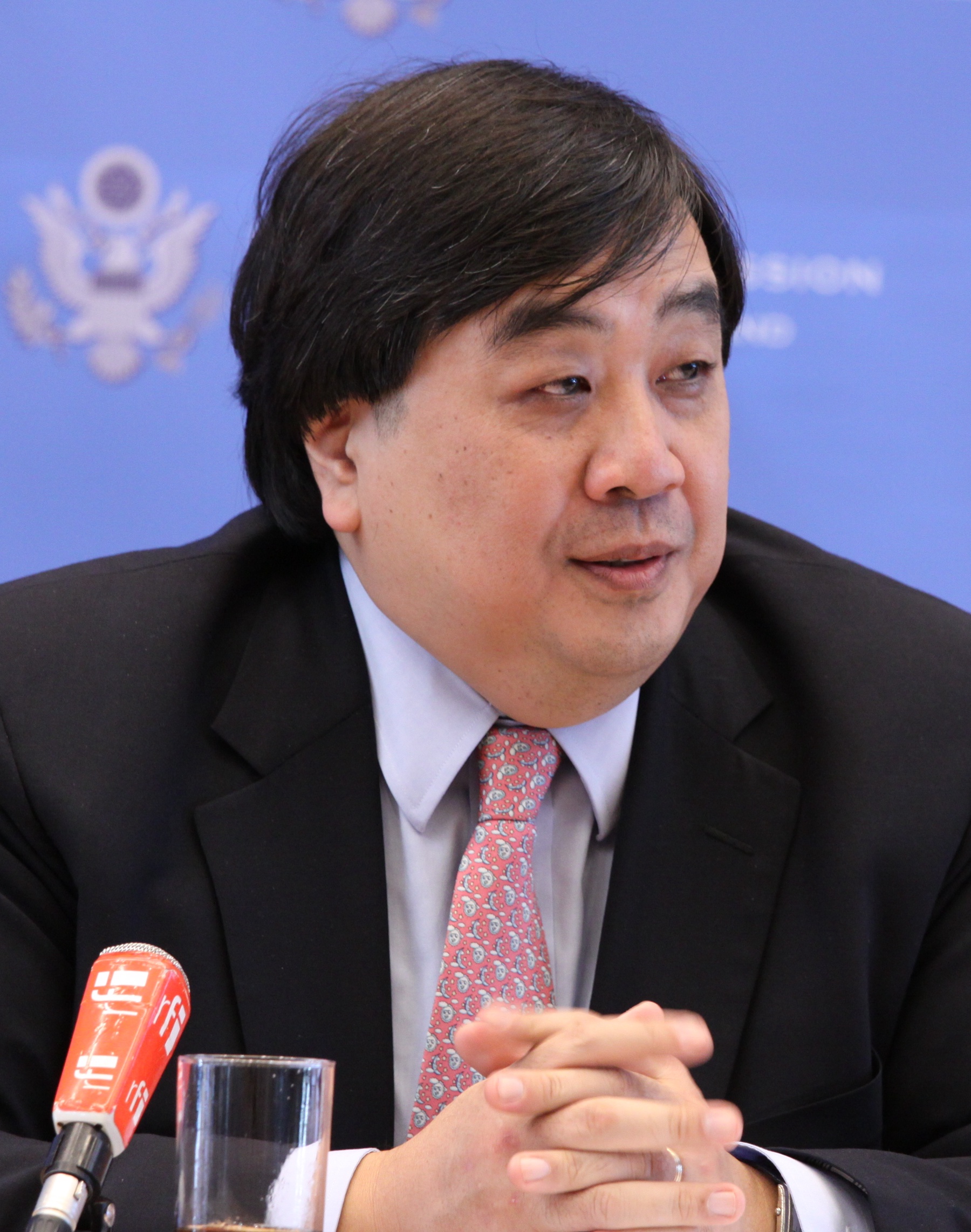
Harold Hongju Koh
Lawyer and former Legal Adviser of the United States Department of State
3
APPEARANCES
3
PODCASTS
Jul 7, 2026

Vanita GuptaMODERATOR
So I'm going to switch a little bit and ask you both to speak about that, but also— Professor Goh, do you feel like we are facing a temporary test of constitutional norms? And or do you think the underlying structure of executive power has been changing for decades across administrations? So as you talk about the imperial presidency, just give us a little bit of historical perspective on this, too.

Harold Hongju KohGUEST
The National Security Constitution in the 21st century, the reason I flag it is – and you would get CLE credit for reading it – is I wrote it twice.
Harold Hongju KohGUEST
I wrote it after the Iran-Contra affair when I thought it was a temporary situation, but the analysis was very simple, which is, as you said, Vinita, this is not a tale of one branch.
Harold Hongju KohGUEST
It's a tale of three branches because the president has structural reasons to overreach, Congress has structural reasons to defer, and the court has structural reasons to rubber stamp.
Harold Hongju KohGUEST
But in the 21st century, particularly after 9-11, It really accelerated from president to president.
41 MINS LATER
Vanita GuptaMODERATOR
What is useful about them and what is not useful about them for the United States context?


Alexis MadrigalHOST
What was it intended to do, and has it actually been the check on presidential power that perhaps Congress intended?
Harold Hongju KohGUEST
Um, the War Powers Resolution was adopted in 1973, and you can think of it as a no more Vietnams statute.
Harold Hongju KohGUEST
It was designed to prevent what happened during the Vietnam War, which is a slow, creeping war that ends up, uh, uh, taking a huge amount of, uh, resources, human, uh, capacity and, um, uh, and time.
Harold Hongju KohGUEST
Um, the way that it was designed to work was that there was an automatic trigger when armed forces of the United States, that's the term that's used, are introduced into the land, sea, or airspace of another country, and when that event occurs, 60 days later, the president either removes the troops or, uh, gets, uh, uh, approval by Congress.
Harold Hongju KohGUEST
Now, there's a, a catch which may affect this now, which is that the president can extend for another 30 days by certifying to Congress in writing that an unavoidable military necessity requires it regarding the safety of our troops.
Harold Hongju KohGUEST
And my guess is we may see that today or tomorrow from the Trump administration.
40 MINS LATER
Alexis MadrigalHOST
The only consequence was that Republicans voted to rebuke him." Do you see that as a sort of precedent for the current thing, or was the situation quite different?
Harold Hongju KohGUEST
Uh, no, and I, I was legal advisor of the State Department under Obama during that period.

Harold Hongju KohGUEST
Yeah, well, first of all, again, I don't think this is going to survive because compared to the UN, which we're already a part of, this is not a representative body.
Harold Hongju KohGUEST
And the UN system is already facing a financial crisis It's an all-male group at a time in which the UN system has worked hard to try to give voice to all different groups in society.
Harold Hongju KohGUEST
So again, it's something that has a voracious appetite that far exceeds what it can actually perform.
Harold Hongju KohGUEST
I think the most important thing, which Leila referred to before, is that this is a president who in his second term has shown a striking shift from being against forever wars to performative militarism.
14 MINS LATER

Michael ScharfHOST
Turning back to Harold, Harold, is this a legitimate concern? Does that keep you up at night