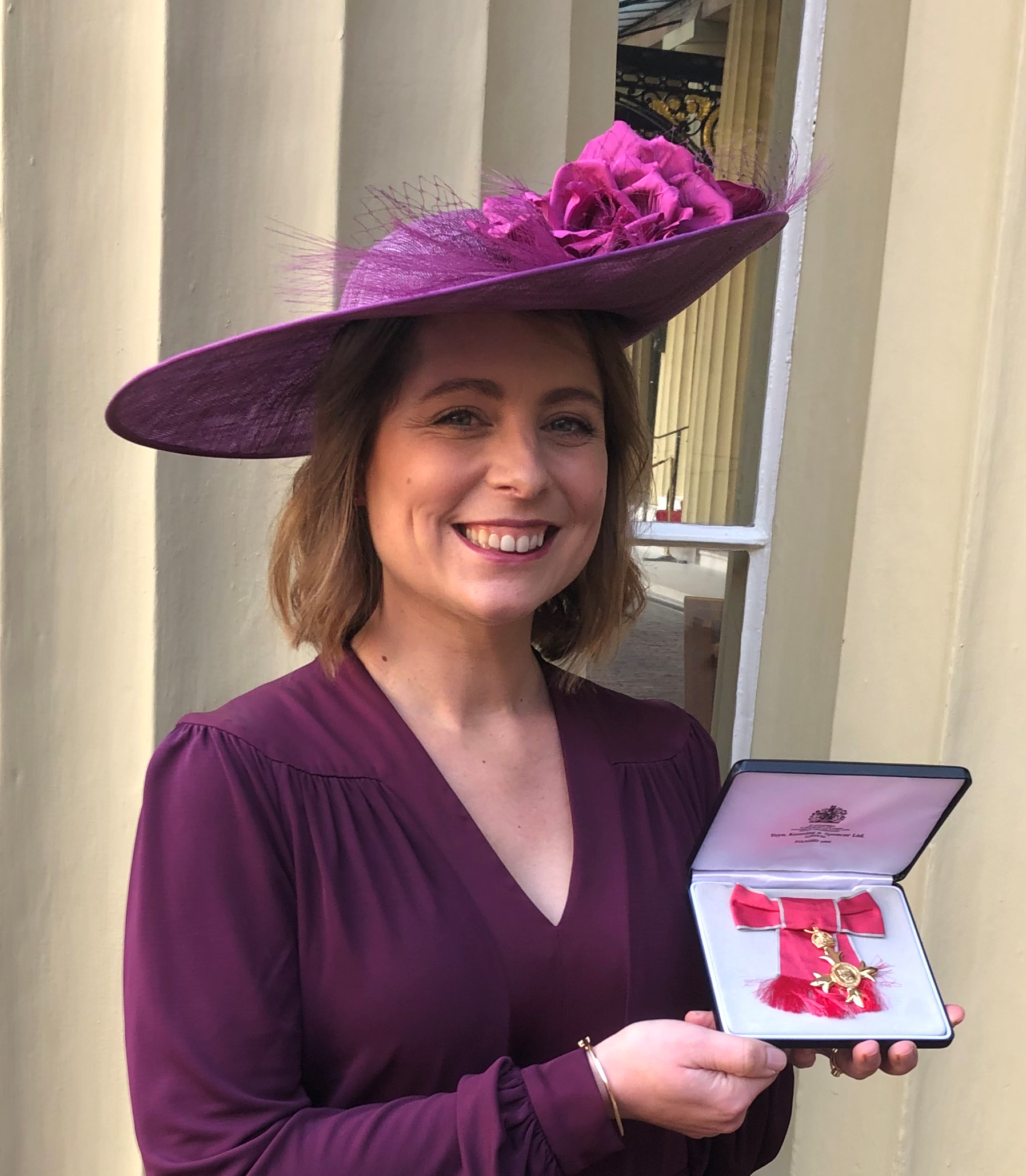
Hannah Cloke
Hydrologist
5
APPEARANCES
5
PODCASTS
Sep 24, 2026

speaker_0HOST
So I wonder if you could just start by briefly summarizing some of the main issues regarding climate change at the moment.

Hannah ClokeGUEST
Well, that's a really easy question, isn't it? [laughs] Because, because there are so very many.
Hannah ClokeGUEST
And yes, here in the UK we've had, uh, three heat waves and possibly, you know, it's, it's pretty hot now in September when we're recording, um, so it's been a very unusually hot summer.
Hannah ClokeGUEST
And heat waves are one of the clearest indications of our, uh, climate changing.
Hannah ClokeGUEST
You know, the, the relationship between those higher temperatures, those longer periods which are above a high threshold temperature, you know, that is a very strong footprint of, of our changing climate.
Hannah ClokeGUEST
So obviously we've had wildfire in the, you know, in the UK that's, that's, um, been really quite a bad season, but elsewhere it's been absolutely terrifying, uh, in, in Europe and elsewhere in the world this summer.
speaker_0HOST
I'm glad you mentioned the, uh, the, the flooding in 2021 and, and also the flooding in Britain because to what extent do you think these are a consequence of climate change, the, the warming of the atmosphere and the, the fact that the atmosphere for every one degree centigrade increase in sea temperature, the 7% increase in the amount of moisture taken up into the atmosphere? I mean, is that broadly correct?


Abdul HaleemHOST
For the average person out there, can you explain, like, in simple terms, um, how climate change is affecting the weather that we're seeing in the UK right now?
Hannah ClokeGUEST
Yeah, and heat is one of the easiest things to explain because as we, as we burn the fossil fuels, like, that, that, all of those greenhouse gases go up into the atmosphere and they trap the heat just like a greenhouse.
Hannah ClokeGUEST
Just like, in fact, if you've got a conservatory or in fact, if any of your homes have been trapping the heat through the window, the, it comes through the window and it can't escape anymore.
Hannah ClokeGUEST
And so that's heating up the atmosphere, and that heat kind of gets into the ocean as well, so the ocean gets hotter and hotter and stores that heat for longer.
Hannah ClokeGUEST
And that moves around the planet, and it changes our weather systems in lots of different types of ways, but mostly because it's hotter.
Hannah ClokeGUEST
Um, and hotter air can hold more water, so we often see really heavy rainfalls become even heavier because the atmosphere can hold more water.
Hannah ClokeGUEST
So we've seen not only heat waves and fires and things to do directly with the heat, but we also can see worse kind of heavy rainfall storms as well because of the heat energy in the atmosphere.

Pete RossHOST
So what's so different about this year, and how bad is it? Professor Hannah Cloke is Regius Professor of Meteorology and Climate Science at Reading University here in the UK.
Hannah ClokeGUEST
It's not quite yet the worst fire we have seen, but we're very early in the summer.
Hannah ClokeGUEST
And of course, we've got tourists being evacuated, and that's very, very scary indeed for those people who are involved in that.
Hannah ClokeGUEST
So we've had a bit of a wet winter in, in many places that has allowed that vegetation to grow, and then we've had no rain at all, so it's dried out.


Hannah ClokeGUEST
Well, the first thing is it is a little bit scary and I think we have to realise that.
Hannah ClokeGUEST
It's not quite yet the worst fire we have seen, but we're very early in the summer.


Chris SmithHOST
When water has to go from land out to sea, what affects how quickly it can do that, and what's the most optimal solution? Is it to have massive rivers that are really deep, unobstructed, and they can flow really fast, or is it to keep the water on the land and let it trickle more gently into whatever waterways we've got and make its way gently out to sea?
Hannah ClokeGUEST
If we engineer our rivers and make them deeper and wider and bigger, that can carry the water away quicker.
Hannah ClokeGUEST
But it can mean that we have really quite violent, huge rivers that are moving very, very fast, and that are difficult to control.
Hannah ClokeGUEST
And when we get a very big flood come along, that means that those rivers can flood very violently indeed.
Hannah ClokeGUEST
It's much better to try and hold on to that rain wherever it falls across the landscape.
Chris SmithHOST
These are areas where we need to have special measures to make sure we've anticipated the threat, and we've, we've used all of the things available to us to try to mitigate"?