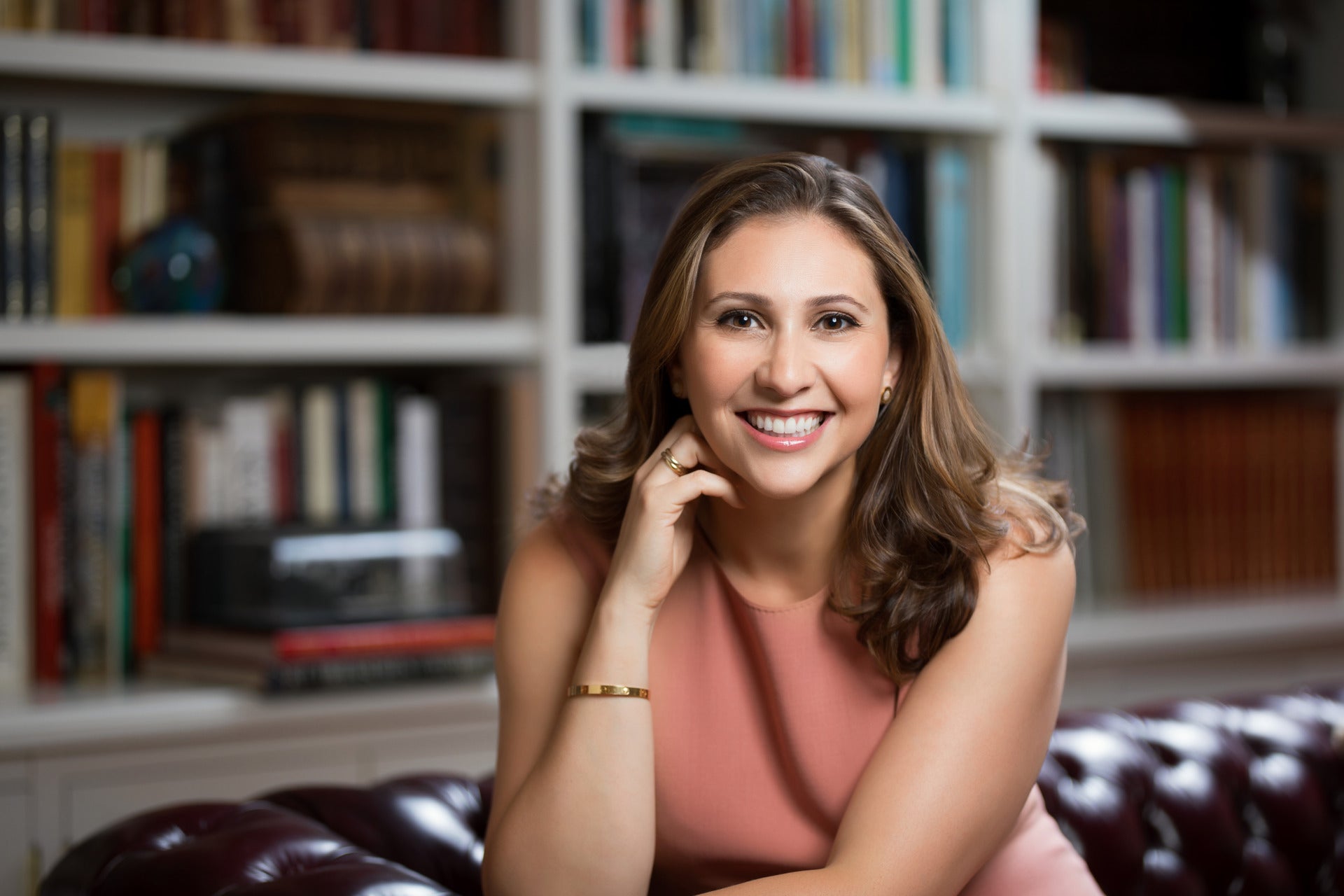
Hagar Chemali
American satirist and writer
25
APPEARANCES
9
PODCASTS
Oct 15, 2026

Hagar ChemaliGUEST
Particularly in that period, they were so degraded, so humiliated, so, by the way, penetrated by the Israelis that they also kind of felt seen and felt paralyzed and they acted as such.
Hagar ChemaliGUEST
The number of commanders that had been killed, you know, they suffered a significant blow.
13 MINS LATER
Ammi HirschHOST
If I were to ask you, where will we be three years from now? Will there be a peace accord? What would you say? Are you optimistic about that?

Hagar ChemaliGUEST
or whether it's later on after President Trump leaves, is somewhat irrelevant because he plays the long game.
Hagar ChemaliGUEST
And it benefits him to watch US resources sucked by whether it's the Iran war, whether it's aid to Ukraine, well, aid to Israel, but aid to Israel was only, you know, grew during, you know, shortly after October 7th, you know, but whatever it is that looks like it's expending national U.S. treasure.
Hagar ChemaliGUEST
And by the way, we haven't even reached the, I'm a believer that things will escalate significantly after the elections when it comes to Iran.
Hagar ChemaliGUEST
And we can talk about that later, but the reason I mentioned this is that because they discussed Iran, to your point about the context, they discussed Iran really didn't get very far.
12 MINS LATER
Hagar ChemaliGUEST
And we were I was getting ready for class and I had the TV on and I always had a TV on.
15 MINS LATER

Ron SteslowHOST
So how are both of you, each of you, thinking about the financial surveillance and control legacy specifically of 9-11? And how did we get here? And Hagar, I'll let you take the lead since Nick led off on the other

31:04

What do we need to do to reform the United Nations, to make it a more effective organization in the eyes of the American people?
Hagar ChemaliGUEST
So I love that you brought this up because people always assume that because I was spokesperson at the U.S. Mission to the United Nations that I'm going to tout the U.N. as this amazing institution and glory.
Hagar ChemaliGUEST
And it is because it has become completely feckless in achieving its mission.
Hagar ChemaliGUEST
And it is now, as you said, facing a real it's not just a crisis, it's an existential crisis as to whether it is needed in this world because it has been unable to prevent massive conflict.
Hagar ChemaliGUEST
or efforts by dictators and authoritarians to lop off a piece of their neighbor's land, like Russia did to Ukraine, it's unable then to, if it can't achieve its mission, then what is it doing taking up valuable real estate in New York City? John Bolton used to say in his book, he said that if you shaved off the top 12 floors, of the United Nations Secretariat building in New York, it would be exactly the same.
Ron SteslowHOST
Across their national statements and their international committee archive, though, I could not find a single one criticizing China, Iran, Cuba, or Venezuela, or in general criticizing their authoritarianism or human rights abuses.
Hagar ChemaliGUEST
So first, none of what you said surprised me whatsoever regarding the way they congratulated Maduro on winning or their views toward Venezuela and Cuba and Iran.
Hagar ChemaliGUEST
And some of it you saw playing out in protests too, right? During the Iran war, they came out basically, these folks came out.
Hagar ChemaliGUEST
I mean, I know those are random protesters, but they're all far left and have come out straight up pro-Iran regime.
Hagar ChemaliGUEST
And it's shocking to see, but it's not that surprising given what they stand for, which is very, first of all, very anti-America.
Hagar ChemaliGUEST
And if you're anti-America, then of course you're going to find you're going to be simpatico with these regimes that feel the same way.
24 MINS LATER


Hagar ChemaliGUEST
But by the way, when you have situations like this is common in war, where you have ceasefires but they, they're very murky, you still have war that kind of continues, or a low-level grade of war, it actually just ends up being an opportunity for sides to go back, rearm, rebuild, re-strategize.

15:06

So what say you? Where are we with the LAF? Are they ready to step up and do what is necessary to defend the sovereignty of their own country?
Hagar ChemaliGUEST
Okay, so this is such a great question, and, and I'm get- I get this question a lot, as you can imagine, because I think a lot of folks feel as though, all right, you've got this agreement, and now it's your turn, Lebanon.
Hagar ChemaliGUEST
And so the reason I would say to have hope in this is because it requires every single thing happening at the same time.
Hagar ChemaliGUEST
Every single player, party, step has to happen at the same time for this to work.
19:20
I mean, bottom line, are the Lebanese people ready to live in peace with Israel?

Hagar ChemaliGUEST
So I'm so glad you mentioned the part about, Jay, about, um, the fact that there is a lack of appreciation of an inevitability there in terms of a confron- a confrontation with Iran because you see this propensity for s- for a desire for stability in the region.
Hagar ChemaliGUEST
In Lebanon too, we just want things to be stable, and I, and to me, it's shocking because I keep thinking to myself, not because, you know, listen, I understand I live in the, in, I l- I live a privileged life in the United States, and it's comfortable, and so I'm not sitting in the middle of a war zone.
Hagar ChemaliGUEST
So I don't wanna be dismissive of it, but I also think it's very naive to assume that by pushing policies that just keep a lid as much as you can, just keep a lid on it, you know, we don't want this stab- instability, that they would assume that it wouldn't be worse years down the road.


Hagar ChemaliGUEST
And it sounds—a lot of people—it sounds like a ceasefire would be a good thing, right? Normally, that sounds like something you'd want in Lebanon or anywhere.
Hagar ChemaliGUEST
But the fact is that if we focus on Lebanon specifically, it's not a—there's no deal.
Hagar ChemaliGUEST
We've now told one of our most important allies in the world that we don't want them defending themselves.


Hagar ChemaliGUEST
I do believe, I think it very, it would be very narcissistic of us to think that we are the only life form in this universe, um, or in the galaxy.
Hagar ChemaliGUEST
And so I will be honest with you, there is a gap between what I'm seeing in the press and what I hear from sources in the, in the government, in different agencies, who just keep telling me, "Look, honestly, we don't even know." They tell me this, "We don't even know what, where the talks are going on this because it's, they're so far apart.
Hagar ChemaliGUEST
They're not even really able to get to the point where they're discussing, 'Okay, and how much money, and how would we do it, and blah, blah, blah.'" So I just...
Hagar ChemaliGUEST
My, my, my view is that it's more likely to stay in this very murky status quo now-
Hagar ChemaliGUEST
in Venezuela, and then, and everything that, that preceded that, it was the first thing I thought of, was...

Hagar ChemaliGUEST
... you're breaking the ceasefire, and we're gonna return to war." So what happened? The Iranian regime, uh, lobbed missiles in the strait and at the UAE, and we didn't return to war.
Hagar ChemaliGUEST
And the problem with that is that if, if Trump's, uh, bravado here, he sent 50,000 troops to the region.
Hagar ChemaliGUEST
If the US doesn't appear as though it's willing to back up these statements with military action, then th- the Iranian regime looks at it as a significant point of weakness.
Hagar ChemaliGUEST
So on one hand, yes, you have these efforts to one-up each other publicly, and you see Trump saying, oh, you know, yes, t- uh, talks are going well, but I'm not...
8 MINS LATER
Hagar ChemaliGUEST
He announced a, a s- like I think it was a $500 billion investment when he became president, and he said, "This is about China," because China is heavily investing in AI.
Hagar ChemaliGUEST
Because the race is, the race is viewed the, as being whomever has the most advanced AI or, and, and as the, the greatest number of, of AI models and so on, that's the person that's gonna win the AI race, and that's the person who's gonna basically control the world.
34 MINS LATER


Jonathan LemireHOST
What's your sense? If the blockade holds, the president stays the course here, how long can Tehran put up with it?
Hagar ChemaliGUEST
Jonathan, this is a really good question actually because we, it's always easy to believe that, that dictators will fall and that these regimes will fall, and I've been on the other end of making that mistake when I handled Syria at the White House, that we thought that Assad was near falling.
Hagar ChemaliGUEST
And the mistake you usually make is that we don't really realize the extent to which other governments and, and allies will jump in.
Hagar ChemaliGUEST
Uh, Russia e- even with some reports here and there about intel assistance is, is not gonna save the Iranian regime.
Hagar ChemaliGUEST
China as well, there have been, there were past exports, but they're not gonna go in and get into a proxy war with the United States.

Hagar ChemaliGUEST
Well, uh, one of the things I'll be looking for is to see how different Iran's public position is from where these talks are rumored to be going.
Hagar ChemaliGUEST
Because we don't have really the public side on the United States, which is normal.
Hagar ChemaliGUEST
We're not, uh, uh, US negotiators don't share, um, their proposals or, or where they're headed.
Hagar ChemaliGUEST
We know, we only know that President Trump has said that there is more agreement on elements of the original 15-point plan than, uh, and, and so for that reason, he has hope.
Hagar ChemaliGUEST
I mean, almost everything in that list is a non-starter, things like the US military presence leaving the region entirely, uh, things like a r- withdrawal of all sanctions, that the Iranian regime controls the Strait of Hormuz, something that's frankly laughable.
speaker_12HOST
Uh, how do you take into consideration the fact that at the end of the day, this maximalist position still exists, which is with regards to Iran's ability to enrich uranium to potentially create a nuclear weapon? And what do you think ultimately changes the calculus here?

Hagar ChemaliGUEST
Um, the thing that, the thing to really remember here, though, I will say to your earlier point about killing all of these leaders, it's not insignificant.
Hagar ChemaliGUEST
I don't wanna say crumbling, because it's very much intact, but they, nobody trusts each other.
Hagar ChemaliGUEST
The, you know, [laughs] where do I begin? Let's try and summarize this 'cause I know you...
Hagar ChemaliGUEST
Um, I, I think that the coverage of him this way is flat-out dangerous because it implies, it gives him credit and a power that I don't think he deserves.
Hagar ChemaliGUEST
I know they're trying to view this, they're trying to be out ahead and kind of be like, "Well, regardless of whether he's good or bad, you have to view him as a figure in history who was influential, who had amount...
Hagar ChemaliGUEST
this amount of power, who shifted, who changed the dynamic around the region and maybe the world for, you know, in, in such a significant way." And while it is true that he had this outsized power and influence across the region in a really, really negative way, I think that the, I think that the media in this regard, they have to ask themselves what their responsibility is.
10 MINS LATER
speaker_6HOST
I'll be right behind you.
Hagar ChemaliGUEST
I hope you know, Mark, how, you know, how much of a service you personally did for this.
Hagar ChemaliGUEST
I know that, you know, you said, for example, that you never saw yourself go, you know, on 60 Minutes, a million people watching, especially given the, the past career you have.
Hagar ChemaliGUEST
I actually view it as an extension of your career, because your career was all about serving this country, and a government, and institutions, and that you believe in.
Hagar ChemaliGUEST
And I understand that as a government person, and how, uh, like, and I view it for me as it's so hard, because when you are in government, you trust, I find most government people, you trust the government more than others on the outside do.
Hagar ChemaliGUEST
And Ron and I have that conversation all the time, because you see all the good that the government does.
Hagar ChemaliGUEST
So then when you see it on top of it so proactively, deliberately bad, it, it hurts all the more.
10 MINS LATER
speaker_0UNKNOWN
And I think to Richard's point as well, Iran has been surprisingly resilient in its ability to hit back.
Hagar ChemaliGUEST
Yeah, but we're also only two weeks into this, so, you know, I'd be care- I'd be careful to come to a conclusion on that just yet.
Hagar ChemaliGUEST
Um, Mojtaba Khamenei, who- the, the son of Ali Khamenei, who's been appointed as supreme leader, is even more hardline than his father, if you can imagine, and more repressive.
Hagar ChemaliGUEST
And he's tied to the IRGC, which is, you know, which is, uh, and which you had implied here is, it says something about doubling down.
23 MINS LATER
speaker_0UNKNOWN
They're not helping Ukraine, uh, and now they're able to profit.


Stephanie RuhleHOST
And they would argue that was a good move because from a military perspective, they nailed it.
Hagar ChemaliGUEST
I mean, when you look at it from that, from a tactical, uh, operational p- e- element, right? There's success for that, right? Um, this is also something that s- this has actually been in the works for a while.
Hagar ChemaliGUEST
At the beginning of the year, we know that Trump wanted to work with Maduro, try to cut a deal with Maduro.
Hagar ChemaliGUEST
When things started to not work out, when it looked like he wasn't playing game, that's when Rubio went in and was like, "Listen, we can have our cake and eat it too.
Hagar ChemaliGUEST
Well, and you know what? Listen, there, there could be an argument for, "You have all these performance metrics, we've reviewed you over the last two years, you're not meeting the me- the metrics and so we're going to give you a three month notice or two month notice," or whatever is normal, right? But when you have this kind of volatility where you, you have people going in, they don't know whether they're going to have a job the next day.
Hagar ChemaliGUEST
And there are a lot of federal jobs, and I was in one of them, that don't translate to the private sector very well, right? I worked in foreign affairs and, and it's very confusing.
Hagar ChemaliGUEST
I've mentored a lot of people who have been trying to leave government as to where they could go and there's kind of a small group, right? But that said, these are, there's another point to this.
Hagar ChemaliGUEST
Federal workers tend to live paycheck to paycheck, it's not a very high salary, you're living in a town that is, uh, high quality of, or high, um, cost of li- living, and you're living paycheck to paycheck, so when you are put, and I, I witnessed this during shutdowns, if you are not, um, well, whether or not, sorry, if you're furloughed it's you're not getting paid, you're not working, but if you're working-
23 MINS LATER
Stephanie RuhleHOST
Hagar, a lot of people might not care about the Jim Comey prosecution, but does this explain why they should?
Hagar ChemaliGUEST
I think it, listen, when I, when I read this article, to me, at first I really had to figure out why, what was the connection being made on free speech? Because given, if you look at the indictment, and again, I'm not trying to, I'm not trying to make, pass legal judgment here on the, on the indictment.

Hagar ChemaliGUEST
I, I don't think it's that the Trump administration doesn't know that or President Trump doesn't know that.
Hagar ChemaliGUEST
It's that, right or wrong, he views the situation like a businessman would, not necessarily as a foreign policy expert would.
10 MINS LATER
Hagar ChemaliGUEST
There's a lot of bellicose, there's a lot of this rhetoric that's very loud, you know, telling people in Tehran to evacuate, saying that the Iranian regime needs this unconditional surrender.
Hagar ChemaliGUEST
I believe ultimately that he wants a deal and he wants to use this rhetoric and this moment in order to force the regime, given how weak it is, given how, how, how much they could, that, that threat that they could crumble if you, if their nuclear program is completely obliterated, the threat that they face that they could collapse, and he wants to use that to force a deal ultimately.
37 MINS LATER
Stephanie RuhleHOST
What is your take? We were just talking about it during break, you know, for all of those business people who said, "We're gonna get tax cuts, we're gonna get deregulation," if you don't have a functioning democracy, you have nothing.
Hagar ChemaliGUEST
First, to, to add on to the general's analysis, uh, which I agree with, you know, the reason this happened now in particular is that you had the... an IAEA report that came out just a month ago where the IA-...
Hagar ChemaliGUEST
Said that, uh, Iran had enriched near weapons-grade material to 50%, um, more than we've seen in a long time, and also that they had enough to produce "ten nuclear weapons." So, as the general said, this poses an existential threat to Israel.
Stephanie RuhleHOST
What's the global impact? For the Americans who are watching tonight, who say, "That's not my country, that's not my news, that's not my business," why is it their business? Why should they care?
Stephanie RuhleHOST
... this is- isn't who we are, but the United States knew exactly who Donald Trump was and they elected him again. And to David's last point, this is exactly who Donald Trump is. So are we fooling ourselves when we keep saying this isn't who we are?
Hagar ChemaliGUEST
That's fair. I mean, international relations typically, and foreign policy, is conducted in this traditional way, and Trump broke all that, and people wanted, uh, the majority of Americans wanted him to break all that. The thing is, I've been in my fair share of these meetings behind closed doors where I have seen US officials argue with foreign officials to the point where they get u- it gets ugly, it gets heated, and people will walk out. Never at the presidential level, but- but often at- at levels that are only a little bit lower. It happens all the time, but it's usually behind closed doors. And the difference with when you have it out in the open is that it makes it very difficult to move forward, because now somebody has to give a public apology, now everybody's going to ask. Uh, then it's gonna make Zelenskyy look like he's groveling. And the only person who wins in this whole exchange is Putin. Putin is the one sitting there watching, you know, drumming his little fingers, laughing, thinking, "This is exactly what I had hoped for." But the part that got me the most upset is that there is a lack of understanding that this is in America's national security interest. Supporting Ukraine is in our interests. It's not a charitable giving to Ukraine.
Hagar ChemaliGUEST
Because if we allow... First, one of the things I like to say is that supporting Ukraine is the best deal of the century. Why? Because we are funding a military that is very capable, very, that soaks up that training and whatever we give, and is very capable, very creative in pushing back on a dictator that wants to completely under- undo the international world order that has been set up since World War II. He is fighting and Ukraine is fighting, all of these people are fighting, not just because they don't want to be under dictatorship, but they're fighting for democracy for themselves and for the rest of the Western world. And we don't have to put one troop down on that- on that territory. We just have to help them do it for us, for all of us. And that's why I say it's the greatest deal of the century. If we allow Putin to, if there's a deal and Putin can go and rebuild and resupply and get his... What's he gonna do? He's gonna move on to Georgia or Moldova or do it again in Ukraine. He's not gonna learn his lesson. History has proven that time and again, and Putin has proven that time and again. And that's why it's so imp- this is in our interest, just as much as it is in Ukraine's and Europe's.