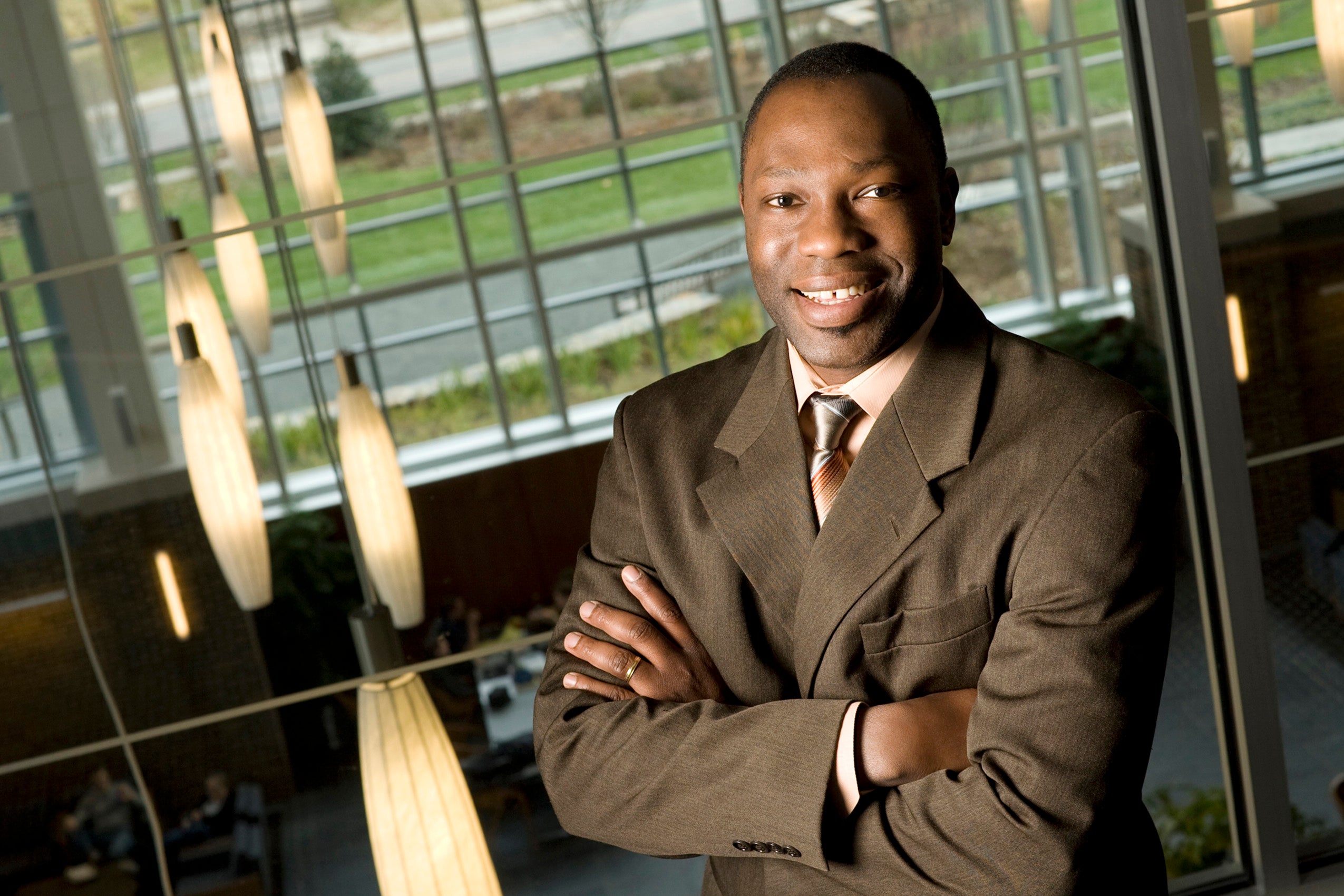
Guy-Uriel Charles
American legal scholar
3
APPEARANCES
3
PODCASTS
Oct 5, 2026


Guy-Uriel CharlesGUEST
So think about the difficulty of carrying out any enterprise, right? Whatever it is that you want to do, all right? And the idea of doing it as a collective action.
Guy-Uriel CharlesGUEST
So within a family, choosing a restaurant, right? Sometimes those mundane tasks sort of reveal the difficulty of collective action because everybody has a different view, everybody has different preferences, and we're all wedded to those preferences, right? And then we can escalate the task to greater levels of difficulty.
Guy-Uriel CharlesGUEST
So restaurant to vacation to moving, right? W- Right? Assuming that the whole family has a choice and a say, right? So we can...
Guy-Uriel CharlesGUEST
Go beyond that to a house of worship, right? So making a set of collective choices in whatever unit, whether small, medium, or extremely large, is extremely difficult.
13 MINS LATER


Matt BushHOST
So why in this moment in our society did you both feel it was necessary to write this and collect this book of essays? Guy, we'll start with you.
Guy-Uriel CharlesGUEST
I mean, I think this moment, 250th, is a moment of reflection for the country.
Guy-Uriel CharlesGUEST
But it is also a time period, given what is going on in our politics and what is going on around the world.
Guy-Uriel CharlesGUEST
to look inward and to ask ourselves the role that law has played, both positively and negatively, in American governance.


Tavis SmileyHOST
But first, Professor Charles, say a word about the Charles Hamilton Houston Institute and the work you continue to do there, sir.
Guy-Uriel CharlesGUEST
Let me just start with actually where you would like to start, because I think your intuitions about what is going on is correct and very much related to the work of the Institute.
Guy-Uriel CharlesGUEST
We have to begin with an understanding that for the last, I don't know, 50 or 60 years since the 1960s, as a result of the civil rights movement, we in this country have had a civil rights paradigm.
Guy-Uriel CharlesGUEST
And at the heart of the civil rights paradigm has been at least a nominal commitment to black equality and freedom.
Guy-Uriel CharlesGUEST
And related to that is the Voting Rights Act of 1965, but also the Civil Rights Act of 1964, the Housing Act of 1968.
Guy-Uriel CharlesGUEST
So a set of core civil rights statutes that have attempted to address the problem of racial discrimination, racial subordination, anti-Black racism that stems from slavery through Jim Crow, and then through the modern era.