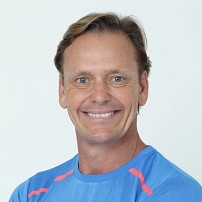
Guy Leach
Guy Leitch is a South African aviation analyst, journalist, and former publisher/editor of SA Flyer Magazine, frequently heard on radio as an aviation expert.
12
APPEARANCES
8
PODCASTS
Oct 2, 2026


Jane DuttonHOST
How hard does it make entry into the cockpit and how hard would it have been for an injured pilot, we didn't know at that stage how injured he was, to open it?

Guy LeachGUEST
Well, this is the fascinating part of this whole story because It's extraordinary that the pilot, who was apparently extremely seriously injured, was able to open the door.
Guy LeachGUEST
Not only that, by the way, he was able to use his transponder to squawk the two emergency codes, 7500 and then 7700.
Guy LeachGUEST
So he really kept his wits about him, and it's extraordinary that he managed to open the cockpit door.
Guy LeachGUEST
The story is that a plumber from Rose 16 came charging into the cockpit and subdued the co-pilot obviously it raises a whole series of other questions about well you know can you rely on the safety of pilots these are in fact pilots may be the weakest link in this whole thing and there's a strong suspicion that the air india crash is in fact uh attempted pilot was pilot suicide as well
Jane DuttonHOST
okay so how often are pilots tested for for mental health and could something like this have been picked up obviously we're still waiting on details but
Guy LeachGUEST
Well, yeah, you could argue, and I'm sure that some people would argue, that this wasn't a mental health incident.
Jane DuttonHOST
How hard does it make entry into the cockpit and how hard would it have been for an injured pilot, we didn't know at that stage how injured he was, to open it?
Guy LeachGUEST
Well, this is the fascinating part of this whole story because It's extraordinary that the pilot, who was apparently extremely seriously injured, was able to open the door.
Guy LeachGUEST
Not only that, by the way, he was able to use his transponder to squawk the two emergency codes, 7500 and then 7700.
Guy LeachGUEST
The story is that a plumber from Rose 16 came charging into the cockpit and subdued the co-pilot.
Jane DuttonHOST
Okay, so how often are pilots tested for mental health and could something like this have been picked up? Obviously, we're still waiting on details.


Guy LeachGUEST
Yeah, well, when you're a sort of, what do they say, a broad-minded and narrow-waisted student, you worry about or wonder about how best to make a difference, you know, full of idealism.
Guy LeachGUEST
And I thought that the big thing in those days, this was the late 70s, early 80s, was the massive housing shortage.
Guy LeachGUEST
And I did a postgraduate qualification in development finance and got a job at a crowd called the Urban Foundation, which was one of the key NGOs at that stage.
10 MINS LATER
Guy LeachGUEST
Yeah, well, you know, when you're a sort of, what do they say, a broad-minded and narrow-waisted student, you worry about or wonder about how best to make a difference, you know, full of idealism.
Guy LeachGUEST
And I thought that the big thing in those days, this was the late 70s, early 80s, was the massive housing shortage.
Guy LeachGUEST
postgraduate qualification in development finance and got a job at a crowd called the Urban Foundation, which was one of the key NGOs at that stage.
Guy LeachGUEST
One of the key operations was indeed low-income housing supply, particularly self-help housing.
10 MINS LATER

Guy LeachGUEST
Yeah, well, you know, when you're a sort of, what do they say, a broad-minded and narrow-waisted student, you worry about or wonder about how best to make a difference, you know, full of idealism.
Guy LeachGUEST
And I thought that the big thing in those days, this was the late 70s, early 80s, was the massive housing shortage.
Guy LeachGUEST
postgraduate qualification in development finance and got a job at a crowd called the Urban Foundation, which was one of the key NGOs at that stage.
Guy LeachGUEST
One of the key operations was indeed low-income housing supply, particularly self-help housing.
10 MINS LATER
Guy LeachGUEST
Yeah, well, you know, when you're a sort of, what do they say, a broad-minded and narrow-wasted student, you worry about or wonder about how best to make a difference, you know, full of idealism.
Guy LeachGUEST
And I thought that the big thing in those days, this was the late 70s, early 80s, was the massive housing shortage.
Guy LeachGUEST
postgraduate qualification in development finance and got a job at a crowd called the Urban Foundation, which was one of the key NGOs at that stage.
Guy LeachGUEST
One of the key operations was indeed low-income housing supply, particularly self-help housing.
10 MINS LATER

Guy LeachGUEST
I'm keen to tell you how it all sort of, for everyone listening, how it all occurred, right? For me personally, I hit 62 and a half years ago.
Guy LeachGUEST
And one of the things that I was really focused in on was what it's going to look like when I'm 70 in 10 years' time being goal-driven.
Guy LeachGUEST
I set these series of goals that I wanted to be able to achieve when I was 70 around physical, mental health and just general life.
Guy LeachGUEST
It was at that time that Brian Johnson, who became famous through that Netflix series on how to live forever, sort of came to the forum.
Guy LeachGUEST
One of the things that I saw that he came up with was a thing called the Rejuvenation Olympics.
7 MINS LATER

Warrick BishopHOST
What was the gap that you saw in the market that really led you to hook up with Paul and seek some advice around creating Next 50?

Motheo KhoaripeHOST
And what is the normal threshold for any airport, even at an international standard in terms of fuel supply? What is expected of you as a supplier?


Jimmy SmithHOST
So if you've got people out there listening, where do I start? What would you recommend?
Guy LeachGUEST
Well, the good news is that it doesn't matter whether you're 20, 30, 50, 60 years of age, any exercise is going to help you.
Guy LeachGUEST
The stats are that if you do something two or three times a week and you run that out for like doing cardio exercise, for instance, like going for a brisk walk or a jog or something like that, within four months, you're 25% fitter.
Guy LeachGUEST
So if you do a couple of times a week of doing body weight exercises or lifting some weights, within half that time, you're 25% stronger.


Jimmy MoyahaHOST
Guy, can we take a look at the economic benefit of introducing this long-haul flight? We know from a South African perspective, there might not be a significant demand of South Africans wanting to particularly go to Madrid, but connecting into a key point such as Madrid, connecting into the European continent, does have almost mutual benefit for South African travellers as well as European travellers.
Guy LeachGUEST
Very much so, especially because Heathrow has got a whole lot more difficulty with transit visas as well.
Guy LeachGUEST
And more importantly, there's an increasing South African presence in the Iberian Peninsula, in Spain, and in particular in Portugal.
Guy LeachGUEST
Portugal, as you may know, has been attracting South African investors with a golden visa program.
Guy LeachGUEST
And in fact, I'm relatively optimistic that Europa will probably soon expand us onto a daily flight and then perhaps even more frequently.
Guy LeachGUEST
And that's great simply because the reality is that we really do need to make sure that we can connect to all points of Europe and the Bad old days of SAA.
Jimmy MoyahaHOST
Could we be looking at South Africa becoming its own hub of sorts, not just for the African continent, but perhaps from a travel perspective globally?


Guy LeachGUEST
So the funny one was, so the first ever professional Ironman race was the Coolangatta Gold, which was, um, born out of a movie in '84, right? And I was just, I was 19 years of age, went up to Queensland, and this race was, um, by far the most ludicrous thing you'd ever do because you had to go and swim, run and paddle from Surfers Paradise to Coolangatta in January heat, um, which was 23K, and then paddle the Ocean Skate back, the rest of the way back to Surfers Paradise.
Guy LeachGUEST
So anyone listening, you know, we've all done that drive from Surfers down to the airport at Coolangatta.
Guy LeachGUEST
Imagine running, swimming and paddling there and back, um, in like 35 degree heat in '84 when, mate, you had no concept whatsoever of what that race was even about because no one had ever done anything like it.
Guy LeachGUEST
So that one is always the one that comes to mind because there was 250,000 people watching it because the movie was, um, was...
Guy LeachGUEST
The, the race, the real race was based on filming, um, footage for the movie and then pretending to add in the, the actors and Grant Kenny for the finish part of the race.
Guy LeachGUEST
So I was out there doing the real race, picked up $20,000 worth of gold, and then a whole professional sport was born out of that race.


Pippa HudsonHOST
Is it something that you think more of us should be worried about? Is this a relatively easy crime to pull off?
Guy LeachGUEST
Yeah, well, the issue is really part of a much bigger problem, and that is that the handling of baggage has simply just not evolved to keep up with the times.
Guy LeachGUEST
I mean, we see it most clearly when we travel and we all just stand around a carousel and wait for our bags to arrive and hope that we take our own bags and that nobody else takes our bags.
Guy LeachGUEST
The honesty system in this day and age, it's weird to think that we have to rely on on a system so easy to fool.
Guy LeachGUEST
It's supposed to be quite difficult to change those sticky luggage tags that get put around.