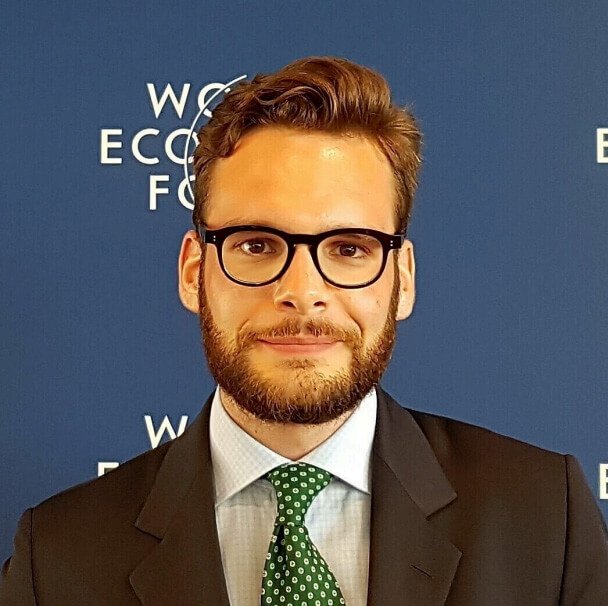
Gregoire Roos
4
APPEARANCES
3
PODCASTS
Oct 9, 2026

Bronwen MaddoxHOST
And Gregoire, perhaps we can start with France, of why politics are so febrile at the moment and where you think Marine Le Pen's party is.
Grégoire RoosGUEST
Well, I think it's, uh, another kind of a challenge for Marine Le Pen's party as they've been entangled in some sort of scandal for the past week after a newspaper, uh, produced evidence that Jordan Bardella, the president of the party and the person poised to become prime minister should Marine Le Pen be elected president, apparently has written or wrote in the past anti-Semitic remarks, brutal ones for that matter, uh, less than a decade ago.
Grégoire RoosGUEST
So many observers have, uh, actually looked at Bardella in a very different way for the past week, and they say that his political future might be compromised.
Grégoire RoosGUEST
So this is a blow to Le Pen, who has worked tirelessly, one must say this, for the past fifteen years to get rid of those anti-Semites within her party to the extent that she actually expelled her own father from the party.
Grégoire RoosGUEST
Uh, now it will be a difficult challenge to overcome, although I would be tempted to say that, uh, many voters do not actually care because their level of anger and rejection of President Macron and mainstream parties is too strong.
Grégoire RoosGUEST
The second is, of course, the kind of gap we see in the emotions on the streets of France between, uh, the visit of the Pope, uh, two weeks ago and the students now taking to the streets with civil unrest and the far left that is, at least for some members of parliament and of local officials taking part in the riots.
9 MINS LATER
Bronwen MaddoxHOST
Not, not just let's not go and fight foreign wars therefore Ukraine, but actually sympathetic to Putin.


Grégoire RoosGUEST
The US will never be Europe, China will never be the US, and I think Europe's un...
Grégoire RoosGUEST
I, I don't think it's explicit, but there's this sort of, of unconscious perhaps, uh, feeling of inferiority that would make us, push us to try to constantly, uh, feeling ashamed of lagging behind them, doubling down on, uh, trying to resemble them, look like them from the economic perspective, socially, the way we, the way we even structure our public discussion.
Grégoire RoosGUEST
I think it's fine to be European, and just because something is working elsewhere, and not just in the US, it doesn't necessarily mean that we should abandon who we are and where we're coming from.
Grégoire RoosGUEST
I think one specific aspect of where we stand is that we don't really realize how much we have in terms of intellectual, scientific, moral, I even dare to use the word, if not spiritual potential.
Grégoire RoosGUEST
So I, I think we should take stock of that, that we have something that still appeals.
12 MINS LATER
Mike HigginsHOST
Europe's offer is enough to, to bring together that coalition that, that you hope might form.


Laurel RappHOST
How is Europe as a landmass, as a European Union, as individual member states, what are the biggest concerns from them, and why is a new order potentially needed here?
Grégoire RoosGUEST
I think it's very interesting that Creon has addressed that problem from the economic angle, because I would say it is telling of the real strength of Europe, obviously of the EU in particular, but of Europe.
Grégoire RoosGUEST
Because of all indicators of power, the economy is by far the clearest, the most advanced, and honestly the strongest that Europe can find in its toolbox of power, as much as it can project power outside of its borders.
Grégoire RoosGUEST
The best and most recent example of that was the flagging of the anti-Kurshan instrument that many European leaders, especially the French president and the German chancellor, used after Donald Trump threatened to grab a piece of sovereign territory, Greenland for that matter.
Grégoire RoosGUEST
The second is obviously we have talked, and not just since Markani's flagship speech at Davos earlier this year, and before then all the articles and and book thereafter of President Stubb from Finland, that there is such a thing as a triangle of power.
19 MINS LATER
Laurel RappHOST
We've seen dramatic moves, of course, to reshape it from certain countries, but this is something that Europe wants too.


Sally SaraHOST
Were there any surprises in this visit and the agreements that have come out of it?
Grégoire RoosGUEST
First, I, I think that China went further rhetorically on Ukraine, and I was, in a way, a bit surprised.
Grégoire RoosGUEST
W- we sense quite a clear of an endorsement of Russia's root causes, as I mentioned earlier, a framing that I find quite significant.
Grégoire RoosGUEST
It still does not endorse the invasion outright itself, obviously, uh, but it gives Moscow more diplomatic cover, and this is, uh, a clear political gain for Putin.
Grégoire RoosGUEST
The second is that, um, the Kremlin spoke of a kind of general understanding on this, uh, on this energy infrastructure pipeline, uh, power of Siberia, and I think that was, um, uh, that was quite striking because Putin badly needs the pipeline, but President Xi clearly, uh, does not feel rushed.
Grégoire RoosGUEST
And the third is, I think the, the US troop signal is what I would say badly timed.
Sally SaraHOST
W- what lessons do you think China has learned from the West's, uh, reaction to Russia's invasion of Ukraine?