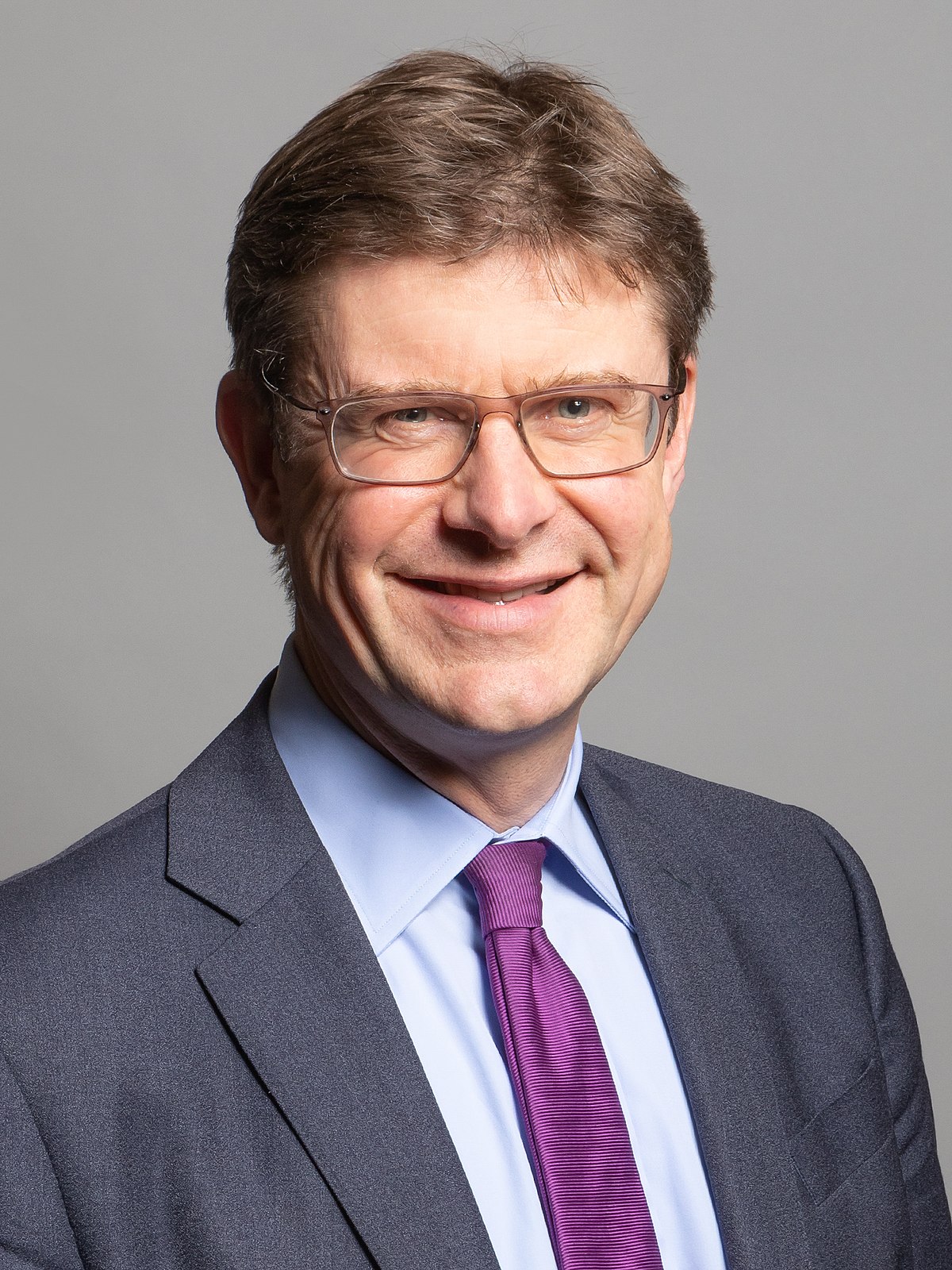
Greg Clark
Business consultant and former City Minister at HM Treasury of the United Kingdom
6
APPEARANCES
6
PODCASTS
Jul 15, 2026


Brett McKayHOST
But how much of a thrill was that for you on the weekend to be calling test rugby again?

Greg ClarkGUEST
Yeah, it, it wasn't, um, to be fair, and no disrespect to, uh, to the Japanese and, uh, the, the Irish team that they sent out, um, it w- it wasn't a classic test match, you know, f- forwards, tries, et cetera.
Greg ClarkGUEST
A- and at my stage, uh, in life and in my career, I'm now happy just to help out whenever I can.
Greg ClarkGUEST
So, um, the joint venture, Six Nations and SANZAAR, got in touch with me and said, "This, uh, i- is a test that's been thrown upon us.
22 MINS LATER


Dave HillHOST
And what about the River Thames today? It's still there, it's not going anywhere, but it's never been a thing that stands still.
Greg ClarkGUEST
Looking at this now from the 21st century perspective, we need to look after the Thames for a whole series of new reasons.
Greg ClarkGUEST
It's not just the cultural heritage, the economic heritage, the rich history of innovation that the Thames has given us, but it's now the fact that the Thames needs to be considered in the context of London's population growth.
Greg ClarkGUEST
We're now heading towards 10 million people very soon and therefore optimising the use of the river as part of the fabric, the original infrastructure of the city is key.
Greg ClarkGUEST
The era of climate change we're now in creates some extra important stresses on our river in terms of our ability to withstand flooding.
Greg ClarkGUEST
But also, of course, the need to keep the river clean, to keep it healthy, to make sure it's not a source in the future of pandemic.
11 MINS LATER


Sonia SodhaHOST
Greg, do you agree with that? Do you think that devolving to other areas of the country could bring the sort of same Manchester-style success right across the country?
Greg ClarkGUEST
It was always my view, born and bred in Middlesbrough, that actually the great towns and cities of our country have, uh, lost their, their national voice over a long period of time.
Greg ClarkGUEST
We've become one of the most centralized countries in the world, and I think that has not been good, uh, for the regions and the cities themselves.
Greg ClarkGUEST
So it's one of the reasons that we created the, first of all, the city deal and the devolution deal with Greater Manchester, and I would say Manchester has benefited from it.
Greg ClarkGUEST
I think we all benefit if e-every part of the country, every part of the economy is motoring.
Sonia SodhaHOST
Greg, what about some of the criticisms that are sometimes made at the devolution agenda, namely that not everywhere will necessarily enjoy the same levels of success, and what you could see is actually more, not less regional inequality?


Greg ClarkGUEST
If you think of the countries that have the most leprosy, countries without so much of a Christian history, India, Nepal, and the worldviews of that country definitely inform the way people feel about the disease.
Greg ClarkGUEST
And so your family is being punished for something and maybe in the next life you'll be relieved of that punishment if you go through this suffering.
Greg ClarkGUEST
So there's quite a lot of education we need to do around the fact that we can cure the disease that's caused by a bacteria and that we are very grateful to God for all of the scientific work and discoveries that have gone into developing, as you say, an easy pill now that will cure people of leprosy.


Naomi CohenHOST
When you talk about the DNA of a city, what kind of things are actually part of that DNA? Is it geography, architecture, culture, ambition, economics, or something harder to describe?
Greg ClarkGUEST
Yes, it's a really good question, and it's something I've been thinking about for about 30 years.
Greg ClarkGUEST
So firstly, I think that, um, the decoding of the human genome gave us a new way of thinking about the individuality of everything because it told us that deep down in the particle structure of every matter, there is a kind of a unique genetic code.
Greg ClarkGUEST
And so that's an interesting way to think about anything, not just a city, but also to think about, you know, a fabric, an item of food, a place in the world, and of course, every individual.
Greg ClarkGUEST
So I started to ask myself the question, what is it that makes every city individual and unique? And in the end, the answer I've come up with is this, that it's a combination of three different kinds of genetic character.
9 MINS LATER
Naomi CohenHOST
So given that you compare cities for a living, what kind of things would you f- would you include in a belonging index, and why do you think most city rankings fail to capture belonging at all?

Greg ClarkGUEST
Yeah, so because our revenues are pretty stagnant at this point, right? Uh, property taxes are capped.
Greg ClarkGUEST
The school board really doesn't have any intention to raise our property taxes beyond that.
Greg ClarkGUEST
Um, you know, the state, the governor's already, you know, telling us that he's not gonna want any increase to public education funding.
Greg ClarkGUEST
So yeah, our, our revenues are s- are stagnant, so really we have to take what we have and make sure it goes towards our priorities.
Greg ClarkGUEST
And I think it's not great that our educators, you know, teachers, paras, every, all of our staff, you know, the last few years, their raises haven't even touched the cost of living.
Greg ClarkGUEST
You know, it's less than 2% for several years, and I think we need to invest more in our educators, and the only way we can do that is if we take from somewhere else in our budget.

Joel HeitkampHOST
Uh, where are you spending too much or potentially, let's say it that way, spending too much on administration?