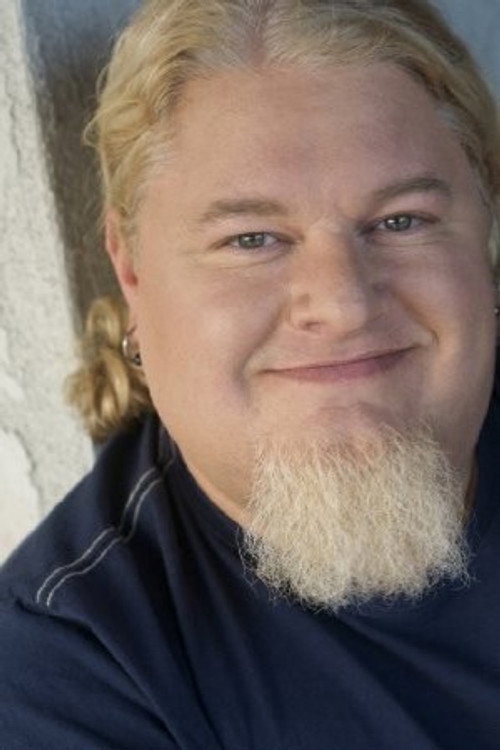
Greg Baker
Greg Baker is a computing lecturer at Macquarie University and AI futurist who won a landmark Fair Work Commission employment case representing himself with AI agents.
3
APPEARANCES
3
PODCASTS
Oct 1, 2026


Greg BakerGUEST
So in 2024, the government, this is Australian government, put in new legislation for making sure that we don't have a permanent underclass of casual employees.
Greg BakerGUEST
And if you have been an employee for more than six months or 12 months if it's a small employer, and you believe you're no longer casual de facto in other words if it's clear that you're getting regular work there's a pattern of work and you've got an expectation that's going to go on indefinitely then you aren't really casual you're actually a permanent employee who happens to be on a casual wage and so you can notify that you want to be permanent Now, I was completely unaware of this legislation, as I think many of your listeners and many people in Australia are unaware that this is a thing that you can do.
Greg BakerGUEST
So it was in late October 2025 when I was having a long chat with ChatGPT about career planning.
Greg BakerGUEST
And also good advice is don't have personal conversations with AI bots after midnight because your ability to realize it's a bad idea.
Greg BakerGUEST
I was working at that stage, a workload at the university, which corresponded to 57.5 hours per week.

Ben AndrewsHOST
We're the most sophisticated country in the world, and frankly, I want to keep it that way because whoever wins AI, wins." Who do you think is right?
Greg BakerGUEST
Um, I think he was great in his first and second terms, and I think extending a third term was a terrible thing to do.
Greg BakerGUEST
Let's hypothetically assume that Xi Jinping decides to go on full-on dictator mode.
Greg BakerGUEST
He can monitor every conversation that everybody ever says, whether it's written or spoken, um, because we can have cameras absolutely everywhere.
Greg BakerGUEST
Um, he can control the narrative so that anybody who says anything that's not- ... way he wants history to be reported can be immediately identified and if we have a, a robotics revolution as well, can, you know, be like a, a drone can go and dispatch them and pick them up and take them anywhere.
6 MINS LATER

Greg BakerGUEST
Well, I'd hope that studying for a PhD in computer science, that would actually set me up to do intelligent things with computing.
Greg BakerGUEST
So I, I hope what I was doing [chuckles] was, was unique in some way and, and groundbreaking.
Greg BakerGUEST
So if you set things up the way I'd-- I, I've done it with all sorts of directories and good instructions, and then you compare yourself against somebody using just a frontier model with, with no extra sort of framework or construction there, what we see is that's about a, a nine-month gap between the capabilities of a well-structured system and the capabilities of a, a frontier model.
Greg BakerGUEST
And then behind that, you've got maybe about six to twelve months, you see the Chinese open source models.
Greg BakerGUEST
Bit behind that, you start getting to the free tier, and there's about a five-year window from the beginning to the end.