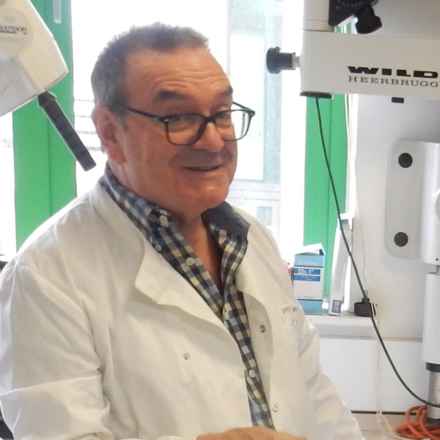
Glen Jeffery
Researcher
4
APPEARANCES
4
PODCASTS
Jul 28, 2026


Glen JefferyGUEST
Now we knew with big red light panels, things that kicked out a lot of red light in a restricted range, there's a biphasic effect.
Glen JefferyGUEST
So if you expose someone to a big red light bed and you have some biological metrics on them, everything seems to work very well for the first 45 minutes.
Glen JefferyGUEST
After that, the process, I mean, you're just not getting a lot of improvement.
Doug LucasHOST
You're going to create this, this choke, this, this area, this funnel that has restriction, right? Would it work itself out over the subsequent 23 hours and 15 minutes? Or should you go lower power for longer exposure, like something like a light bulb? Yeah, so definitely.


Sarah PughHOST
I've heard you talk about it before on other channels, but for somebody who's new and isn't aware that blue light and near infrared and red light can alter blood sugar, because some people think, oh, it's only food that can do that.
Glen JefferyGUEST
It's slightly difficult to get over, but I work on something called mitochondria, which are these little batteries in your body, and there are vast numbers of them, and they respond to light.
Glen JefferyGUEST
And they work much harder when you're in daylight than they do when you're under LED lighting.
Glen JefferyGUEST
So after you have a meal, your blood sugars peak about 45 minutes to an hour afterwards.
9 MINS LATER
Sarah PughHOST
Would you mind if we change some bulbs? Because it's like you say, it's not a difficult thing for people to do.


Glen JefferyGUEST
She really-- I could s-- I think you could say that she was one that opened the door on the subject, and she opened the door on the subject because it wasn't just, say, l-look at red light and see what red light does.
Glen JefferyGUEST
Now, as with all things in science, we find that we're not always running down the right pathway.


Andrew HubermanHOST
So let's talk about, um, how light impacts mitochondria and other aspects of cellular function and maybe use that as a segue into the longer wavelengths.
Glen JefferyGUEST
That area is expanding enormously.Um, and it's expanding enormously in lots of little pockets, and the pockets aren't, or weren't always talking to one another very well.
Glen JefferyGUEST
Um, the first person that came along and said, "Look, longer wavelengths are really positively affecting mitochondrial function," um, was a, a lady called Tina Karu in Russia, and who was very largely ignored.
1 HR 24 MINS LATER