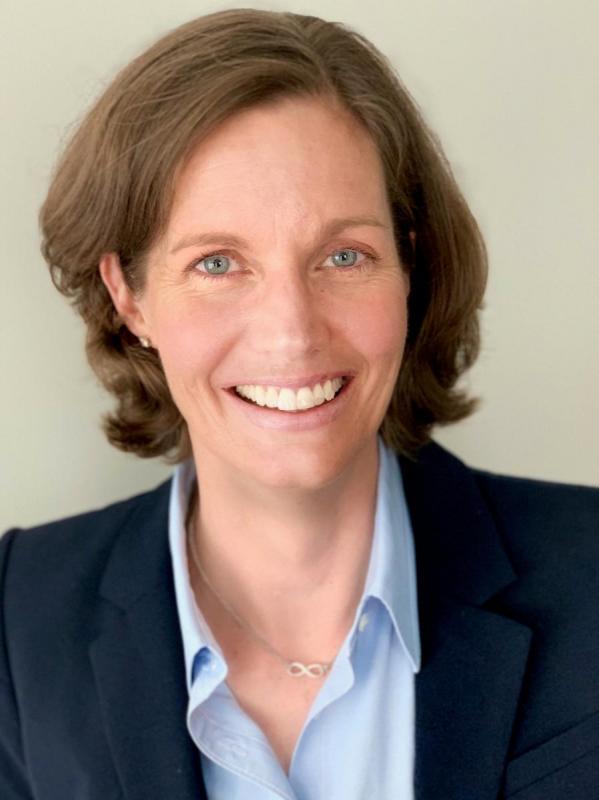
Gitane De Silva
15
APPEARANCES
8
PODCASTS
Oct 6, 2026


Jackie ForrestHOST
But does that mean anybody that has any kind of project now will get this national interest fast track if they're in that region? And what are some examples of regions that might qualify for that?

Gitane De SilvaGUEST
Well, I think we've seen many different projects go to the major projects office for consideration, right? We've got everything from a highway in the north, the McKenzie Valley Highway, to the deep geological repository for nuclear waste in Ontario, and now a pipeline.
Gitane De SilvaGUEST
So any major infrastructure project, I think, can be considered under Bill C-5.
Gitane De SilvaGUEST
I think, again, the advantage is you get that political decision and you have the potential that you're exempted from elements of federal legislation, you also get the advantage of the major projects office putting their weight behind, you know, making sure that all the government is moving quickly and doing that coordination for you.
Gitane De SilvaGUEST
And if you look at the first projects that were referred to the major projects office, where you had a transmission line, you had new electrical generation, you had a critical mineral mine.
10 MINS LATER
Jackie ForrestHOST
okay let's come back to the fast timelines and you said was it 120 days under the provincial alberta provincial system and now we're talking one year under the c39 but there have been people that have said you know they both say you need a complete application and And so, well, maybe it takes you two years to get, what is a complete application? And does a proponent actually spend, you know, many years getting to whatever the green light is to start this one year time clock?
Gitane De SilvaGUEST
We have seen a long period in Canada where large investment has not been quick to come because we have a reputation, rightfully so, of being very slow to build things or repeatedly saw projects get cancelled.
Gitane De SilvaGUEST
And then I think the other piece is when you want to actually make a quick pivot to a new market, like sometimes the government needs to do that.
Gitane De SilvaGUEST
If we go back to, you know, the origin of the oil sands, there was a lot of public money that went into that to get that resource to market.
Gitane De SilvaGUEST
So I think with this real push at this moment to diversify our export markets and reduce our dependence on the United States, the government is saying this is what we need to do.
11 MINS LATER

Kathleen PettyHOST
So to get up to 16 by 2045, right? A long way from what the initial promises were.


Michael SerapioHOST
So does that stand as an impediment, Jetan, right now to get to what the stated goal of the summit was for Canada? You know, the Canadian government wanting to generate a trillion dollars worth of investment across the next five years.
Gitane De SilvaGUEST
I think this is in part why we're seeing fairly large hints that some of the big projects to go first will actually be publicly funded.
Gitane De SilvaGUEST
And so the government needs to demonstrate that this new system is workable.
Gitane De SilvaGUEST
And I think with the hopes that If they fund a project, then demonstrate that we can get something done and do it in a partnership with Indigenous peoples that then hopefully the private capital will follow.
Gitane De SilvaGUEST
I'm waiting to see what is tabled in the federal legislation this fall in terms of the actual changes to the regulatory system, because I think it's all... well and good to have Bill C-5 that says, you know, at a certain point, if a project's declared in the national interest, that the federal government can then exempt that project from pieces of federal legislation, but would give greater certainty to investors in the private sector if they actually knew what that process was going to be.
11 MINS LATER
Michael SerapioHOST
But when you hear what Brett is saying here about not enough Canadian companies are engaging with the free trade agreement that we already do have, What can be done to change that? Or does the reality with the United States encourage companies to do that naturally?


Falice ChinHOST
Turning to your time during the first Trump administration, what did you learn from engaging with all these people within Trump's orbit that you think might be helpful today in how we think about the problem we're in right now?
Gitane De SilvaGUEST
I think first of all, you need to not equate political opinion and intellect.
Gitane De SilvaGUEST
Just because people have a very different worldview from you doesn't mean that they're stupid.
Gitane De SilvaGUEST
And there's a lot of very intelligent people that support President Trump that wanted to see a different way of doing business around the world and domestically and were really looking for a change.
Gitane De SilvaGUEST
And actually, your job as a diplomat is to get to know the people that don't agree with you because at the end of the day, your job is to keep the conversation going for as long as possible to try and figure out how to get to yes.
Gitane De SilvaGUEST
So I think it's important for people to know that just because they have a different worldview than us doesn't necessarily mean that they're not intelligent.
14 MINS LATER
Falice ChinHOST
How might this supercharged elbows up moment complicate the effort to bring the temperature down, though?


Jim RichardsHOST
As someone who has been in these rooms before, is there any kind of insight that you think maybe the public is missing when we're consuming this news?
Gitane De SilvaGUEST
Like you're in the room, you've got your marching orders, you've got sort of certain goalposts you need to stay between.
Gitane De SilvaGUEST
And then you're thinking about, okay, how am I keeping my key stakeholders up to date? So the premiers for one, for sure, but the prime minister is, counsel on U.S.
Gitane De SilvaGUEST
You're making sure that those people are also leaning on their U.S. contacts because this is not just a matter of getting a deal with President Trump.
Gitane De SilvaGUEST
Then we also need to sell it to Congress and the American people because we know that President Trump keeps trying to claim authority over trade, but the Supreme Court keeps affirming that under the Constitution that sits with Congress.
Jim RichardsHOST
But that is part of the sales job that the prime minister might have to do over the next little while.

Jim RichardsHOST
And when you say they've been tight-lipped, do you not agree that we kind of know where the sticking points are?
Gitane De SilvaGUEST
Well, we know, I mean, based on what the Americans are saying, we know what their sticking points are.
Gitane De SilvaGUEST
That doesn't say that we know how those are being negotiated or what is being navigated.
Gitane De SilvaGUEST
You know, dairy is always a politically sensitive issue in Quebec in particular.
Jim RichardsHOST
And how do you as a negotiator look at people who say, "Why negotiate with somebody who won't recognize or respect the deal?"

Kathleen PettyHOST
Is it as Chris Sands says, or are there other sort of layers to this that I'm not seeing? Yeah.
Gitane De SilvaGUEST
So we knew that the 122 tariffs that the president had opposed, that 10% tariff on everybody was expiring, right? So he was looking for a new mechanism to replace those.
Gitane De SilvaGUEST
And we saw new tariffs come out this morning, right? This forced labor tariff.
Gitane De SilvaGUEST
We know that Canada is not progressing at the same pace in our Kuzma Review conversations as the Mexicans are.
Gitane De SilvaGUEST
the Mexicans have had this sort of very low profile, calm and steady approach to this.
7 MINS LATER
Kathleen PettyHOST
But What was your feeling on that, about those ads and what role it's played?
Kathleen PettyHOST
Is it as Chris Sands says, or are there other sort of layers to this that I'm not seeing? Yeah.
Gitane De SilvaGUEST
So we knew that the 122 tariffs that the president had opposed, that 10% tariff on everybody was expiring, right? So he was looking for a new mechanism to replace those.
Gitane De SilvaGUEST
And we saw new tariffs come out this morning, right? This forced labor tariff.
Gitane De SilvaGUEST
We know that Canada is not progressing at the same pace in our Kuzma Review conversations as the Mexicans are.
Gitane De SilvaGUEST
the Mexicans have had this sort of very low profile, calm and steady approach to this.
7 MINS LATER
Kathleen PettyHOST
But what was your... feeling on that about those ads and what role it's played?
Jim RichardsHOST
But what did it say to you about the state of the negotiations or Donald Trump's relationship with Canada or even Carney?
Gitane De SilvaGUEST
So I think a bunch of things are happening, right? We did see the president comment on the wildfire smoke.
Jim RichardsHOST
When we think of all of the things that we see within the news cycle, when someone with your experience on this sort of thing, what would you say is the missing part of the conversation or how we should be looking at this?


Erika BarootesHOST
Like, is this where we're actually headed in our economic state, do you think? Or are we ever going to get back to a free market enterprise or a free market society?
Gitane De SilvaGUEST
Well, I mean, I hope it's not where we're headed across the board because we can't afford it, right? Our fiscal balance sheet is not strong enough for us as taxpayers, federally and provincially, to buy all the things.
Gitane De SilvaGUEST
But I would say we are seeing a shift globally, right? As trade protectionism increases, you're also seeing greater government intervention, including in countries like the United States, that is typically pretty hands off when it comes to the economy.
Gitane De SilvaGUEST
So there is a global movement as well to see greater government intervention.
Gitane De SilvaGUEST
It kind of goes hand in hand with that protectionism, because if you want to not... allow the free and fair trade of goods and you want to bolster your domestic economy, you're doing that usually through subsidies or through government contracts, which is a subsidy through another mechanism, right? So it's not unique.
Gitane De SilvaGUEST
And we've even seen here in Alberta some comments from the province, right, that if things don't go You know, if the market won't do it, then the province is willing to do it.
7 MINS LATER

Mark TooheyHOST
If they don't all agree on Wednesday, is Wednesday the date that they have to have agreement, or is it the beginning of the time that they discuss agreement? And if there isn't agreement, what happens with this sort of one-year resetting of the clock?
Gitane De SilvaGUEST
If we don't reach agreement by July the 1st, it just means that we're in this continued situation of not knowing whether the agreement will last beyond 2036.
Mark TooheyHOST
And what do you know about what the U.S. is asking for? And would any of those things be things Canada would be willing to give them? And if so, what might we want in return?
Jim RichardsHOST
That's just you getting back to where you should have been when all this kind of stuff started.
Gitane De SilvaGUEST
Yeah, I mean, I think we have to acknowledge, too, that the bar keeps shifting.
Gitane De SilvaGUEST
I mean, in terms of Canada removing its retaliatory tariffs, there is some thought there that, you know, if we want the U.S. to comply with the agreement, we should, too, even if they don't always play by the rules.
Gitane De SilvaGUEST
And the reality is, you know, if you look at the tariffs they slapped on Canada, the KUSMA, those items protected by the KUSMA or the USMC are exempt.
Gitane De SilvaGUEST
Those Section 232 tariffs on steel and all those aluminum those are things outside of the kuzma so you know you can debate that one i think you know conceding on the digital services tax at the time i bet the negotiating team thought they would get something in return and to your point they absolutely have not so i think now part of why the president is annoyed is we're standing firm to say that we have nothing that he needs i would just point out that you know canada supplies 60 of u.s oil imports which translates to 20 percent of U.S. domestic consumption.
Jim RichardsHOST
And moving forward over the next little while, what obstacles do you think we have that we may have invented? I just wonder if there's a default setting to get back to where we were before Doug Ford ran the Reagan ads, and whether or not the speech to the world where he said we have a rupture— whether that is not an impediment as well.

Chris AyotteHOST
And my sense is that these are different things, but in terms of what the grievance is, but I'm curious in your perspective in terms of how the feds should really be looking at this or maybe other Canadians in other parts of the country.
Gitane De SilvaGUEST
Well, I think at their core, it's the same feeling of not being valued or not belonging, right? The issues in Quebec, though, are more about you know, different language, a much stronger connection to the Catholic Church, a different history.
Gitane De SilvaGUEST
Alberta's grievances, while also real, like that's the one thing I'd say to people, the grievances here are not made up.
Gitane De SilvaGUEST
And I think, you know, this feeling of always giving and not getting in return, or the feeling of always contributing and then when the request is could we build a pipeline through your jurisdiction and the other jurisdiction says no and then albertans don't understand because it's it's oil and gas money that's paying for social services in that province but then it's a step too far for that province to allow that commodity to transit so Like that's a hard thing for Albertans to understand because they sort of feel like people are happy to take the money, but they don't really want to know where it comes from.
Gitane De SilvaGUEST
And that's very simplistic, but that is a big part of the challenge is that feeling that, you know, Albertans always answer the call and then when they ask for something in return, they're That is not granted.
30 MINS LATER
Chris AyotteHOST
I mean, no one's got a crystal ball, but are you optimistic for the future? Are you deeply concerned about certain things? I mean, when you look five or ten years out for Alberta, for Canada, what are you thinking about?
Kathleen PettyHOST
But at the same time, Michael Kovrig, who all of you will remember was, you know, a former diplomat was held in China for three years, is sort of warning That geopolitically, he thinks this is going to get sticky, in his words, because he believes China wants to demonstrate to the U.S. that it has influence on Canada and weaken the bonds between Western allies.
Gitane De SilvaGUEST
I mean, I read the U.S. national security strategy that came out yesterday.
Gitane De SilvaGUEST
in december all 33 pages of it you know they say you should take trump seriously but not literally and yet i also think you should believe somebody when they show you who they are and that document basically is carving the world up into three superpowers we are part of the western hemisphere which us has made very clear with its action in venezuela that that is their backyard and they will do as they see fit and if they see china as a threat and canada cozies up too much to china I think we have to be very careful because even parking a conversation about military action against Canada, which I can't believe we're having this conversation, but welcome to 2026, they have real means to destroy our economy if they so choose.
Gitane De SilvaGUEST
And so we're going to have to be very careful about this effort to diversify our economy and how close we get to other nations that Trump does not believe share his economic vision.
Gitane De SilvaGUEST
Like it's a real delicate dance that the prime minister is going to have to do.
Gitane De SilvaGUEST
Because on one hand, options give you power, right? That ability to access other markets is great for Canada.
9 MINS LATER
Kathleen PettyHOST
Given the volatility of the situation, and that's putting it mildly, does this increase or decrease the incentive for a private proponent or proponents to build a new pipeline?
Falice ChinHOST
How do you think discussions around that overall impacted how Canadians see Alberta and how Alberta sees itself?
Gitane De SilvaGUEST
Well, I mean, we have to acknowledge any conversation on separatism is not good for the economy, right? Investment really starts to dry up.
Gitane De SilvaGUEST
And when you're already facing uncertainty from a trade war, adding that to the mix, I don't think is helpful.
Gitane De SilvaGUEST
I think for some Canadians, they probably started to take Alberta's concerns a bit more seriously.
Gitane De SilvaGUEST
I think, though, talking to, you know, friends and colleagues across Canada, certainly in eastern Canada, they don't really understand.
Gitane De SilvaGUEST
Like they, you know, the conversation with colleagues in Ottawa is, why are you complaining? We bought you a pipeline.
Gitane De SilvaGUEST
It's like, well, you created the conditions under which the only way that pipeline is going to be built was if the federal government built.
Falice ChinHOST
Chetan, how would you describe her overall strategy? Because you seem more sympathetic with what she's trying to do.