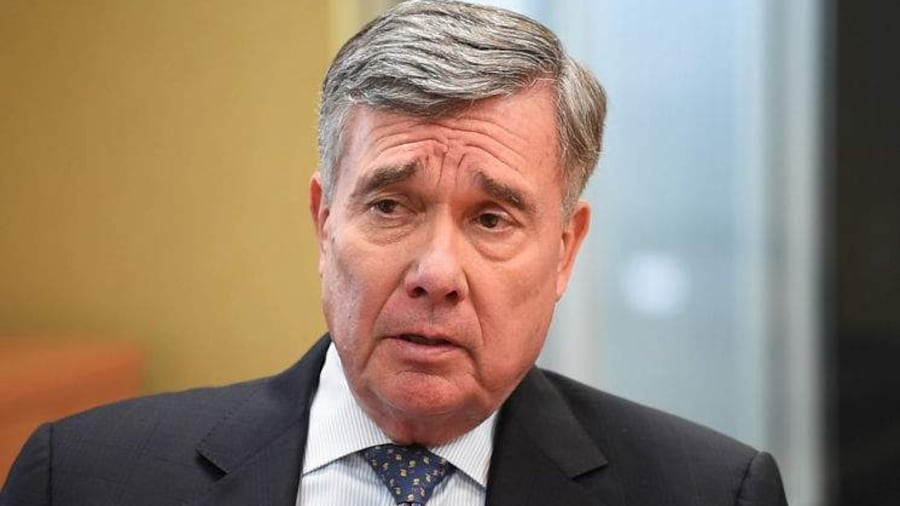
Gil Kerlikowske
Former commissioner of the U.S. Customs and Border Protection
5
APPEARANCES
4
PODCASTS
Sep 1, 2026


Garrett GraffHOST
Now it fell to Kurlikowski to reform the agency and clean up the mess caused by the hiring surge.

Gil KerlikowskeGUEST
Thousands of people had been hired, some of whom should not have been hired.
Gil KerlikowskeGUEST
Those are circumstances in which if you were going to be involved in corruption, a smuggler could say, well, just stay at the far end of your area for the rest of the night and don't come into this area.
Garrett GraffHOST
Apprehensions at the border decreased, along with use of force incidents, while the agency hired 100 additional internal affairs investigators.


Scott DetrowHOST
Walk me through some of those specific tactics that, that, that you're most concerned about.
Gil KerlikowskeGUEST
So you don't approach a vehicle, uh, and make a traffic stop by boxing it in.
Gil KerlikowskeGUEST
That means that you have probable cause that that person in that car, uh, is wanted for a felony, and that's the kind of tactic that you would use.
Gil KerlikowskeGUEST
All too often, these same tactics are being used, and they're even, uh, not against the target that they were intended.
Gil KerlikowskeGUEST
Uh, the other thing is that law enforcement officers are trained in communities, rural and, uh, suburban and, and city, not to get in front of a vehicle, not to put your hands inside a vehicle.
Gil KerlikowskeGUEST
And yet we see repeatedly, uh, these ICE agents and Border Patrol agents stand in front of the vehicle.
Scott DetrowHOST
And then we learned, uh, i- in this Houston incident that the officers didn't have body cameras.


Amna NawazHOST
Based on what you know about what happened before that interaction, what a- what should have agents done in that case, in those circumstances?
Gil KerlikowskeGUEST
Well, I think what they don't do, and what they should be doing, is that when they're confronted with somebody who is attempting to interfere or attempting to obstruct, they should tell that person, "We're arresting you." Uh, this use of chemical munitions, just bringing out pepper spray, et cetera, just makes little sense.
Gil KerlikowskeGUEST
Police officers deal with these things all the time, uh, and they make a physical arrest, and that actually then deters some other people from getting involved or obstructing.
Gil KerlikowskeGUEST
Uh, but remember, this is a group of people, the Border Patrol in particular, who are completely untrained and unskilled for policing in an urban environment.
Gil KerlikowskeGUEST
Well, one, the Border Patrol is clearly the, the wrong tool to be leading this effort, to be working in an urban environment, and frankly, the ICE section, the removal section, ERO, uh, they were pretty good at being able to target people who were dangerous, uh, target people with final orders of deportation, uh, and make those arrests.
Gil KerlikowskeGUEST
This walking through, uh, a Walmart and a Home Depot lot, uh, makes little sense, and all you've really done is, one, cause chaos, but you've also pretty much eroded the trust that law enforcement has gained, uh, in the last five years after the murder of George Floyd.


Mika BrzezinskiHOST
Um, do you see any procedures, law enforcement, basic law enforcement procedures that were followed or not followed?
Gil KerlikowskeGUEST
When you go to a protest, and you want to observe, you want to record, you want to voice how you feel about it, when Alex unfortunately kind of intervened when that woman was pushed down, and I'm not condoning what that agent did, it's probably better not to engage.
Gil KerlikowskeGUEST
Uh, DHS has been condemning the fact that he had a gun, but remember, DHS didn't say anything when right-wing protesters brought guns to Charlottesville, uh, one of them bringing the gun out and shooting into the ground.
Gil KerlikowskeGUEST
So having disarmed him, but the shots were almost immediately after the gun was taken from him, so I think there's still more to see.
Gil KerlikowskeGUEST
I'm skeptical of whatever this investigation is, though, and they haven't really defined that.

Joe ScarboroughHOST
These people are going to..." When you see five, six, seven guys bumbling around, um, uh, over one protester, not taking him to the ground, I, I'm, I'm just curious what, what level of unprofessionalism and lack of training do you see in all of these, all of these agents? And not just in this case, but across America.

Willie GeistHOST
Just talk a little, if you can, about what we've been saying here, uh, and elaborate, if you will, what, what you know about protocols and guidelines and how they may or may not have been followed based on what you see in that video.
Gil KerlikowskeGUEST
Clearly, the Border Patrol is the absolute wrong unit to be bringing into any city environment.
Gil KerlikowskeGUEST
Secretary Ridge, Secretary Chertoff, I- we've all remarked about this, whether it was in Portland, uh, and certainly now.
Joe ScarboroughHOST
Um, c- could you, could you tell us and with your, uh, collective knowledge if someone that was working, uh, in one of your, uh, departments or someone working in the New York City Police Department had fired two shots at the head of a s- car going by at, say, five miles an hour? Um, w- would they most likely be reprimanded or even charged?