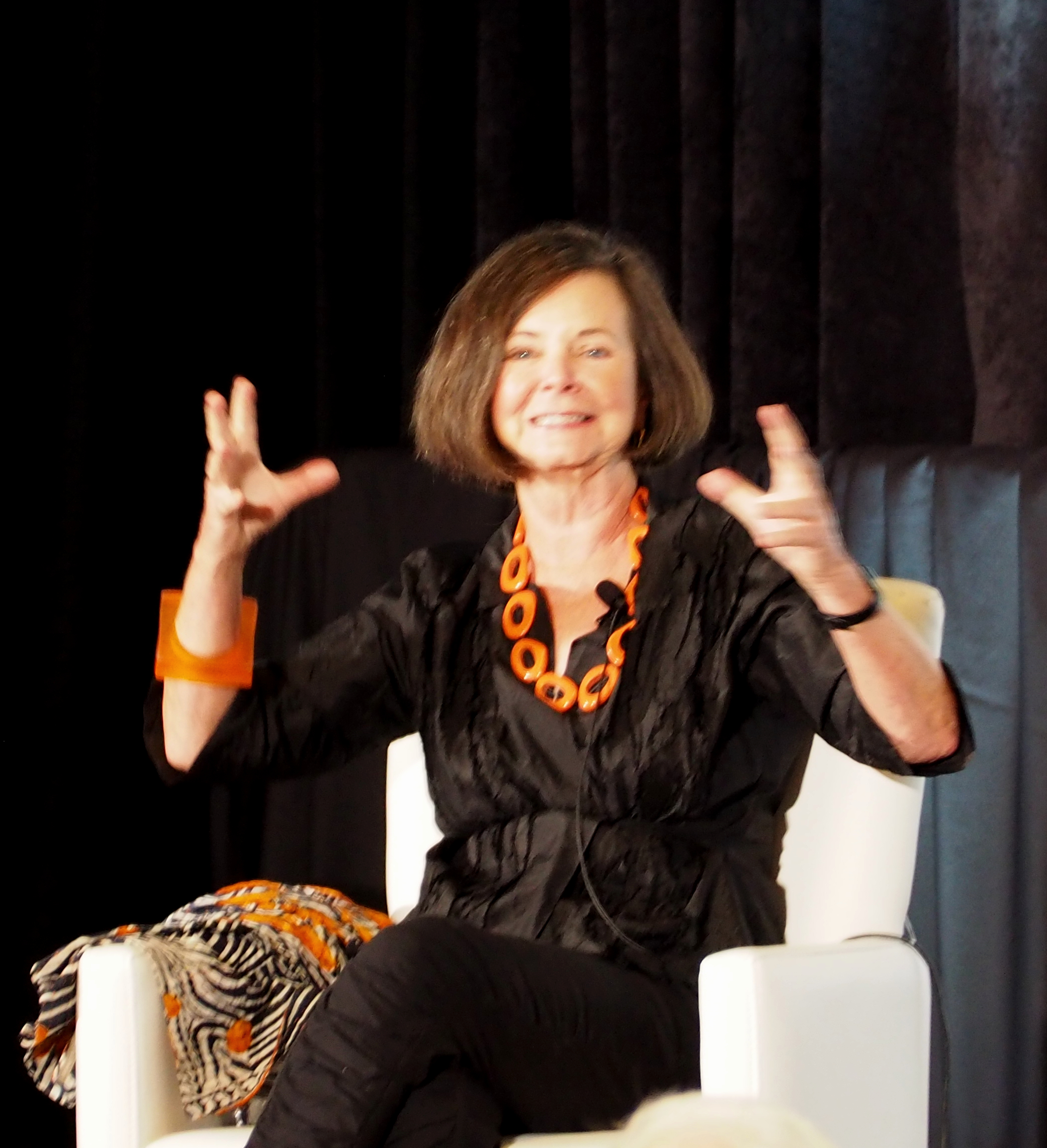
Geraldine Brooks
Australian-American journalist and novelist
7
APPEARANCES
7
PODCASTS
Sep 27, 2026


Geraldine BrooksGUEST
So I was trying to think what she might be like, and because it was a village of lead miners and shepherds, I thought probably she would have been married to a lead miner, and maybe he would have died in a mine collapse, and maybe she already had a couple of kids.
Geraldine BrooksGUEST
And I imagined her as something like many of the women that I'd met in the Middle East and Africa covering stories, who were women who thought that their lives were going to be very circumscribed, that they were going to be very domestic, that their business would be To keep house and have children.


Kelly CorriganHOST
Like, understanding crypto and being, like, the forensics guy around that, can you dig in a little bit to maybe explain to our lay audience and me, a lay person, um, how crypto works and why it is such fertile ground for criminality?
Geraldine BrooksGUEST
So it, it was created out of an idealistic, um, and libertarian desire by an anonymous person, whose identity has never really been disclosed, to create something that wouldn't have the flaws of the existing financial system that were exposed by the financial crisis in 2008 when it was shown how absolutely flawed the banking models and the exchanges that we relied on, how flimsy they could be.
Geraldine BrooksGUEST
So this person came up with a cryptographic store of value, and, you know, I don't wanna go too deep in the weeds, but just take Bitcoin, which is the main example.
Geraldine BrooksGUEST
It is basically a, a hash, which is 64 letters and numbers in a string, that represents a financial transaction that is scrutinized and agreed upon by anybody who has the computer power to do it.
Geraldine BrooksGUEST
So people all over the world Verify this transaction, and it is recorded forever.
Geraldine BrooksGUEST
It's supposed to be 100% anonymous, and it exists outside of the control of any government.
Kelly CorriganHOST
And you brought up Al Capone, so I thought it might be worth revisiting that story and talking a little bit about the role of Michael Malone.

Geraldine BrooksGUEST
So it was a true story of the great racehorse of the 19th century, Lexington, who was the fastest horse of all time at that point and a great celebrity.
Geraldine BrooksGUEST
I mean, thousands flocked to his races and racing was a national obsession in those days.
Geraldine BrooksGUEST
The only way I can explain it is it's, you know, It's like baseball if we all played it because everybody still had a horse or was one generation away from having a horse and people would race their horses down the main streets of the town, which is how we got the quarter horse.
Geraldine BrooksGUEST
But these thoroughbred races were massive spectacles and they were a big source of prestige for the racehorse owners.
Geraldine BrooksGUEST
these competitions between a Northern horse and a Southern horse would get all the blood up about the differences between the two societies.
23 MINS LATER

David RubensteinHOST
And was that based on the fact you lived there and just enjoyed the history of it?

Geraldine BrooksGUEST
So it was a true story of the great racehorse of the 19th century, Lexington, who was the fastest horse of all time at that point and a great celebrity.
Geraldine BrooksGUEST
I mean, thousands flocked to his races and racing was a national obsession in those days.
Geraldine BrooksGUEST
The only way I can explain it is it's, you know, It's like baseball if we all played it because everybody still had a horse or was one generation away from having a horse and people would race their horses down the main streets of the town, which is how we got the quarter horse.
Geraldine BrooksGUEST
But these thoroughbred races were massive spectacles and they were a big source of prestige for the racehorse owners.
Geraldine BrooksGUEST
these competitions between a Northern horse and a Southern horse would get all the blood up about the differences between the two societies.
22 MINS LATER
David RubensteinHOST
Now, you wrote a book about Martha's Vineyard as well, and was that based on the fact you lived there and just enjoyed the history of it?

Geraldine BrooksGUEST
I looked at that paragraph describing what we were supposed to be talking about, and I had exactly the same reaction as you.
Geraldine BrooksGUEST
I think they were getting at something about how are we going to cope with the aftermath of COVID? What did it really do to us? And I think it's impossible to answer that question yet because we're still seeing the reverberations of the experience.
Geraldine BrooksGUEST
But the problem also is I think all of us experienced COVID in different ways.
15 MINS LATER

David MarrHOST
Geraldine, do you see what Rachel is talking about and what Julia is to some extent as well about a sense of wanting to blow things up at the moment?


Geraldine BrooksGUEST
Um, and he was mostly like that, although, you know, when I was reading his journals I realized that that came hard-won sometimes, that he had a lot of insecurities and, uh, and a lot of them were totally unfounded.
Geraldine BrooksGUEST
Uh, I was off reporting somewhere, and this was before he'd been hired by The Wall Street Journal, and, uh, he was still waiting for this st- staff job to eventuate that he'd been sort of, kind of promised, and it hadn't happened.
Geraldine BrooksGUEST
And so he writes in his journal, "I've come to accept that I may never amount to something in journalism." And I read that and I just laughed out loud because, like, one year later he would be the star reporter in the London Bureau [laughs] of The Wall Street Journal covering the revolution in Romania and then, uh, leading, um, the coverage of the first Gulf War and being the first Western reporter into liberated Kuwait, and then he'd have the Pulitzer Prize.
Geraldine BrooksGUEST
So, it's so, it was, it, it was funny to me that he thought that, and then it was also sad that he'd been insecure at that time, and he had not verbalized that.
20 MINS LATER


Geraldine BrooksGUEST
Every time I left the house, it was as if I was putting on a costume and a mask and going out and acting a role.
Geraldine BrooksGUEST
So I did all the things I was supposed to do if I were a normal woman, like be the secretary of the PTO and serve on the local conservation commission and do my work and even go on book tour.