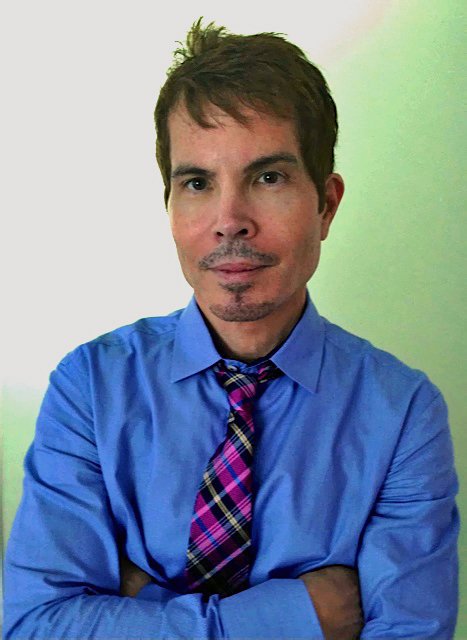
Gerald Posner
American journalist and author
11
APPEARANCES
9
PODCASTS
Sep 11, 2026

18:03

So do you think that Jews could have had advanced warnings of the attack? Somebody

Gerald PosnerGUEST
But somebody should tell the fact that Jews had advanced warning of the attack to the approximately 400 Jews who died in the towers coming down.
Gerald PosnerGUEST
You know, a story went out, by the way, also Egyptian made Egyptian newspapers.
Gerald PosnerGUEST
It came out from Hezbollah originally and then picked up in Egypt, Lebanese papers as well.


Gerald PosnerGUEST
I know that from the, the people that, uh, helped me on why America slept back in 2002 and 2003, some of them, most of them, are now retired.
Gerald PosnerGUEST
But they were in the services, um, security services, intelligence services, through the, uh, 2013, 2014, '15 period.
Gerald PosnerGUEST
There was a period immediately after the 9/11 report came out when the agencies were behaving.
8 MINS LATER


Gerald PosnerGUEST
So Michael, I, I had, uh, three different sources, one of whom was in a very close position to know exactly what happened, who described to me that when Zubaydah was captured, since he was wounded, they were able, they, the Americans, were able to, as interrogators, to apply pressure by delivering him pain medication that would, uh, when he needed it, to relieve the time from his wounds, and then take it off in the hope that he might talk.
Gerald PosnerGUEST
Once they realized that he would survive, they moved him into an operation that was a fake flag in which they had a couple of American Special Forces who were able to speak fluent Arabic pretend that they were Saudi interrogators.
Gerald PosnerGUEST
And when Zubaydah woke up from this drug-induced narcotic haze, he thought he was in Saudi custody.
Gerald PosnerGUEST
They were ready to execute him, and he knew that they had no holds barred in terms of interrogations.
Gerald PosnerGUEST
So Michael, I, I had, uh, three different sources, one of whom was in a very close position to know exactly what happened, who described to me that when Zubaydah was captured, since he was wounded, they were able, they, the Americans, were able to, as interrogators, to apply pressure by delivering him pain medication that would, uh, when he needed it, to relieve the time from his wounds, and then take it off in the hope that he might talk.
Gerald PosnerGUEST
Once they realized that he would survive, they moved him into an operation that was a fake flag in which they had a couple of American Special Forces who were able to speak fluent Arabic pretend that they were Saudi interrogators.
Gerald PosnerGUEST
And when Zubaydah woke up from this drug-induced narcotic haze, he thought he was in Saudi custody.
Gerald PosnerGUEST
They were ready to execute him, and he knew that they had no holds barred in terms of interrogations.


Gerald PosnerGUEST
And so all of the, uh, the, you know, the Chicken Little, as I call it, the sky is falling in, the scare tactics of, "Oh, no, if you come here, it's gonna be terrible.
Gerald PosnerGUEST
Uh, uh, you're, uh, you know, and that's why we're not gonna have people coming to the World Cup.
Gerald PosnerGUEST
And I went back to look at some of those accounts online that had sort of generated up beforehand to see what they were saying Post-Smerconish.


Jack CarrHOST
Why on earth has the government gone to such great lengths to make themselves look complicit in this assassination? It's mind boggling to me.
16 MINS LATER
Jack CarrHOST
But a little bit of history on, let's say, the pharmaceutical industry, on morphine, heroin, cocaine, being able to buy those at some point in pharmacies, and then how that leads up into a World War II, Cold War era when really this industry comes into its own.

2:20

How far along have we come from cocaine being a drug that doctors use to today?
Gerald PosnerGUEST
When you said Sears and Roebuck sold a little kit that you could use, that was the Amazon of its day.
7 MINS LATER

Gerald PosnerGUEST
So they ha- uh, will give a grant, and I go through this, I have a thing called the j- Transgender Money Pipeline, I did an article about it.
Gerald PosnerGUEST
They will give a grant, let's say to the University of Illinois, or University of San Francisco, and they say $20 million, $22 million grant, whatever else, "But we want you to open up a gender studies program.
Gerald PosnerGUEST
We want you to have a study to look at, uh, bringing, uh, children possibly who might be born in the wrong body." Let me tell you, sidelight, hate to say this, no question, nobody's born in the wrong body.
58 MINS LATER


Gerald PosnerGUEST
So, uh, so I think that, uh, uh, I mean, there isn't an easy soundbite in this sense, but the, the real answer as to why Oswald alone killed Kennedy is Oswald himself.
Gerald PosnerGUEST
Without understanding Oswald, you can't get an idea of as to how the assassination happened, and what the conspiracy theorists do, and you know this so well, is Oswald becomes a cipher.
Gerald PosnerGUEST
They talk instead about Angleton, and what about CIA memos, and what was happening in the Cold War, and what should we be doing in this.
Gerald PosnerGUEST
So everybody thinks, well this, who's this fellow, this 24-year-old who was shooting at the president? Why would he do it? And he did say after he was arrested, "I'm just a patsy," as Oliver Stone has.
8 MINS LATER

Gerald PosnerGUEST
Well, I used to believe in the mob theory before I wrote my book, uh, in the early '90s.
Gerald PosnerGUEST
You get a big subject, if you're assigned to cover like the Epstein files or look into what happened with Snowden and his leaks or that, you have a feeling for what you think might happen, and then as a journalist you go ahead and follow the evidence.
Gerald PosnerGUEST
So my thinking was that, "Man, it could be the mob," and the reason I thought so was because two days after the person accuses the assassin, Oswald, is arrested, he's killed in police custody.... by a guy who was a nightclub owner, who looks like he's straight out of central casting for the mafia.
Gerald PosnerGUEST
So I thought, "Oh, that looks like a mob silencing." Then I followed the evidence and came to a conclusion it was just Oswald.
Gerald PosnerGUEST
But there's good reasons to suspect the mob because you're right, Bobby Kennedy was not only JFK's brother, but he was the attorney general.
6 MINS LATER
Lisa BradyHOST
The book that you wrote, Case Closed, is more than 30 years ago now, 1993, right? Have any of the disclosed files, um, disclosed over the years, not just this, this last batch, um, you know, made you think twice or planted any seeds of doubt?
Gerald PosnerGUEST
The House select committee investigation in the late '70s had got me interested in the case 'cause I was going to law school at the time, '75 to '78 out in San Francisco, and I sort of followed it closely.
Gerald PosnerGUEST
That select committee did some fantastic work investigating new leads, looking at new evidence.
Gerald PosnerGUEST
They debunked a whole bunch of conspiracy theories, and then at the very end of their investigation, somebody gave them a copy of a Dallas police Dictabelt, which was recording all the scenes of what was happening, all the sound recordings of what was taking place on two police channels, one of those police channels in Dallas that day.
Gerald PosnerGUEST
And the sub-committee said, "Hey, maybe it recorded the sounds of the assassination," and you listen to them and there's no sounds of gunfire or anything else.
Gerald PosnerGUEST
But they gave it to two sound experts from New York who said, "Hey, we see four supersonic-like impulses.
speaker_18ADVERTISER
it for you?