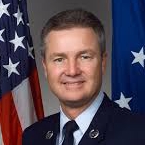
Gerald Murray
Canon lawyer and pastor of St. Joseph's Church in New York City, a priest of the Archdiocese of New York and frequent EWTN and Fox News commentator.
8
APPEARANCES
5
PODCASTS
Aug 25, 2026


Gerald MurrayGUEST
Yes, no, and that really is what I contend is to be the essence of the whole synodal project, which is a shared governance in the church by lay people and together with the bishops.
Gerald MurrayGUEST
But in practicality, the bishops be overwhelmed by the lay people demanding this, that and the other thing.
Gerald MurrayGUEST
That's what the Second Vatican Council created, and it's based on the ancient practice of bishops meeting in synods.
Gerald MurrayGUEST
But the Synod of Bishops did not include what Pope Francis made it into, which is basically a sort of semi-parliament, an assembly of all the different people of the church, bishops, priests, deacons, religious, lay people, etc.
Gerald MurrayGUEST
And even at the Synod, you had non-believers and people who were doubters, who were invited to be members So, you know, this really is a troublesome thing that's going on.

Joe McClaneHOST
How long do you think, what would you do, what would need to be done to reverse the course of some of the damages that we've seen in the church these last several decades for sure, especially synodality? What do we do to reverse it? How long does that take?


Gerald MurrayGUEST
In fact, uh, ask the people of Poland were they happy under communism or what they have now.
21 MINS LATER

Doug WilsonGUEST
the gleaning laws would be a good example of a political construct that, um, that allows the poor to go out into the fields and, and glean

Andrea LinaresHOST
¿Dónde, diría, termina ese derecho del paciente de decidir sobre su vida, sus decisiones personales y esa libertad religiosa que tenemos aquí en Estados Unidos? Que es una gran pregunta.
Gerald MurrayGUEST
No, si una persona que está en una casa de viejos que quiere quitarse la vida, tiene que quitarse la casa.
Gerald MurrayGUEST
Tiene que ir a otro lugar para hacer, porque es un pecado y no se puede decir, Quiero recibir el sueño o la ayuda de la gente católica, pero quiere matarme a la misma vez.
Gerald MurrayGUEST
No. Hay que decirle a la gente, aquí en la vida hay amor y sostener a la gente que necesita amor.
Gerald MurrayGUEST
It's something that I can't imagine, the government telling monks to do something that goes against the law of God, but it's happening in this state of New York, yes.
Andrea LinaresHOST
And how important could this case be in terms of possibly establishing a precedent on religious freedom in this country? Because it's not just New York that now has this law that will come into force on August 5th, but there are several more states in the country that already have laws like this approved.
Gerald MurrayGUEST
No, ese es el problema porque lo que comienza en un lugar puede expandir y puede ser presente en los estados.
Joe McClaneHOST
And the question I have, Father, is does the SSPX situation, does this highlight, does this put a big highlight on the need to be more generous to Catholics who want more of the patrimony and traditions of Holy Mother Church and not less? Because it feels lately that there has just been a vice grip clamp in many dioceses across the United States and the West, in particular, against traditional Catholics.
Gerald MurrayGUEST
No, I think it does require the situation with the Society of St. Pius X does require that the Holy See respond with greater generosity in making available the traditional Latin Mass and the other sacraments to people who find great spiritual strength.
Gerald MurrayGUEST
Mass, in its essence, has been celebrated for 1,500 years, has proven its worth, and since we're a Catholic Church which values tradition, that tradition of prayer and liturgical worship should not be cast aside.
Joe McClaneHOST
It feels like the average traditional Catholic who wants it is going to be the one to suffer.
Gerald MurrayGUEST
There are two documents that were sent to nuncios by the Casio of the Doctrine of the Faith explaining to bishops what to do regarding both the SSPX priests and then the laity.
Gerald MurrayGUEST
Now, the documents are full of problems, too, because as regards the priests, it never refers to the priests as being excommunicated.
Gerald MurrayGUEST
It refers to them as being under a censure for receiving ordination improperly from an SSPX bishop or having joined the SSPX if they were ordained by another bishop.
Gerald MurrayGUEST
So the priests are not in that practice document ever considered to be excommunicated and there's no provision for lifting of the penalty of excommunication.
Gerald MurrayGUEST
Likewise, the practice for lay people is confusing because it is presumed that they have been somehow been excommunicated by adhering to the doctrinal positions of the SSPX.


Gerald MurrayGUEST
Uh, so as regards something called the synodal style, uh, who determines that? Who identifies it? Who understands what it means? Synodality was, is a neologism.
Gerald MurrayGUEST
The word synod exists, but the idea of synodality as describing an aspect of, of the Church, almost a mark of the Church, this is a complete new thing.
Gerald MurrayGUEST
And as with any, you know, uh, verbal engineering, uh, it's the engineers who tell you what it means because otherwise you don't know.
Gerald MurrayGUEST
You, you can't go to a dictionary, you know, written 30 years ago and find out what is synodality, uh, because it doesn't exist.
9 MINS LATER


Conor GallagherHOST
There's an ongoing debate about is it pastoral, doctrinal? But my simple question is this: Why is assent to the Second Vatican Council necessary if it was described by John XXIII and others as predominantly pastoral in character?
Gerald MurrayGUEST
The first is the description of a council by the pope, uh, it doesn't ch- change the nature of a council.
Gerald MurrayGUEST
So as pastoral, meaning the direction was not to, uh, to define dogma against heretical attacks, but rather to promote the mission of the church by adapting the church's apostolate to modern needs.
Gerald MurrayGUEST
But by its nature, a council teaches, and we have two dogmatic constitutions on the word of God and on the church issued by the church fathers and then approved by Pope Paul VI.
Gerald MurrayGUEST
So it's clear the church, the Va- Vatican Council is, Second Vatican Council is a teaching, uh, um, authority.
38 MINS LATER
Conor GallagherHOST
[rock music] Does the existence of more traditional communities, such as the Fraternity of St. Peter, Institute of Christ the King, I think of also Clear Creek Abbey, the Benedictine Monks of Norcia, other traditional communities, does that mitigate their argument for the state of necessity?
Joe McClaneHOST
What was your initial reaction to the to the AI encyclical? And I mean, you think it's emotionalism that we're dealing with here? Do they just is everything emotional these days?
Gerald MurrayGUEST
Well, I looked at the encyclical, and I was interested because AI is a very important topic now in discussing education, work, its applications, etc.
Joe McClaneHOST
If you could decide what the cardinals spoke of in the next consistory, what would be the important things? What should they be talking about? If it's not talking about the just war theory or some of this other social synodal whatever.