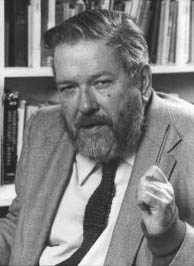
George Grant
Canadian philosopher
8
APPEARANCES
7
PODCASTS
Oct 13, 2026


George GrantGUEST
If Byzantium could fall, if the great city of Constantinople, the center of Christian civilization in the East, if that could fall, if the imperial armies of the Byzantine Emperor could be defeated, then surely nothing else could stop them.
George GrantGUEST
Almost immediately, uh, there were calls for a liberating crusade of all of the historic lands in the eastern Mediterranean.
George GrantGUEST
All called for new crusades to liberate the eastern Mediterranean from the terror of the Islamic horde.
12 MINS LATER


George GrantGUEST
You know, the barbarian invasions when the Gauls and the Normans and the Visigoths and the Goths and the Ostrogoths swept down from the Caucasus and out of the fjords of Scandinavia and launched, you know, full-scale attacks from the 4th all the way through the 9th centuries.
George GrantGUEST
One of the things that happened was is that the barbarian tribes were converted because the church was courageous and bold.
48 MINS LATER

3:09

But first, maybe it'd be helpful for the audience to hear about how you came to Christ and how you ended up in Christian ministry.
George GrantGUEST
I came to Christ as a high school student as a result of an evangelistic sort of outreach to my high school in Dallas, Texas.
George GrantGUEST
I think the Holy Spirit had prepared me for the clear presentation of the gospel the first time I heard it.
George GrantGUEST
And so I almost immediately decided that on my way to swim practice, I was a high school and later a collegiate swimmer.
35 MINS LATER
38:45
How far did you, when you were preaching every week, how far would you work ahead on a Sunday message? Would you prepare it several weeks in advance, or are you getting that done the week of?

George GrantGUEST
He is perhaps the most important of all of the founding fathers that we are unaware of.
George GrantGUEST
Obviously, there were stalwarts like George Washington, John Adams, Patrick Henry, Samuel Adams, John Hancock.
George GrantGUEST
But Witherspoon's influence was according to each of those men, outweighed them all.
George GrantGUEST
250 years ago, when news arrived in London— that the long and protracted conflict with the American colonial possessions had culminated in this resolute declaration of independence, Horace Walpole, who was then prime minister, rose in parliament to declare, there's no use crying about cousin America, She has eloped with a Presbyterian parson.
George GrantGUEST
And interestingly, it was a sentiment that was shared with virtually all of the elites in Britain at the time and many royalists back home in America.
14 MINS LATER

C. R. WileyHOST
Well, when it comes to the situation we find ourselves in today, and this is a nice segue to that matter, what would you say just people who are believers should learn from John Witherspoon and these other founding fathers who were influenced by him?

George GrantGUEST
He is perhaps the most important of all of the founding fathers that we are unaware of.
George GrantGUEST
Obviously, there were stalwarts like George Washington, John Adams, Patrick Henry, Samuel Adams, John Hancock, but Witherspoon's influence according to each of those men, outweighed them all.
George GrantGUEST
250 years ago, when news arrived in London, that the long and protracted conflict with the American colonial possessions had culminated in this resolute declaration of independence, Horace Walpole, who was then prime minister, rose in parliament to declare, there's no use crying about cousin America, She has eloped with a Presbyterian parson.
George GrantGUEST
And interestingly, it was a sentiment that was shared with virtually all of the elites in Britain at the time and many royalists back home in America.
14 MINS LATER
C. R. WileyHOST
Well, when it comes to the situation we find ourselves in today, and this is a nice segue to that matter, what would you say just people who are believers should learn from John Witherspoon and these other founding fathers who were influenced by him?

speaker_2NARRATOR
If the First Great Awakening gave us the glory of the War for Independence, the Second Great Awakening descended into the shame and misery of the War Between the States.
George GrantGUEST
Because the American War for Independence was deeply theologically rooted in the ideas of the First Great Awakening, the ideas of, of George Whitfield in particular, but, but also the ideas of Jonathan Edwards and the Tennant family and a whole host of others.
George GrantGUEST
You read the sermons, for instance, of, of the colonial pastors, and you start to see the reaction back in Westminster of what they called the Black Robed Regiment.
George GrantGUEST
It was, it was led by these theologically astute, deeply theologically rooted pastors and leaders.
George GrantGUEST
The result was, is that things like the Just War Theory were taken very much into account in the prosecution of the war.
33 MINS LATER
speaker_2NARRATOR
There can be no holy nation without a holy people
George GrantGUEST
[lips smack] Well, one of the things to remember is that most of the colonial possessions were Christian colonies when they were founded.
George GrantGUEST
And, uh, th- there were a host of different renewal movements f- that had fled from, uh, Europe.
George GrantGUEST
Uh, the f- you know, French Huguenots from France, and the Puritans and the Pilgrims from England.
5 MINS LATER

Lindsay MastHOST
Tell us what book you chose to talk about, and what, what was going on in your life when you first read it?
George GrantGUEST
Well, the first thing I have to say is, to narrow this down to just three books has been torture.
George GrantGUEST
I read it in nineteen seventy-one.... and it was the day after I had made a profession of faith.
George GrantGUEST
So on my way to swim practice, I went by this little Pentecostal bookstore and thought, "You know, I need to find out what it is that I'm supposed to believe now." I-- That night before, I'd read the whole Gospel of John in a little pamphlet that I was given.