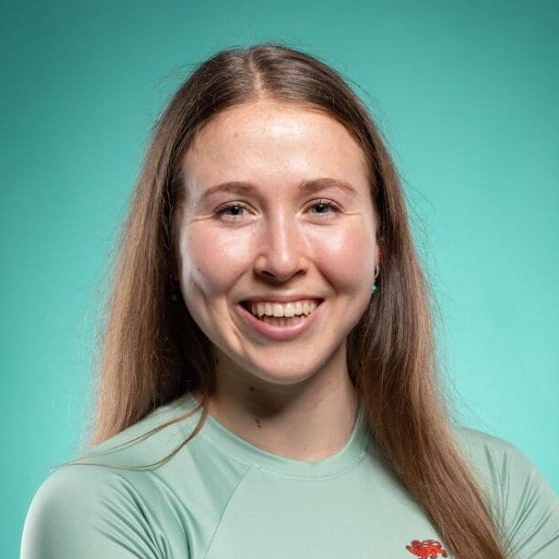
Gemma King
PhD student in Stem Cell Biology at University of Cambridge and Women's President of Cambridge University Boat Club
4
APPEARANCES
4
PODCASTS
Jul 20, 2026


Gemma KingGUEST
said in the book i'm not discounting you know thousands of years of chinese medicine because i do believe there's some really amazing stuff in chinese medicine but so what happens is um you know if you've got your sleeps architecture you've got 90 minute cycles and you've got four stages you up you know awake and then you go right down into deep slow wave sleep So you get predominantly more deep, slow-wave sleep at the start of the night, and then REM sleep starts to kick in around 2 a.m., depending on when you go to sleep.
Gemma KingGUEST
And so REM sleep is when you are consolidating your memories, you're making sense of the day.
Gemma KingGUEST
A librarian with a bench and all of the folders come in throughout the day of, you know, what happened in memories.
6 MINS LATER

Jemma KingGUEST
So I know that some people really don't like trackers, and they think that it's maybe a waste of money.
Jemma KingGUEST
But honestly, if you have a serious mental, physical health issue or feel like you're not coping with life, I, I strongly recommend just getting a wearable even for six months because if you don't know what's going on during that really imperative part of your daily sleep, uh, architecture, you just don't know.
Jemma KingGUEST
And so when you think about, um, the sleep cycles, all of them are equally as important, and they do different things.
Jemma KingGUEST
So you start o- off with- Light sleep, so that's that really nice, you know, when you're drifting in between consciousness and, uh, and awareness where your alpha brainwaves sort of, they start to change and, you know, you can have insights at this time, which is q- quite lovely, and I think a lot of people historically have used this time for, um, you know, creative insights.
10 MINS LATER

Paul TaylorHOST
I remember reading a 2019 paper by Dutch researchers who blocked REM sleep in both animals and then followed it up with humans and found that it induced anxiety-like behaviors within a week, right?
Gemma KingGUEST
And so if you're like a lot of people will cut off their REM if they drink and or if they've got early alarms and they're getting up to play sport or something.
Gemma KingGUEST
So, you know, REM is predominantly characterizing the later part of your sleep architecture.
Paul TaylorHOST
What about the other stages of sleep? Like, what are they? Are they useful or are they just kind of around the edges? Yeah, I think we're finding out


Jamie BurnettHOST
So where do you start? If you're chatting to someone, they're having a period where sleep's been a bit rough, where do you kind of start to reverse that?
Gemma KingGUEST
About 30% to 50% of people wake up at 3 a.m. in the morning and can't get back to sleep.
Gemma KingGUEST
I think there's normalizing it, but then you have to say a good night's sleep starts the minute you wake up.
Gemma KingGUEST
It's not something that you jump into bed and then all of a sudden you can fall to sleep.
Gemma KingGUEST
It's like landing a hot air balloon, but that hot air balloon had to take off in the morning.
Jamie BurnettHOST
Do you think that's kind of part of the reason why, why so many of us are having those middle of the night wake ups?