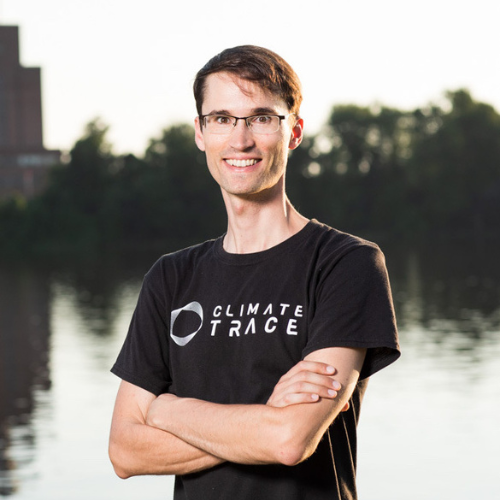
Gavin Mccormick
4
APPEARANCES
3
PODCASTS
Aug 6, 2026


Gavin McCormickGUEST
Um, so I think I should start by saying, so what we do at Climate TRACE is we are a big coalition of NGOs, um, 150 different NGOs and universities who all specialize in satellites and measuring emissions.
Gavin McCormickGUEST
So the reason that I'm talking to you today about this question is we got a whole bunch of experts.
Gavin McCormickGUEST
We had experts in shipping emissions, mining emissions, and put it all together, kinda Wikipedia style, to monitor the world's emissions.
Gavin McCormickGUEST
And last time I talked to you, we had just, like, hot off the press, finished the draft of now being able to measure all the emissions in the world, all sectors in.
Gavin McCormickGUEST
We're talking physical emissions, not what a company say they are emissions.
44 MINS LATER


Gavin McCormickGUEST
Who could have seen that coming? So the whole notion that it's somehow good for the environment to use energy at off-peak times, and that you want to not use it when it's peak, that's true if you're talking money.
Gavin McCormickGUEST
A different way to think about the problem is to say, if I use energy from the power grid at this time, what power plants are gonna turn on or off? And, um, so it turns out that research was coming out that right about 2012, and, uh, long story short, I was the grad student assigned to go actually operationalize some of those algorithms.
Gavin McCormickGUEST
Um, and so, um, we just for fun on a weekend hit upon this idea that a few people from Google and Facebook and me met at a party and we're like, "What if we just put this on the internet? What if we just made it possible for anybody to know what time do you have to use energy for it to be cleaner or dirtier?" And we hit upon this idea that, um, in addition to charging batteries at the right time, you could use your dishwasher at the time that is good for the environment.
8 MINS LATER


Kevin FrazierHOST
And so if you're charging that battery at the wrong time, you're really straining the grid and not doing the world a favor and, in fact, leading to deleterious outcomes.
Gavin McCormickGUEST
Yeah, the way I like to think about it is there was a very concerted information campaign effort by electric utilities.
Gavin McCormickGUEST
It kind of like predates a lot of the AI campaigns to convince everybody that the best thing for the environment was to do whatever was most profitable for the electric utilities.
Gavin McCormickGUEST
Who could have seen that coming? Who could have seen that coming? So the whole notion that it's somehow good for the environment to use energy at off-peak times and that you want to not use it when it's peak, that's true if you're talking money.

Gavin McCormickGUEST
But there are people like Deep Seek saying, I'm not sure it's going to happen.
Gavin McCormickGUEST
There's precedent from things like Bitcoin when Ethereum came out with something that used a thousand times less energy and everybody had said, that's not an option.
38 MINS LATER
59:01
Tell me about Climate Trace, this organization you co-founded with Al Gore.