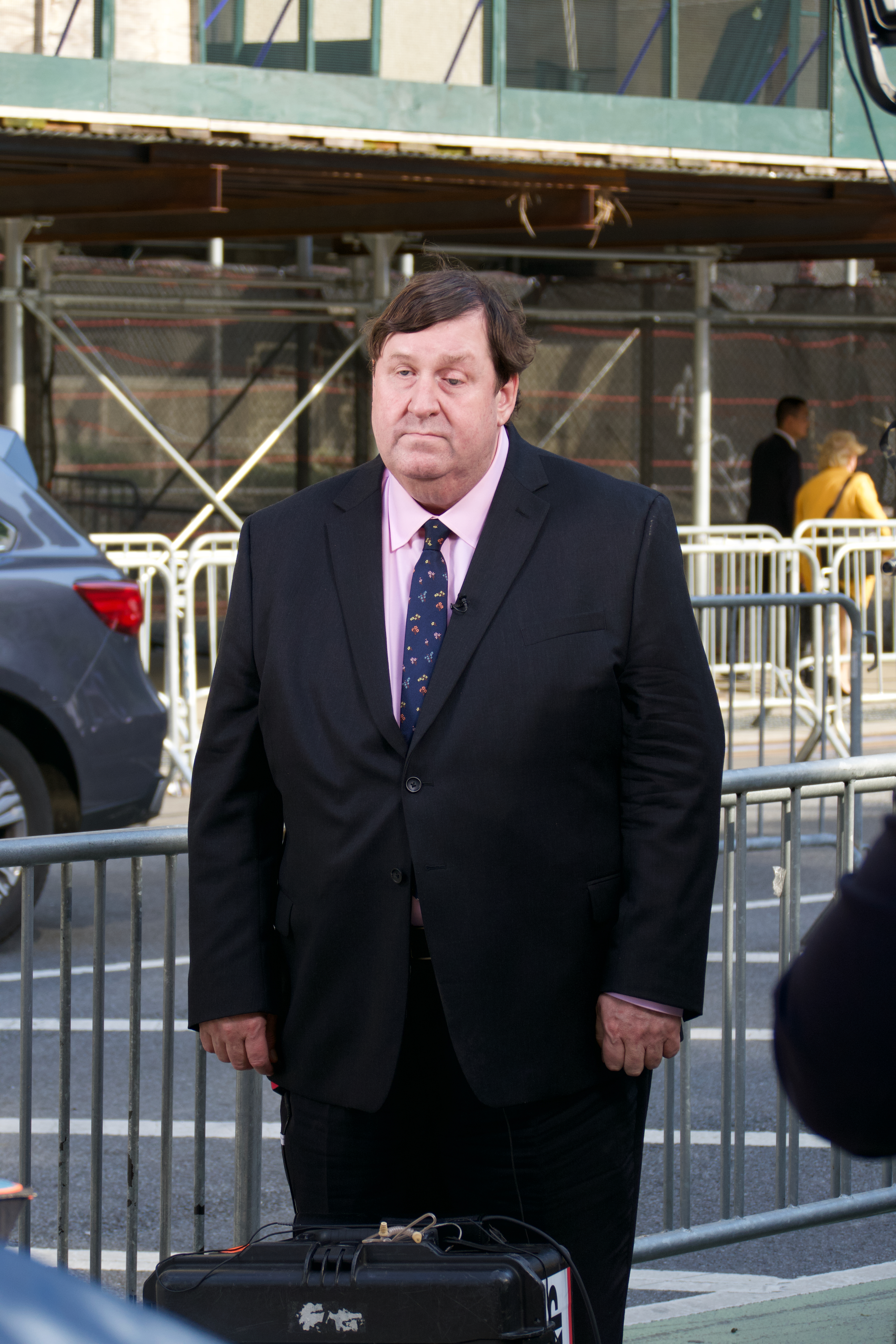
Gary O'Donoghue
Journalist
4
APPEARANCES
3
PODCASTS
Sep 7, 2026


Amy ZayedHOST
So how do you see it? I mean, do you use them in your job or doing your work, Gary? Yeah.

Gary O'DonoghueGUEST
I do occasionally use them in my job in the sense that I use them for navigation because they could connect to things like the Aira service.
Gary O'DonoghueGUEST
Now Aira is a visual interpretation service where you effectively dial up a sighted agent who can see through your phone camera or all your meta glasses who's trained in you know interpreting the world for blind people it's a paid service and they can you know guide you because as we know as blind people you know you can get about but the last 25 or 30 meters is always the difficult bit right you can get almost somewhere But finding the door.
Gary O'DonoghueGUEST
But the other thing I have used it for, and this has been a liberation for me, and it's not because it's glasses, but the glasses make it practically possible because it's hands-free.
Gary O'DonoghueGUEST
So, for example, when I arrive at Heathrow in London, I used to have to wait for the assistants and sometimes wait a long time, and it wouldn't necessarily be the best experience.
Gary O'DonoghueGUEST
My daughter now guides me right through the term from the plane, right through passport control to the bag carousel, identifies my bag when it's coming round.
17 MINS LATER

Karina SturmHOST
Did you like ever consider going back to the UK or were you like, nope, I'm staying, whatever happens now?

Gary O'DonoghueGUEST
We, we, we've glossed over the option that, that they could have gone for, which is the, what, what's called confidence and supply, where you have an arrangement that another party supports you in confidence votes in the Commons, because if you can't win a A confidence vote or Queen's Speech vote, then, you know, you can't do anything, and Supply, which is another word for money.
Gary O'DonoghueGUEST
Um, and that was an option, uh, for the Liberal Democrats and i- and for the Tories, but, but it was quickly ruled out, and it was ruled out on grounds of stability, A, publicly that was Um, but y- y- it was clear that coalition, what did it give you that confidence and Supply didn't give you? It gave you some power.
Gary O'DonoghueGUEST
It gave you a share of power, and my goodness, the Lib Dems hadn't had, liberals of any kind, hadn't had that since the '30s.
Gary O'DonoghueGUEST
So the temp- the temptation to finally get your hands on a lever or two of government must have been overwhelming.
11 MINS LATER

Adam FlemingHOST
And that also was quite novel for a British government to have a sort of handbook of what they were gonna do for the next five years.
Gary O'DonoghueGUEST
Yeah, and they, they also, you know, they, they had a, a series of sort of what we, well, I think what we called carve-outs, didn't we? Where there was some complicated, whi- which would cause problems later on, um, where Lib Dems were allowed to take an independent view on Trident, for example, renewal, or nuclear power, which was also, you know, one of those things that got the activists, um, upset.
Gary O'DonoghueGUEST
And, and then it became murky as to whether these carve-outs applied to people wi- with ministerial jobs.

Carole WalkerGUEST
But I think that set the tone for how they could deal with one another when you came to these incredibly difficult and complex negotiations.
Gary O'DonoghueGUEST
I mean, he, he was often accused of trying to cling on to power and being rather sort of static and, and sort of unimaginative.
Gary O'DonoghueGUEST
But there were, I mean, Labour had made the, the offer for a, a referendum on the voting system already before the Tories ever did to the Lib Dems.
Gary O'DonoghueGUEST
The Lib Dems have, uh, uh, liberals, SDP, Liberal allies, it's been back in the '70s, electoral reform was always one of, you know, was their, was their key demand.
8 MINS LATER


Gary O'DonoghueGUEST
He was actually a blind chap called Kevin Mulhern, who ran a production company making a program from, for Central Television at the time called Link, and it was a disability magazine program.
Gary O'DonoghueGUEST
And he happened to pick him up, and my dad had got talking to him, and Kevin said to, to my dad, "Oh, why doesn't he come along and have a look at one of our shows go out?" And this was when I was, like, in the second year or something like that at university.
Gary O'DonoghueGUEST
And so I went up to Birmingham, and I looked at it, and I kind of got a bit starstruck by this whole business, and I liked the fact they were, you know, just having people on telling stories and talking about issues and things like that.
Gary O'DonoghueGUEST
And he put me in touch with a couple of other people, and that meant that, um, uh, by the time I went on, on my year abroad to France, I sort of had some contacts, and I started going down ...
18 MINS LATER