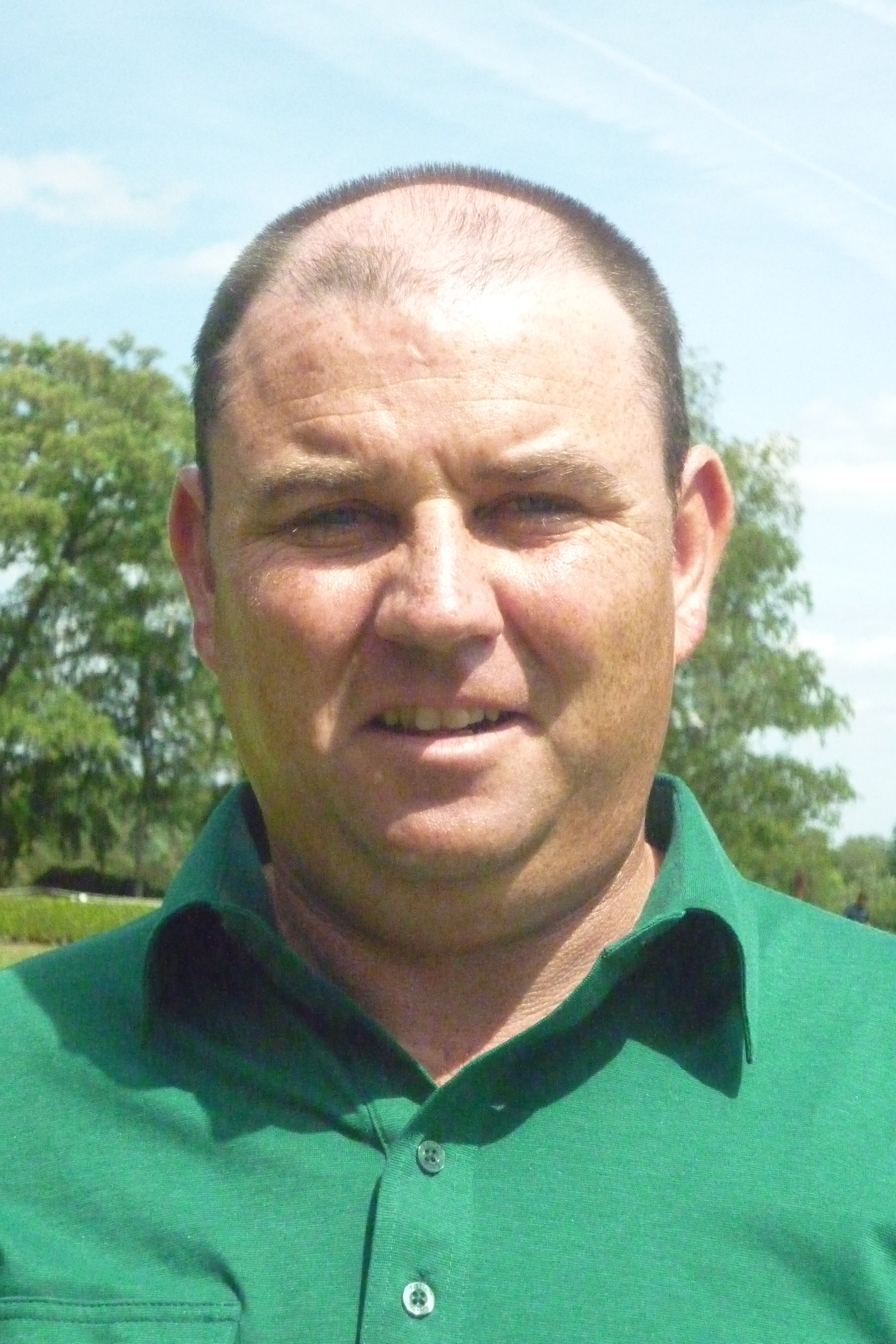
Gary Murphy
Irish professional golfer
8
APPEARANCES
7
PODCASTS
Aug 31, 2026


Shane MoynihanHOST
Can you talk to us a little bit about that, particularly to focus on how the party evolved in Cork in terms of that electoral support and how that's evolved over time as well? Because that's a key part to understanding the story and understanding that 45% that you referenced earlier on in your own notes.
Gary MurphyGUEST
I think the great strength of Fianna Fáil was that its representation mirrored the people it represented, if that makes sense.
Gary MurphyGUEST
So the teacher just talked about electrical engineers, but it had sheet metal workers, and bus drivers, and carpenters, and drapers, like the Lamasses, and barristers, and teachers.
Gary MurphyGUEST
It had all sorts of Irish people representing it at local level, in Dáil Éireann, and in the Sianad.
Gary MurphyGUEST
And it was able to attract people from all social classes because they felt, I think, that it stood for something.
19 MINS LATER
Shane MoynihanHOST
Have they changed? What have been the kind of highlights and the main evolutions that you've seen? It manifests itself to the public as the way campaigning happens differently, but how have you seen that transform over the hundred years?
Gary MurphyGUEST
Although we had a teacher who ended up in jail for protesting against water charges, just water charges way back in the early days of... paying for services as this thing from the 2015 iteration.
Gary MurphyGUEST
But that's an important date, 1789, 181, 182, because it was in 1977 that Fianna Fáil ran the really first professional campaign.
Gary MurphyGUEST
In 1973, Fianna Gael and Labour had a 17-page manifesto literally stapled together on a few pieces of paper about what they would do as an alternative government to Fianna Fáil.
Gary MurphyGUEST
And in one way that forced Fianna Fáil in 1977 to produce the famous, I think it's called the Action Plan for National Reconstruction, sometimes just called a 1977 manifesto, written by Seamus Brennan with the help of people like Frank Dunlop, Esmond Smith.
Gary MurphyGUEST
Jack Lynch had basically put together this, Seamus of course involved in the setting up of OGRA, a very important organisation for Fianna Fáil.
28 MINS LATER
Brian O'ConnorUNKNOWN
I mean, Fianna Fáil has evolved substantially the last hundred years, but what has influenced that evolution? I mean, needless to say, Fianna Fáil 1926 is very different to Fianna Fáil today in a lot of ways, What is the most consistent thing that causes that evolution, do you think? And what is the thing that binds Fianna Fáil back then to now? Thanks, Brian.

Eoin SheahanHOST
... what's the best outcome here for golf, Gary? As, as somebody who can, who can maybe cast a, a fairly neutral eye over the future of the sport, what, what's best? Like, is it, is it Liv ceasing to exist, if we're being brutally honest here? Is it, i- i- is Liv a, a bad actor in terms of the growth of the game and what's good for the game? Or is some version of Liv actually the thing that golf needs to grow and to attract more viewers and potentially more participants?

Gary MurphyGUEST
Well, if, if you look at growing the game, like if, if, if the Saudis were intent on growing the game, if they'd put half of what they've spent, if they put three billion into grassroots golf.
Gary MurphyGUEST
Now, I don't know where they're at with... 'Cause ideally, Dubai was essentially created through an exposure to sport, and it's the holiday destination and the tax, tax haven that it is nowadays.
Gary MurphyGUEST
You know, it was in the late '80s that, that the European tour landed in Dubai, which was no one had really ever heard of Dubai.
Gary MurphyGUEST
So essentially, the Saudi model was to try turn, you know, soften their image, try turn it into a sporting mecca.
Gary MurphyGUEST
Had they invested in, which they are allegedly building a lot of golf courses, but if you don't have a front model like the LIV Tour to play these events on, it doesn't really make that much sense, which is what Dubai have done.

Gary MurphyGUEST
And like most things, if you are paying very little, you may not get what you expect to get.
Gary MurphyGUEST
Now, there is some, uh, there's an organization, I think it's the Joint Commission International, a US organization, which accredits international hospitals, and if you are gonna go abroad, you are gonna get treatment, then you should obviously be making sure that you're going to, uh, so you're going to be treated by a doctor that's fully qualified, uh, a hospital that's accredited, uh, minimizing the risk yourself before you go.
Gary MurphyGUEST
But from an underwriting perspective, do we end up with a list of hospitals that are on the JCI, uh, or they're JCI accredited? That's possible.
Gary MurphyGUEST
Uh, and therefore, we can get some data from those hospitals about the type of procedures they're carrying out, uh, and, you know, the, what their success rates are, what the, uh, additional challenges are with those procedures.
Gary MurphyGUEST
But it's a lot of information you'll need to bring in to be able to write it properly, and we just, you know, at the moment, I don't have that data.
6 MINS LATER
Scott McGeeHOST
I mean, I mean, like I said, if you, if you were to go and, and, uh, start looking at, at providing cover for this, what would you have to look at to make sure that, that you're entering this space in the right way?


Ciara KellyHOST
let's say, the art from the artist or the music from the musician or indeed the policies of a politician from the politician
Gary MurphyGUEST
And certainly Hockey, a bit like his father-in-law, Sean Lamass, he was a great man for compartmentalisation.
Gary MurphyGUEST
Or even take his attitude to his wife, Maureen, who was a marvellous woman who I interviewed on a number of occasions over my research.


Gary MurphyGUEST
Yeah, so basically the Hockey family were very upset about the tribunal report, which found that three instances of corrupt acts, I think is the phrase used in the tribunal report when it comes out a couple of months after he died.
Gary MurphyGUEST
Now, I was very conscious when I was writing my book to try and try and clear my mind of how he's felt about the Tribunal Report, how the Fintan O'Toole's of this world, and a great admiration for Fintan O'Toole.
Gary MurphyGUEST
Anyone who knows anything about modern Ireland would think that he has been one of its great sort of portrayers.
Gary MurphyGUEST
And I spoke to people like Park O'Higgins, his very close civil servant, who was deeply critical of the tribunal and considered it a sort of a star chamber, as many did.

SarahHOST
Do you think this political storm has hurt Fianna Fáil and the wider government or is it largely confined to Bertie?
Gary MurphyGUEST
I mean, the fact that he was out canvassing at all says something about how all-encompassing politics is for him.
Gary MurphyGUEST
I can't think of any other former Taoiseach who has engaged with the sort of nitty-gritty of out canvassing in a by-election the way Mr O'Hearn has been doing for Fianna Fáil in this particular by-election.
Gary MurphyGUEST
But no one has taught that Fianna Fáil had much of a chance in Dublin Central with their candidate John Stevens who of course has been long associated with Mr Ahearn.
Gary MurphyGUEST
Fianna Fáil has been a wasteland in Dublin Central since Bertie Ahearn himself stepped down.
SarahHOST
And we have seen the government take a harder line on immigration, haven't we?

Gary MurphyGUEST
It was I actually worked with this sports psychologist towards the end of my career when I needed a psychiatrist not a sports psychologist but and one of his one of his things was you know you want to feel like you're walking in the footsteps of champions you know and have that awe about you when you're that was one of his mantras which kind of made sense but But when I played the course, that's exactly what it felt like.
11 MINS LATER