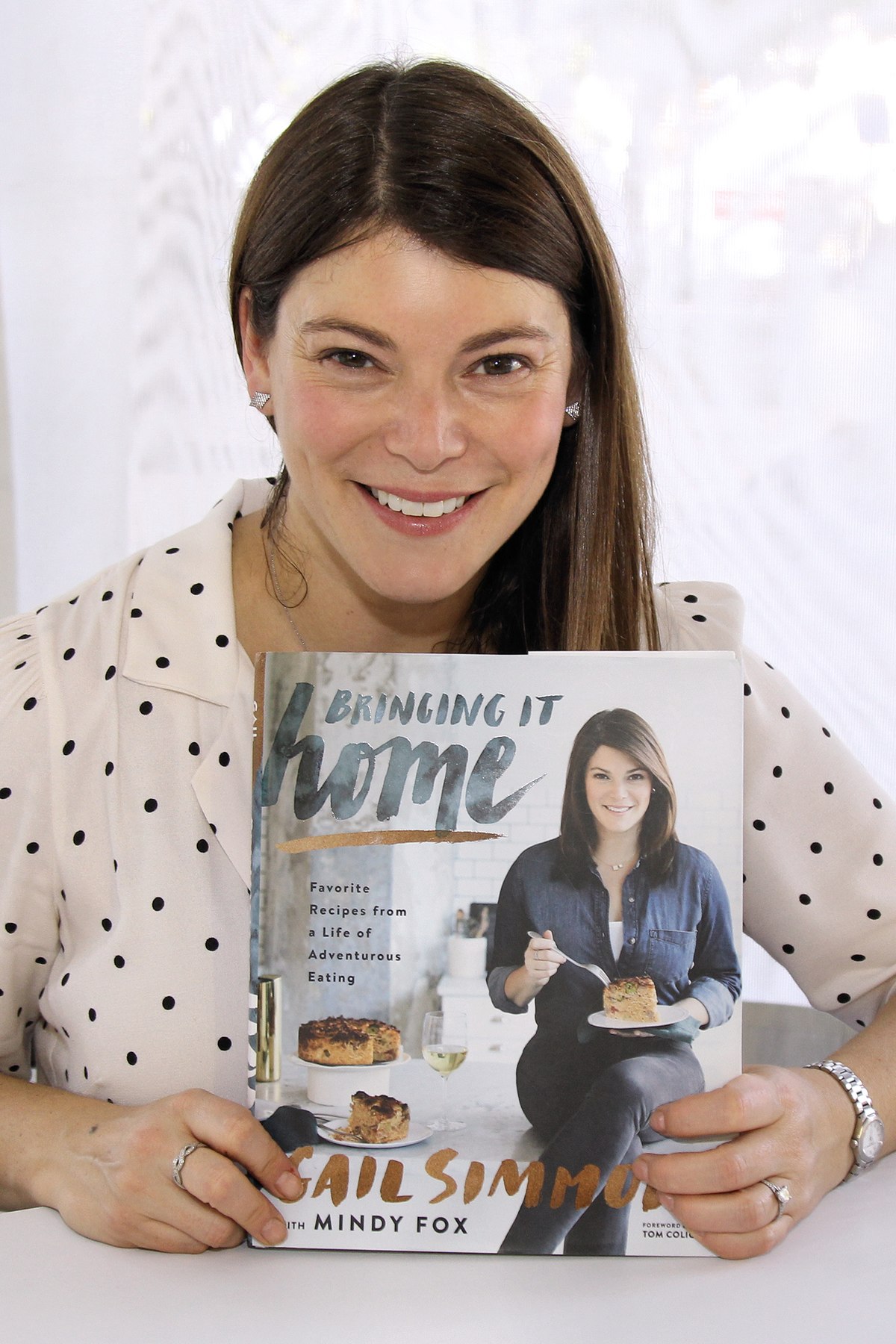
Gail Simmons
Canadian food writer
20
APPEARANCES
13
PODCASTS
Nov 17, 2026


Gail SimmonsGUEST
At the beginning of Top Chef, yeah, we were instructed a little bit and our own instincts were to be nitpicky and come across as really stern because we wanted to be taken really seriously.
Gail SimmonsGUEST
We weren't established personalities, right? I was plucked from obscurity, basically.
Gail SimmonsGUEST
Yes, I had credentials and I was doing it on behalf of Food & Wine magazine, which obviously is a trusted source of food information, but no one knew exactly who I was.
Gail SimmonsGUEST
And we all were edited to be incredibly biting and to create this... aura of drama, right? But we learned at least on Top Chef very, very quickly that our show wasn't about us and it wasn't about being mean or spiteful or just saying things for the point of being provocative.


Ed LevineHOST
then I don't want to ask the people if I can have it for breakfast because then I'll seem
Gail SimmonsGUEST
And that sort of overlaps into another idea about leftovers that I also talk about in dessert in the book.
5 MINS LATER


Jen HatmakerHOST
Could you talk a little bit more about your parents and your home? And this is what you picked up in the atmosphere.
Gail SimmonsGUEST
Well, my parents certainly taught me to be curious about other people and other cultures.
Gail SimmonsGUEST
He moved to Canada, met my mother in Canada, and they settled in Toronto and had me and my brothers.
20 MINS LATER

Gail SimmonsGUEST
If you think about it, we've all been guests way more than we've been host because you're not just a guest when you go to someone's house.


Gail SimmonsGUEST
I wrote this book as an invitation for all of us to step up for our communities, to step up for the people who take care of us.
Gail SimmonsGUEST
Because I realized about three or four years ago, you know, coming out of the pandemic, that we guest way more in life than we host, even prolific hosts.


Gail SymonsGUEST
So I think probably the most important piece is that when you vote, you're basically making a statement about the government that you want.
Gail SymonsGUEST
I mean, yeah, and the nation, but frankly, it's state and local that is the most.


Lisa JoynerHOST
want to ask you about because i'm i'm so excited you have a new book that's coming out yeah and i got to you know you were kind enough to give us a little bit to read i think it is such an interesting take that you do have a little bit of a plus one connection with this new book tell us about it
Gail SimmonsGUEST
so the book is called guesting and it came out of the idea that sort of after the pandemic i started seeing these patterns in people's behaviors both when they were going out for dinner in restaurants, staying at hotels, but also in the behavior around going to people's houses that everyone felt a little bit paralyzed, a little bit awkward, uncomfortable, and also lazy.
Gail SimmonsGUEST
You never need to talk to another person to get your food delivered, to get all your work done, you know, and it's very isolating.
Gail SimmonsGUEST
And what we all now know is that there is absolutely like an epidemic of loneliness happening in this country.
8 MINS LATER
Lisa JoynerHOST
Share with us just a little bit of your thoughts on being a part of, you know, television, of television phenomenon.


Gail SimmonsGUEST
Well, this is actually secretly a dummy copy because I'm supposed to get the real copies today.
Gail SimmonsGUEST
You know, I wrote a sort of an early life memoir in my early 30s, really just called Talking With a Mouthful that was about sort of how to find your place in the universe, graduating college and not knowing, you know, for kids who are kind of coming out into the world and how they, you know, how to find something you love and find your place in the world.
14 MINS LATER

Jeff RickettHOST
Gail, you're tired of, of let's see, what could you do for me? Not how can we get a new enemy or how can we fight with somebody else?
Gail SymonsGUEST
So, um, You know, I knew as soon as Chuck Gray won the nomination, and I think I had done that a couple of weeks ago, I knew I wasn't gonna vote for him.
Gail SymonsGUEST
I watched him for close to 10 years getting absolutely nothing done, but alienating people and speaking poorly to them.
Gail SymonsGUEST
And basically speaking and acting in ways that I just, I find embarrassing in the thought that he would represent Wyoming in DC on a national stage.
9 MINS LATER


Gail SimmonsGUEST
I use the word tenets because they started out as rules, and I don't want this to be a rule book.
Gail SimmonsGUEST
It's not about, like, what fork to use at dinner or how you have to, like, sit up straight or things that we think about as traditional etiquette.
Gail SimmonsGUEST
It's about how we can communicate and contribute better to the world around us to enrich our own lives and to build community.
Gail SymonsGUEST
So when they contacted me, it was about last week's column, which was really about the 50%—well, not 50%, but it's the special districts and the funding for special districts that come out of our property taxes— And specifically, the fact that our special districts, so when you look at what happens with our residential property taxes, and so this is a big issue when we're looking at an additional 25% off.
Gail SymonsGUEST
So my understanding is that what we'll be voting on in November will not be an additional 50% over the 25.
Gail SymonsGUEST
So it would double the amount that is then not available to our special districts.
Gail SymonsGUEST
And my whole point about this is that the special districts and even the college and school districts are...
7 MINS LATER


Gail SimmonsGUEST
Um, and, and I think that that actually is really important to the moment we're in.
Gail SimmonsGUEST
You know, I read an interview, and for what it's worth I'll send it to you after this call because I've sent it to so many people.
Gail SimmonsGUEST
It's actually, it was written by a chef in Toronto who I'm friendly with who I was on Top Chef Canada with and whose restaurants we ate at a lot when we were shooting in Canada last season.
Gail SimmonsGUEST
And he, um, wrote an article recently, and what he said, like, I can't get out of my head, and it's very similar to what Dan Kluger said, which is that he said the problem is that restaur- and I'm paraphrasing, the problem is that restaurants are unable to charge the prices of what food costs.
6 MINS LATER


Gail SimmonsGUEST
This was a first, and you know, the funny thing about this snake is that the day before, you know, we started our episode in Greenville, South Carolina.
Gail SimmonsGUEST
We moved to Asheville for the day, where the chefs enjoyed learning about Asheville and Appalachian ingredients and meeting a bunch of chefs and going to restaurants in Asheville to be inspired.
Gail SimmonsGUEST
And then we moved back to Charlotte to this beautiful farm outside of Charlotte for the Asheville hurricane relief fundraiser that we put on with 200 diners.
Gail SimmonsGUEST
And the morning that the chefs all moved from South Carolina to Asheville for the day to do their little day trip, Kristen and I went on a bike ride.
Gail SimmonsGUEST
And you know, Greenville, if you watched the episode before, you know Greenville has this amazing Swamp Rabbit Trail, and so many professional, like Tour de France bikers bike that trail and train there.
7 MINS LATER

Gail SimmonsGUEST
And there was, like, you know, searches on the inter- But it was a d- it's a whole, totally different time for media.
Gail SimmonsGUEST
And Jeffrey was one of the last of the really, like, long-format, old-school, like, classic journalists.
Gail SimmonsGUEST
So he wrote a column in Glo- in Vogue every month that was a really deep dive.
Gail SimmonsGUEST
And, you know, he's made two books that are compilations of his essays from Vogue over the years.
7 MINS LATER

Gail SimmonsGUEST
Like that's the- Yeah ... those are the things that you could never anticipate or plan for that I think are what make Top Chef what it is.
Gail SimmonsGUEST
Because every season you're in a new place, new circumstances, and we s- spend as little time as we possibly can in the kitchen, right? The whole point is to really do a deep dig into the place, the geography, the population, the culture, the immigration pathways, the local ingredients, and what makes this little corner of the world unique, right? And I think actually this season in Charlotte, it's really taken to a place I didn't anticipate because on the surface I was like, "We're going to Charlotte? I, I don't know.
Gail SimmonsGUEST
It's like a nice, lovely, it's a lovely mid-sized city, but, um, you know, what's the culture there? What, what are we gonna really discover and be able to show the chefs? Is there enough?" You know, it's always our question.
Gail SimmonsGUEST
And what we found was like, you know, so surprising because we weren't doing in the obvious place, right? It's, it's easy to know what you're gonna get when you go to LA, New York, Chicago, San Francisco, like all the big food cities.
29 MINS LATER


speaker_4UNKNOWN
Yeah.
Gail SimmonsGUEST
There was a lot of drama in general, and then there was actually a quick leak of the winner hours before the actual show aired, and I thought I was gonna be fired.
Gail SimmonsGUEST
Like, I really thought this was the demise of not only the show but of my life and job.
Gail SimmonsGUEST
And, um, I went to bed that night and could barely sleep I was so anxious the day before the finale was airing.
Gail SimmonsGUEST
And the next morning, I woke up in Aspen and I had asked for a copy of the New York Times.
Gail SimmonsGUEST
I, I woke up on a Wednesday morning, Wednesday is the dining section of the New York Times, and I knew that Frank Bruni, who was the restaurant editor at the time, was going to be writing about the show.
10 MINS LATER