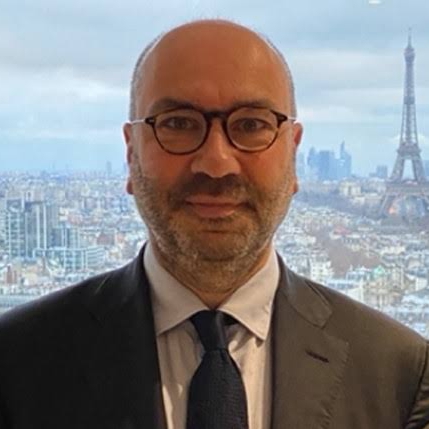
Frédéric Samama
Climate finance pioneer at S&P Global Sustainable1, co-author of the BIS "Green Swan" report and author of "The Enigma of Climate Inaction."
3
APPEARANCES
3
PODCASTS
Oct 15, 2026

Matt MaternHOST
So, uh, given that you've identified the problem, uh, how do we solve it now and what's, what's the new construct that we have to come up with if you've, uh, if you come up with one?

Frédéric SamamaGUEST
The, the book has eight chapters, and the first seven chapters are about, um, understanding the deep, deep reasons why we are facing, um, why we are failing when we are facing this problem, and it was very important to me to, uh, to, to, to have an explanation of the mechanisms of societies And then the last chapter says, okay, now that we have this new toolbox, again, that our worldviews are functioning like our brains can we, uh, use the very same toolbox for a solution? Usually, when you talk about climate change, it's, it's a debate between the corporations and the governments But I say, uh, based on some academic papers, you, you have a, a third pillar, civil society, and how can we mobilize civil society? We have tried many things.
Frédéric SamamaGUEST
We have tried, um, the movies like the one from Al Gore when we see the, the, um, the catastrophic consequences of climate change.
Frédéric SamamaGUEST
All of that has not worked so well So I try a new avenue that says, um, can we have, um, as we, we keep on making models based on observations, is there a new form of signal, a new signal that could help us reshape our worldviews? And here, all the astronauts who went into space say that seeing the planet from space changed a relat- their relationship with the planet.
Frédéric SamamaGUEST
The term coined here is the overview effect All the astronauts are saying...
8 MINS LATER

Frederic SamamaGUEST
At a very young age, I was 28, I invented the first leverage employee share ownership programs.
Frederic SamamaGUEST
It was a mechanism that allowed employees to buy shares of their company without taking risks and benefiting from a leverage effect.

Joseph JacobelliHOST
Why do big institutions keep trusting these tools, even when they clearly fall short?

Frédéric SamamaGUEST
And so the people, um, made a kind of pushback against individualism, social bonds weakening, by asking for very strong social structures.
Frédéric SamamaGUEST
We have, we have the same rise of individualism in the '80s and '90s, and we have similar, um, rises of populisms here and there.
Frédéric SamamaGUEST
And so what is climate change about? Climate change is about, as well, reconnecting with nature, redeveloping the social bond that gradually we lost with the animals, with nature, and so on.
Frédéric SamamaGUEST
But beyond that, it's a way as well to reinvent social bonds between we the human beings.
56 MINS LATER
Eli RabaniPANELIST
to climate, even though we can't really hope the same sort of consciousness from fossil fuel executives.