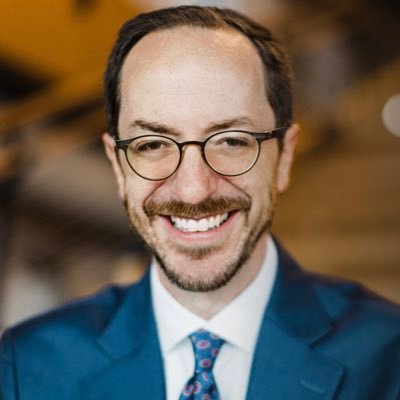
Freddie O'Connell
Mayor of Nashville-Davidson County Metro
9
APPEARANCES
6
PODCASTS
Oct 8, 2026


Clarence AnthonyHOST
Uh, uh, how, how have you been able to work on that, and what achievements have you felt like you've made in that area?

Freddie O'ConnellGUEST
Yeah, it's a really good question, and it's, it's hard when you're kind of facing twin pressures, right? Growth does not automatically make concepts of equity easier.
Freddie O'ConnellGUEST
And then here, unfortunately, in the past few years, not just in Tennessee, but the federal level, a lot of us who do work in cities have, uh, seen a very different approach, sometimes an approach of an abandonment from the federal government.
Freddie O'ConnellGUEST
And so we have less funding, right, from federal and state partners, uh, and we are seeing the patterns of prosperity change in a quickly growing city.
Freddie O'ConnellGUEST
One of the boldest things we did was, uh, my first year in office, uh, we put together a transit improvement program to help Nashville escape this trap we'd been in, where we were one of only four of America's top 50 cities that didn't have some kind of dedicated funding, uh, for transportation and infrastructure.
12 MINS LATER
Clarence AnthonyHOST
Um, why did you feel that that was in part, uh, a part of your vision and plan, and, and, and what lessons did you learn?


Blake FarmerHOST
How involved do you expect to be if the city ends up having to shrink the Metro Council by at least half? My understanding is we are still waiting for a decision from the Tennessee Supreme Court.
Freddie O'ConnellGUEST
So years ago, you'll probably remember, Blake, the General Assembly passed legislation that would forcibly reduce the Metro Council to 20 or fewer seats.
Freddie O'ConnellGUEST
We felt like the way this legislation was Crafted definitely violated some legal principles.
7 MINS LATER
Anna O'ConnorAUDIENCE
This is Anna O'Connor, and I'd like to know how many data centers... are, have been built in middle Tennessee that are promoting, uh, AI and how many are proposed at this point?
Freddie O'ConnellGUEST
Blake, this is exactly why we undertook the Winter Storm Commission as a not just a, hey, what kind of happened at NES and that process, but rather how did the whole of the city respond? And you may remember because I think we talked about it.
Freddie O'ConnellGUEST
We had a couple of top priorities as we went through the exercise of responding to the storm.
Freddie O'ConnellGUEST
One was life safety as a top tier, like we are going to do everything we can to protect life.
Freddie O'ConnellGUEST
And then secondarily, we're going to do everything we can to enable NES to restore power as quickly as possible.
Freddie O'ConnellGUEST
So coordinating and focusing INDOT's debris removal, OEM's ability to help access things.

Brandon StyllHOST
When you became the mayor, what did you believe you were inheriting? What condition was Nashville in financially, operationally, and culturally?
Freddie O'ConnellGUEST
I think I knew I was inheriting at least a metro in recovery, if not a city in recovery, right? We had all been on the journey through the pandemic that was not unique to Nashville.
Freddie O'ConnellGUEST
And so some of the economic impact of that, the public health impact of that, these were not unique to Nashville conditions and yet they definitely had impact on us.
Freddie O'ConnellGUEST
And it was sort of like a city coming out of a period of some amount of social isolation, right? And so it was sort of like we were rediscovering each other as a city and what kind of the next chapter of Nashville, including our growth, was going to be like.
Freddie O'ConnellGUEST
The good news was Mayor Cooper had done some things, important things, some of which we sought to continue that really did put us on a trajectory back toward fiscal health after some instability and volatility.
18 MINS LATER
Brandon StyllHOST
Looking back, do you believe Kerry was directionally right? And what did Nashville learn from that

11:49

I don't think that people understand what's happening, what's happened here.
Freddie O'ConnellGUEST
Just extraordinary change in the political landscape ever since the super majority.
Freddie O'ConnellGUEST
We're in court again on the airport, and it's this strange dynamic because it's not like we're going around producing bad results.
Blake FarmerHOST
Was this intended to regulate data centers to death so developers don't even want to build them in Davidson County? That's kind of my question.
Freddie O'ConnellGUEST
Well, I think what we've seen is, so behind the scenes, we had been working with the planning department already before there was a widely known, you know, either a single or multiple proposals out there in the community and appreciate Metro Council members, Council Member Johnston leading on the moratorium, Council Member Horton leading on a broader moratorium.
Freddie O'ConnellGUEST
I think one of the things that the moratorium is letting us do is now take a breath and say, you know, how do we want to consider the idea that, you know, it's, I'm sure you all here at WPLN have a closet somewhere full of some technology, some of which might be computers.
Freddie O'ConnellGUEST
And so what's, what's the scale from a server closet to something that AT&T is a major, you and them having a major kind of carrier co-location facility there, would they be able to rebuild that in Davidson County? So there's a lot of different scenarios that I think we have to be careful to make sure that even as, you know, I joined Nashvillians and concerns about clean air and water, noise, utility consumption and prices along the way as we go through this.
Freddie O'ConnellGUEST
I think I wouldn't tell you, and I can't speak on behalf of the council members who led on it, but I think what I've observed and what I've seen in the the conversation in Metro Council is, it is clear that just like our office, council members are hearing the significance of the concerns from the community, trying to respond.
25 MINS LATER
LeahAUDIENCE
And there were thousands of people doing that.
speaker_3AUDIENCE
So, uh, I wish you would take that into consideration, but it seems like always it's just the big companies that get help, and the small businesses are left struggling.
Freddie O'ConnellGUEST
William, that's absolutely not true, and I mean, I guess it's, it's tough because I know some neighborhoods have seen, um, including parts of East Nashville, have seen property values increase dramatically, and that's one of the hard parts, is I don't talk to a lot of people who wanna see their property values go down.
Freddie O'ConnellGUEST
And when you see an area where small business growth has, has attracted people to the area, it's one of the costs of doing business.
Freddie O'ConnellGUEST
I think, you know, we're very sensitive to the fact that this year's, uh, this past year's property assessment pushed property values up across the county more than I think a lot of us were expecting, which probably feels like an imbalance to small business.
Freddie O'ConnellGUEST
But what I'm encouraged by is we're still seeing, uh, an incredible amount of small and locally owned business growth.
Freddie O'ConnellGUEST
In fact, in my own neighborhood, we just had a new neighborhood market open at one of the areas where commercial activity, we-- I think a lot of people have been waiting for.
Freddie O'ConnellGUEST
We still see a lot of wonderful entrepreneurship, and we're supporting it directly.
22 MINS LATER
Jesse TaylorAUDIENCE
Like, for the businesses, it's gone up, but what about, like, single mothers like me that, like, don't have help?

speaker_4SOUNDBITE_SPEAKER
She addressed none of that-
Freddie O'ConnellGUEST
Right? So we kinda had a, a moment of collapse and scandal, a vice mayor who became mayor, uh, and then I think because of that enormous breach of trust, that next regular election, another new mayor.
Freddie O'ConnellGUEST
So we went through three mayors in three years, which is not a pattern I would recommend to any city.
Freddie O'ConnellGUEST
And so credit to Mayor Cooper, the final in that trio of mayors for, I, I think, stabilizing some of our public finances, but also enduring that incredibly difficult year for anybody involved in governing of 2020.
Freddie O'ConnellGUEST
And I think by the end of that term he concluded, uh, that seeking re-election was not gonna be to his...
14 MINS LATER


Stephanie RuhleHOST
Mayor O'Connell, take us to Nashville, because these health services are being cut, and it's hitting when measles cases are popping up in and around your area.
Freddie O'ConnellGUEST
We just had a first case of measles in Middle Tennessee, which is not a s- you know, that's not something I thought I'd have to be prepared for, uh, as mayor in the 21st century, as we've seen such advancements in medical science.
Freddie O'ConnellGUEST
And Stephanie, it, it's very frustrating, 'cause a few weeks ago, a Republican senator from the state of Wyoming said, "Wyoming people want to see some broken eggs back here." And I'll tell you, Nashvillians want to see eggs on grocery store shelves.
Freddie O'ConnellGUEST
Uh, this is a case where we saw at local government level the first series of job losses as a direct result of the so-called Department of Government Efficiency, uh, and the cuts that are being made.
Freddie O'ConnellGUEST
And this was three different funding sources into how we deliver public health.
Stephanie RuhleHOST
Six months from now, if all of these cuts go through, the, the cuts to NIH, cuts to universities, just federal cuts across the board, what will that do to the city of Nashville? What will life look like?