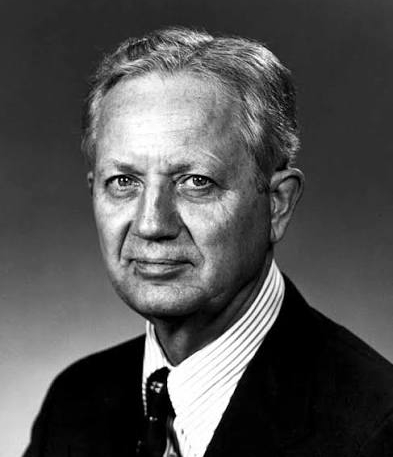
Frank Putnam
Frank W. Putnam, MD — Clinical Professor of Psychiatry at UNC School of Medicine and leading researcher on the lifelong effects of childhood trauma and maltreatment.
4
APPEARANCES
2
PODCASTS
Oct 20, 2026

Frank PutnamGUEST
I think the most important sort of that the average person can make is, in fact, to be open to talking about this.
Frank PutnamGUEST
And what we know, actually, from some studies is that those individuals who have had these experiences as children, talking about them, to other people is actually protective for their own children, that there's our studies where you have demographically at-risk families where there's a history of maltreatment in the parents.
Frank PutnamGUEST
And if they acknowledge their maltreatment and tell somebody, and it doesn't have to be a therapist, it can be a good friend or a spouse or somebody, But where they have come to acknowledge their maltreatment, they are much less likely to become maltreaters themselves or abusers themselves.
Frank PutnamGUEST
I think it's also important to talk about it because it helps people who've had these experiences seek out resources.

Purva MehtaHOST
And then maybe you mentioned about the policymakers and the advocates, but what about the clinicians that are listening? What's the one thing that you really want them to take away from the book that might change how they practice?

Purva MehtaHOST
For listeners who aren't familiar with longitudinal research, why does that kind of time horizon matter so much when we're studying something like childhood trauma?
Frank PutnamGUEST
Well, there's that old saying, you know, "As the twig is bent, the, the tree shall grow." And that, the realization that these early experiences, in fact, are quite powerfully shaping adult outcomes in that the fact that the maltreatment often trans- crosses generations.
Frank PutnamGUEST
In fact, the single biggest risk factor for a child being maltreated is if their parents were maltreated.
Frank PutnamGUEST
Now, that does not mean that people who were abused inevitably become child abusers, 'cause that's not the case.
Frank PutnamGUEST
In fact, the majority of individuals who've been abused do not become parents who abuse their children.
17 MINS LATER
Purva MehtaHOST
From everything you've seen, kind of where is the system around child protection system working, and where is it fundamentally failing families, especially at a time where we're seeing a lot of economic difficulties again?
Frank PutnamGUEST
So as, as a result of experiences I had during my training, I'd seen a number of what I'd call rapid shifts in mental state, very, very quick things like a panic attack or flashbacks and PTSD or periodic catatonia where somebody went into a frozen state, or the switches in, in bipolar disorder when somebody who's rapid cycling goes back and forth between mania and depression.
Frank PutnamGUEST
So I was quite interested in understanding what was happening at a biological level as well as the psychological level when somebody made very large sort of jumps in mental state.
Frank PutnamGUEST
I went down to the National Institute of Mental Health to do a research fellowship around those issues.
Frank PutnamGUEST
And I was on a bi- bi- uh, polar, rapid cycling bipolar unit where we had about 15 to 20 people who were really bouncing back and forth between very profound depression and very, very sort of out of control mania i- in many cases.
Frank PutnamGUEST
And, and we were trying to understand what was happening biologically, uh, to them in the, in this situation.
18 MINS LATER

Frank PutnamGUEST
I think the biggest single thing that I see as being important in agency is options, that they see that they have different options that they can exercise and that when they face situations, they know that they have more than one or two choices.
Frank PutnamGUEST
And that seems to be one of the things that when we look at them and say, what's really helped you? It's the sense that I know more about other options that I can do.
Frank PutnamGUEST
They don't use the term agency so much, but it's like it gives me control of my life.
Frank PutnamGUEST
And that's, again, often a function of relationships that they have with mentors of various types.
5 MINS LATER

Stephen CalabriaHOST
Looking back on your career, what lessons has your research taught you about human potential for both suffering and for recovery?