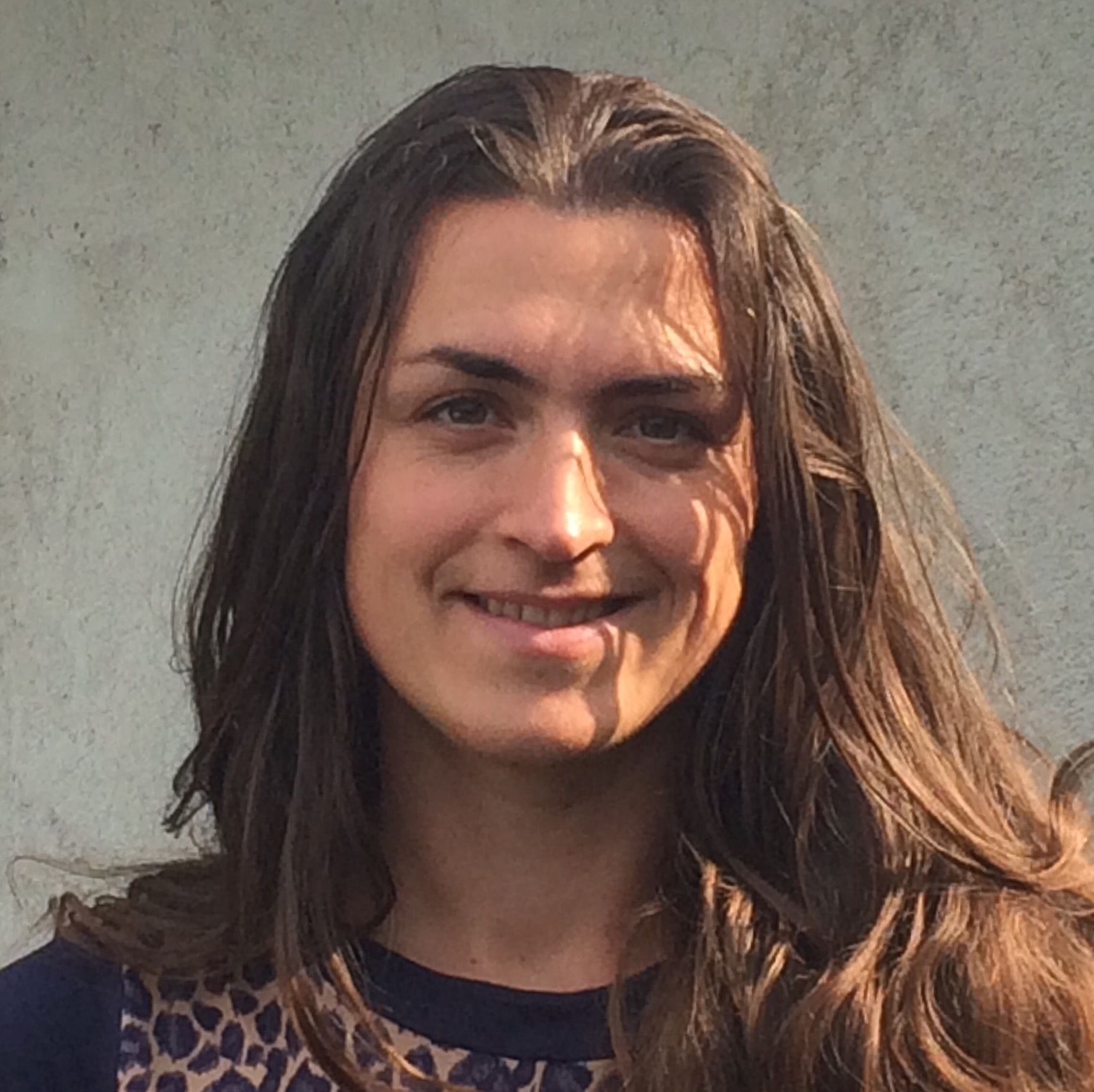
Florence Hazrat
Researcher and writer, one of the world's foremost authorities on the history and culture of punctuation; author of An Admirable Point and On the Mark, and a BBC New Generation Thinker.
10
APPEARANCES
9
PODCASTS
Oct 11, 2026


Florence HazratGUEST
And we see that really throughout this entire history of punctuation, there w- it always, uh, came from an impulse to make writing more accessible, and that might be ancient or, like, um, Greek-influenced Egypt, you know, this library in Alexandria, that might be Ireland in the 8th century, or that might be Egypt in the 19th century.
Florence HazratGUEST
So there's always this impulse to make writing more accessible and understandable for a larger amount of people.
Florence HazratGUEST
In Greece or in, uh, Alexandria, it was the librarians who tried to develop this point system, this, you know, or dot system for learners or for readers of their manuscripts who were not native speakers of Greek.
Florence HazratGUEST
And then, uh, we have the monks who are themselves speaking Gaelic, so they're like Irish, and they are translating the Bible and from Latin into Gaelic, or, like, they were copying the Bible, and then they were trying to figure out, okay, which...
Florence HazratGUEST
W- what does this word mean in, uh, Gaelic? And they were kind of copying it above the Latin.


Michael RosenHOST
Can you give us a sense of when people thought, let's start putting some signs in order to break up the language and give us different tones and so on? When does it all get going?
Florence HazratGUEST
So actually in ancient Alexandria, so like Greek-influenced Egypt, this amazing library developed, the Library of Alexandria with half a million scrolls and all of these scholars from all over the world coming and studying together and reading these texts together.
Florence HazratGUEST
And the librarians there noticed that their non-native Greek speakers had trouble because they were non-natives.
Florence HazratGUEST
And so they started to invent punctuation and other kinds of signs to help these non-native Greek speakers along.
Florence HazratGUEST
And one of these librarians was Aristophanes of Byzantium around 200 BC, who included the dots at different levels of the line to mark where a sentence starts and ends and then two medial pauses, a bit like a comma and a colon.

Florence HazratGUEST
So if we think about punctuation as something that helps us making sense of text, then space would definitely be among this as well because we have to imagine that in ancient Greece, for example, or ancient Rome, text didn't actually have spaces between the words, and this is a little bit difficult for us to really get how significant then space is and why they did that because for us to mark the beginning and the end of a word seems so inevitable.
Florence HazratGUEST
And scholars are kind of divided why, uh, ancient Greece and ancient, um, Latin didn't have these spaces between the words, and they said perhaps it's that people didn't think of text as different from speech.
Florence HazratGUEST
Perhaps they thought we are just recording speech, and when we speak, we actually pause a tiny, tiny bit between words, but we don't do it consciously.
Florence HazratGUEST
So perhaps people back then, you know, your Cicero, for example, they thought, "Okay, that's just one flow of speech, and text is speech that we record." So they didn't put any spaces between words.

Scott RankHOST
Anyway, can you tell me about the exclamation, how it's been used for good, quote unquote, of injecting emotion? And then also for evil, like Nazi propaganda, where everything is an exclamation because everything has to give you the sense of urgency to hammer their message home.
Florence HazratGUEST
Oh, Scott, I'm so sorry that I wasn't able to convince you of the beauty of the exclamation mark.
Florence HazratGUEST
But maybe if I can now, you know, hold an impassioned speech for it, I can convince you a little bit or like soften you up a little bit for that at least.
Florence HazratGUEST
So, yes, of course, the exclamation mark is so extroverted if we would give a personality to punctuation marks.
Florence HazratGUEST
And at the same time, I think that's where its power also lies, because in this very disembodied space of texting or of the Internet or the smartphone and the personal computer, as you suggested, we have to do a bit more effort to have some warmth and some humanity there.
14 MINS LATER


Florence HazratGUEST
And then even earlier than that, at the very, very dawn of the invention of writing in cuneiform, in ancient Mesopotamia, where they had these wedges that they would press on soft clay, they would use just lines to mark this is a paragraph or this is a sentence.
Florence HazratGUEST
And I love this because it's actually quite difficult to think about what is a paragraph, what goes into a paragraph, and I would, uh, really encourage everyone to think, just try and, and find a definition because is it one idea? Is it one thought? Then the question is, what is one thought? And then we have lots of different thoughts, one after the other.
Florence HazratGUEST
This is my paragraph"? And nowadays, n- which is also something I suggest in the book, um, the definition of paragraph, again, becomes a little bit, um, subverted or is a bit iffy because when we read on the phone, it's so, the screen is so slender and so tiny that one sentence can actually suddenly become really long, too much to read.
Florence HazratGUEST
... something super simple, super elegant, and, uh, econo- economical in, in the context of maybe manuscript culture.


Minter DialHOST
And I was wondering to what extent that would resonate with you, Iranian, German, and your life within those two.
Florence HazratGUEST
So as far as I understand, so the dash is the hyphen connects and the dash is separates potentially abruptly, right? But it does also maybe help us understand the mindset of the person who is thinking, either the writer or the narrator, right? So I really love these 18th century novels where when people start to use, when the character on the page, because of course we have these biographical novels like Clarissa or Pamela or something, they start to use dashes.
Florence HazratGUEST
Then it means, okay, something's happening to their mind, right? So in that sense, one could say, okay, life is, life is lifing.
12 MINS LATER

Ryan ReynoldsADVERTISER
Mm-hmm.
Florence HazratGUEST
Reading and text and writing is as good as it will ever get because it's so well adapted to our brain, I think.
Florence HazratGUEST
And so I just want to really emphasize that they were master craftsmen and master thinkers, really, at what they were doing.
Florence HazratGUEST
and originally to make sure that people knew how to pronounce a sentence that had something something special something about um something miraculous like an admiration or some something emotional in that so we shouldn't pronounce that just like a normal sentence we should really make sure that we give our voice this this emphasis we have the parentheses that were developed we have the semicolon for a more nuanced pause.
Florence HazratGUEST
You know, I know a lot of people love it and a lot of people hate it, but originally it was supposed to be a punctuation mark that gives us the potential to meander and, you know, have this kind of additive thinking that doesn't need to stop, that can continue.
Florence HazratGUEST
So I actually really love the semicolon for like more creative spiraling kind of thinking.
9 MINS LATER


Florence HazratGUEST
So this is a bit shocking to think about, actually, that people didn't really have a notion of needing to put anything between words in order to make sure that that's one word and that's another and that's another because we're so used to it, right? So sometimes we just need to make a bit of an effort to distance ourselves from that and understand that everything that seems so...
Florence HazratGUEST
inevitable to us now, had to be invented by someone at some point for some reason, right? And so scholars are not sure quite why people would just write in one line, like ancient Greek or Latin would just be one long line.
Florence HazratGUEST
but potentially it is because when we speak, we do make slight pauses between the words, but then not large enough to really pick up by our conscious brain.
Florence HazratGUEST
You know, when we record speech, we can see these pauses, but not really when we are in the act of talking.
Florence HazratGUEST
So perhaps to people back in the days, it didn't seem self-evident that speech is not one long line.
Florence HazratGUEST
And so maybe they saw writing not as a different manifestation of language, but just as an extension of speech in a way.


David MarrHOST
Now, Florence, from your book, it struck me that the really radical act that took an extraordinarily long time was to put spaces between words.
Florence HazratGUEST
I mean, um, we are so used to our text looking the way it does now that it's sometimes quite difficult for us to take a step back and realize that all of this had to be developed at some point by our ancestors, right? And in the past, for example, the ancient Greeks, the ancient Romans, they didn't use spaces between, um, words because for them, in a way, writing was just another manifestation of speech.
Florence HazratGUEST
It didn't have its own parameters and its own behaviors and needed its own treatments.
Florence HazratGUEST
So it kind of makes sense that they wouldn't necessarily think of marking somehow that there's a beginning and there's an end.
Florence HazratGUEST
And, um, actually, when we speak, we don't necessarily also hear that, right? But in, um, kind of phonographic, um, records of speech, we do make these like tiny, tiny, tiny pauses.

David MarrHOST
Now, Florence, from your book, it struck me that the really radical act that took an extraordinarily long time was to put spaces between words.
Florence HazratGUEST
I mean, um, we are so used to our text looking the way it does now that it's sometimes quite difficult for us to take a step back and realize that all of this had to be developed at some point by our ancestors, right? And in the past, for example, the ancient Greeks, the ancient Romans, they didn't use spaces between, um, words because for them, in a way, writing was just another manifestation of speech.
Florence HazratGUEST
It didn't have its own parameters and its own behaviors and needed its own treatments.
Florence HazratGUEST
So it kind of makes sense that they wouldn't necessarily think of marking somehow that there's a beginning and there's an end.
Florence HazratGUEST
And, um, actually, when we speak, we don't necessarily also hear that, right? But in, um, kind of phonographic, um, records of speech, we do make these, like, tiny, tiny, tiny pauses.