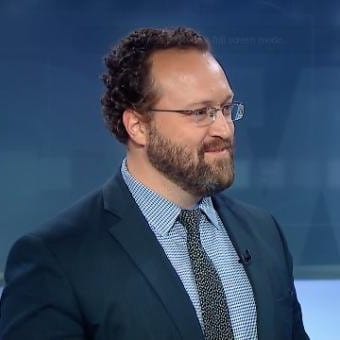
Flavio Volpe
24
APPEARANCES
13
PODCASTS
Sep 8, 2026

Ben MulroneyHOST
So talk to me about what you think is at play here and talk to me about what you think is at stake here.
Flavio VolpeGUEST
What's that play? I think we all have to at some point start to accept what our eyes and ears are telling us and that the president may or may not be being strategic here.


Scott MacFarlaneHOST
And though Trump says he put those tariffs in place to protect U.S. automakers, U.S. steelmakers, U.S. manufacturers, it's going to be anything but helpful, especially in the short term, according to Volpe, when U.S. carmakers have to take it on the chin because of this new trade relationship.
Flavio VolpeGUEST
And let's be really specific about auto manufacturing from a U.S. perspective on And this is tariffs on Canada and Mexico, for example.
Flavio VolpeGUEST
The cars that are made in Canada and in Mexico have U.S. parts and U.S. steel and U.S. aluminum in them.
Flavio VolpeGUEST
Cars that are made in Japan and Korea and Europe do not, even though those car companies are heavily invested throughout the U.S.
Flavio VolpeGUEST
But on Ford motor vehicles, General Motors, Chrysler and Dodge vehicles made in Canada, there's an average 50% U.S. content in there.
Flavio VolpeGUEST
So when a Detroit-based company makes a vehicle in the Toronto area and makes a profit, those profits are repatriated to Detroit.
Scott MacFarlaneHOST
Volpe says that kind of provocative move by Trump to rename or try to rename a Great Lake is only going to further fracture relationships and make more tenuous the rebuilding of a critical trade relationship here in the Western Hemisphere.


Jim RichardsHOST
I think it was you that I talked to about three weeks ago when essentially the American CEO of Ford basically said something that was similar to, yeah, we still believe and trust in the deals that we have in Canada, and Canada is a part of Ford's manufacturing of cars.
Flavio VolpeGUEST
And I'll say that this is in essence what Mary Barra, CEO of General Motors, is saying as well.
Flavio VolpeGUEST
Notwithstanding what we've heard from the president and all his lackeys this week, Canada makes sense, still makes sense as a place to make cars, but also because the Canadians, we have a bit of leverage here, would buy a lot of General Motors vehicles.
Flavio VolpeGUEST
So when you're Weighing whether to recommit, and not all of this is new, you know, I don't think we should dismiss the $1.1 billion commitment in writing to the union, to the city, as well as commitments to Ingersoll and St. Catharines.
Flavio VolpeGUEST
We buy a lot of General Motors cars and so when they're weighing this, they're also saying, hey, this is our number one export market for our vehicles.
Flavio VolpeGUEST
We do have a different relationship with Canada, the Canadian government and the Ontario government bailed us out and 2009.
Jim RichardsHOST
So this is the reality, even though the headlines wonder if we would lose our auto industry, that we have people and companies invested in our country, that even during these difficult times, they're willing to double down and go through some maybe tougher years until Trump is gone?


Greg LasonHOST
What would that do to the industry? What would change? Would we see something materially change? Would we see production, whether it's parts or autos, move to the United States, which is his stated goal?

Flavio VolpeGUEST
Well, you and I have been having this conversation for a year and a half and really goes back to an example that you and I talked about in 2022 when the Ambassador Bridge blockade caused for parts not to be able to cross the borders.
Flavio VolpeGUEST
If you tariff parts, unlike vehicles, that we've seen automakers willing to spread tariffed vehicles around their dealer inventory, 60, 70, 90-day delays, 120, a dozen products where two of them are costing way much more than their profit margins are.
15 MINS LATER

62:34

Um, so, uh, in your view, what we know about the deal and your sector or what was offered and your sector, how far apart, uh, are the two sides?
Flavio VolpeGUEST
One is they were, they were offering to reduce their section, uh, two 32 tariffs on cars from 25% to 15, and then have a carve out for us content.
Flavio VolpeGUEST
So at a, you know, bring it down to about seven and a half percent effective rate in automotive in 2024, the last year before the Trump madness, the average profit margin for the automakers operating in Canada was 6%.
Flavio VolpeGUEST
And so the problem there is we were looking at legitimizing tariffs that we are disputing.
Flavio VolpeGUEST
at a level that's higher than the profitability of the companies here, you're not going to sell a $25 pizza for $20 and be in the pizza business too long.
67:58
potential for growth on the Canadian side, right, in the last two years? Like, who's going to invest on this side now with this uncertainty overhanging it?


Flavio VolpeGUEST
Uh, we lost, uh, one in Windsor, uh, and we've got two of them that are currently not making cars right now.
5 MINS LATER

Flavio VolpeGUEST
And, you know, your listeners may remember hearing me ad nauseum last year when he did that.
Flavio VolpeGUEST
And, you know, in that little snippet that everybody knows, a parking across the border eight times before it's a car, is why a tariff on auto parts doesn't work.
Flavio VolpeGUEST
The auto assembly customers on the other side of the border, now whether that's a Detroit 3 or the Toyota or Mercedes or whoever's making cars there, they're the importer of record.
Amanda GalbraithHOST
So your expectation then, Flavio, is that the U.S. administration is getting the phone blown up right now by saying, hey, that's all fine and good for you to raise the rhetoric, but the economics of this materially hurt our industry, not just Canadians.

Flavio VolpeGUEST
Well, I think, um, I think to put it in, in, in lay person's terms, um, we went into these negotiations in good faith and made, um, uh, high level, uh, commitments to each other that, uh, away from the table, uh, away from the chief negotiating table, you know, you have dozens of officials that then go and put together the text.
Flavio VolpeGUEST
So we're, we're working at a quick pace, and I think we knew this, uh, over the last four weeks that a lot of work needed to be done.
Flavio VolpeGUEST
When, uh, when Minister LeBlanc says still lots of work to be done, he didn't necessarily mean him with Jameson Greer.
Flavio VolpeGUEST
So as the text started to, um, crystallize, we started to see that the American interpretations of the, of the key principles weren't the same ones that, that, that we had, and that maybe, um, it wasn't the same principles, uh, in spirit as w- was agreed at the table.
Flavio VolpeGUEST
And so, you know, you heard the Prime Minister talk about a series of different things, um, uh, but he talked about them at a high level, uh, like, um, the...
5 MINS LATER
Susan OrmistonHOST
Uh, how worried are you for auto jobs and the well-being of auto workers in the country given what happened on the weekend?

Flavio VolpeGUEST
Well, look, we've been engaged as an industry, uh, from the assemblers to the parts makers, the, the, to the, uh, to raw material suppliers and the tooling companies with the negotiating team, with the prime minister and his team, also with the premier of Ontario, who I'm eager to hear from as well.
Flavio VolpeGUEST
Um, what I heard there is that he heard from us that anything that makes these temporary tariffs, that we've been challenging their legality, um, legitimizing them in a permanent sense above, uh, the profit line in Canada was going to be very critically damaging to the industry.
Flavio VolpeGUEST
For him to say in, in a first example of the things that didn't work here, um-
Flavio VolpeGUEST
Um, but in that designation that came into contention yesterday is, um, a super duty pickup truck, you know, like Ford F350s that are about to start getting made in Oakville, Ontario's plant here after billions of dollars in investment from Ford Motor Company, and the Silverados that are made in Oshawa in a plant, uh, that's been going for almost a century.
Flavio VolpeGUEST
Car manufacturers in 2024, the last year before this trade madness, averaged 6% profits, uh, from their car assembly, um, uh, and related business.
Flavio VolpeGUEST
A good deal is allowing a company, uh, an entrepreneur to invest money and expect a return.

Lyndsay DuncombeHOST
I- is what we're dealing with now kind of like a stop-gap measure, uh, where we can not have the new tariffs come in, reduce what exists now, and then lay the groundwork for bringing in Mexico, uh, for, uh, for CUSMA negotiations?
BertAUDIENCE
But that's not the number that the industry is
Flavio VolpeGUEST
On the original 25%, the Americans said on the 25% tariff on the cars made in Canada, you can exempt up to half of that value if there's half of the value of the car coming from U.S. auto parts.
Flavio VolpeGUEST
So the effective rate was half of that, or about 12.5. Is that same exemption on the 15? And we had argued here from the Canadian side for the inclusion of Canadian content and or Mexican content as part of coming from the region.
Flavio VolpeGUEST
The minimum 75% of parts that go into any car in the region for many of the three countries to be sold tariff-free.
Flavio VolpeGUEST
It's really important because the effective rate has to be below the profit margin of the car companies for them to stay here.

Flavio VolpeGUEST
Well, for your listeners, for the first time in a year and a half, the Americans and Canadians are sitting physically at the same table.
Flavio VolpeGUEST
uh without a return ticket with senior people with proposals that are uh being uh uh uh reviewed uh uh countered etc uh where we're talking about different than what we did last october where we're looking for sectoral relief and steel aluminum now we're looking at a comprehensive A DEAL DISCUSSION.
Flavio VolpeGUEST
THE PRIME MINISTER HAS INSTRUCTED THE CANADIAN NEGOTIATING TEAM THAT IF WE'RE GOING TO NEGOTIATE THESE AUGUST 19TH TARIFFS, THEN WE NEED TO GET THE AMERICANS TO HAVE A FULL CONVERSATION AND IN FAIRNESS TO THE AMERICAN NEGOTIATING TEAM FOR THE FIRST TIME SINCE THIS WHOLE THING STARTED.
Jim RichardsHOST
What are your thoughts on that? When we played that for our listeners, 80% of the texters said they would not bite on that and put booze back on the shelves.
Flavio VolpeGUEST
Well, look, the guy who's got to put booze back on the shelves, Doug Ford, said in Washington in a scrum to reporters a couple weeks ago, I'll put booze back on the shelves if we can get those punishing tariffs off Canadian industry.
44:17
What is driving the American side, from your perspective, to make moves at the table? And are they, as far as you can tell?
Flavio VolpeGUEST
You and I spoke, and I've been rather public about this, that I thought that we were working substantively through a list of irritants between the two countries and that we were rather close.
Flavio VolpeGUEST
And, you know, we were all, those of us with the scars and the gray hairs from the 2018-2019 NAFTA renegotiations know that Donald Trump likes to turn up the heat as he gets close to a conclusion.
47:28
Can there still be a Canadian auto industry when the Americans are talking like this?
Flavio VolpeGUEST
Well, I think the context of those conversations is, let me rem-- let me keep you up to date on the consequence of the tariffs, for example, in automotive, and I represent the auto part suppliers.
Flavio VolpeGUEST
The consequence of the tariffs on automakers over the last fifteen years, uh, fifteen months, how's it going over the last couple of months? What, what's the activity in that space? And also trying to proactively give them some scenario planning.
Flavio VolpeGUEST
So what would happen if, you know, the, the Americans proposed to the, the Mexicans? This is widely, um, uh, reported.
Flavio VolpeGUEST
What about a higher regional value content? What about an American specific content? What about the steel content? And then, you know, we try to run through for the negotiating teams.
Flavio VolpeGUEST
Well, that's what it would mean specifically in Burlington, Ontario, or what it would mean in Oshawa, Ontario, Vaudreuil, Quebec, um, and, and, you know, do what we did through, uh, uh, TPP negotiations and CEDA negotiations and NAFTA negotiations and this one here, which is, well, I'll get you an answer real straight on exactly what it means for those specific companies in those towns, and then help them balance it off, uh, uh, humbly, uh, against other priorities in the, in the economy.
Flavio VolpeGUEST
W- we saw how the, the Chinese, uh, managed to play off s- one industry, uh, o- off another, uh, when they put, uh, tariffs on canola and, um, and fisheries products.

Katie SimpsonHOST
Is, is there any way that you can see that Canada can get out of this 50% tariff threat on certain goods without making more concessions?

Flavio VolpeGUEST
And the other one said, "I don't like the, the, the targeted tariffs that Canada's put on US autos." Now, all of those are a bit cynical.
Flavio VolpeGUEST
The only tariffs Canada has on US autos is a retaliation against the Section 232 tariffs they put on Canadian autos, and we asked for that as an industry.
Flavio VolpeGUEST
If we didn't put up, uh, retaliatory tariffs and then allowed the companies that make cars here to get, uh, relief against, uh, those tariffs, then, uh, likely the results of the last year would have been, uh, not just tough, but tragic.
Flavio VolpeGUEST
You know, we'd be seeing real closures instead of idling production and lower production.
Deb HuttonHOST
Um, I mean, where, where do you find yourselves in terms of the, of, of your counterparts in the States? Are they, are they still with Trump? Are they more where you are?


Flavio VolpeGUEST
I was when I read the headline and when I read the title of the proclamation from the White House that said, "We're gonna retaliate against Canada's, um, tariffs targeting the US on motor vehicles." But as we've analyzed it now over the course of the last, uh, 12 hours or whatever it is now, 18 hours, w- what has unveiled itself here is that they actually ga- put an exemption on cars and parts that are covered under their Section 232 action.
Flavio VolpeGUEST
Um, and what they've done is they're using the fact that Canada has retaliated on, uh, to the US tariffs on auto parts with their own, or... a- and, and cars, and saying, "Well, in this new basket, we're gonna go after a whole bunch of other Canadian goods." Now, um, where it spares the auto sector, it does not spare, um, upstream lumber products, like wood products.
Flavio VolpeGUEST
And, um, it also, uh, raises the, the, a issue with the fact that some provinces, uh, e- especially Ontario, uh, here has taken booze off the, the shelf, um, American booze, and a real big impact, uh, b- by that delisting.
Flavio VolpeGUEST
... that came out of nowhere, and it causes Americans to buy-- to pay more for things that come from Canada.
Flavio VolpeGUEST
So I don't wanna moralize on who's right and wrong here, but I also think that i-if that's-- if part of the reaction to this is the Canadians saying, "What did we do wrong?" Canadian government saying, "What did we do wrong?" Well, this just really comes back to a year delay of, "Hey, um, we didn't like that you stood up to us." Now, we're going through a s-- uh, uh, the last few months, very productive conversations with the, uh, uh, with the administration, especially USTR.
Flavio VolpeGUEST
That list, you know, there's some reports that that list is down to the number of fingers that are on my hands.
Flavio VolpeGUEST
These are the vehicles that would have otherwise been shipped to the U.S. About half of the auto parts production in this country goes directly to the U.S. for assembly and plants in Michigan, Ohio, and a bunch of other places like that.
Deb HuttonHOST
I mean, if the president were to invoke the six months and we're out clause, I mean, do you have any sense? Does the industry talk about what that would look like, like how you would ever begin to disentangle? Well, you couldn't

MikeHOST
So if we're hitting that mark already, should we just agree to lock that in? and say, okay, we'll do 50% where they're already.
Flavio VolpeGUEST
Yeah, look, I think, as I said in that interview, and I'll say this morning, I think it's a path forward.
Flavio VolpeGUEST
Now they're laying out what the price of entry is, and they're saying the same thing they said in 2018.
Flavio VolpeGUEST
Why would we agree to a floor that's American, and we're not even close to it? You know, that 38 to 50 was my testimony in Washington in December to the USTR to say, look, your new USMCA, it's worked.
MikeHOST
Are you pleased so far being on that committee that the automotive, I guess, message, the message from you on behalf of the automotive industry is being heard as part of an overall agreement?

Flavio VolpeGUEST
Look, on the Canadian side, the argument was more about a bottleneck and what that bottleneck cost versus the toll on the bridge.
Flavio VolpeGUEST
And if we're going to spend some money on infrastructure going around town, build the highway to a new bridge.

Greg LaysonGUEST
How does that change the way auto industry moves goods? And how does that change in terms of monetary savings just in time delivery? Because we know that's how the industry operates.


Jen GersonHOST
... from your perspective, what do you think is happening on the US-Canada file, and why do you think it's possible that maybe the Can- Canadians aren't screwing this up for once?
Flavio VolpeGUEST
What it said was, um, that the, the sectoral negotiations that were happening in the fall, where Canada, US looked like they were gonna come back from the cliff on steel and aluminum, um, not automotive, uh, fell apart over a reason different than what's been reported.
Flavio VolpeGUEST
What's was reported is that the president was upset with, uh, Doug Ford's ads with, uh, Ronald Reagan's voice.
Flavio VolpeGUEST
That's the, that's the, t- that's the kind of tumultuous relationship that anybody who's dealing with, uh, Donald Trump has.
43 MINS LATER
Flavio VolpeGUEST
Well, I drive a Jefferson County assembled Jeep Grand Cherokee, and I have for the last few years.
Flavio VolpeGUEST
I still can't figure out what the national security threat is about that or my Dodge Demon.
Flavio VolpeGUEST
We do know that with the president losing his Aipa case at the Supreme Court, he's doubling down on the instruments that he can use.
Flavio VolpeGUEST
They are continuing to do 301 investigations and 232s and trying to find any short-term lever they can to pressure allies to make or trading partners to make concessions.

David KennedyGUEST
You know, is that at all a concern for Canada to have either higher North American parts content or higher, you know, US specific parts content?
Ben MulroneyHOST
Wouldn't you agree there are other ways to incentivize people to move towards electrification? Heck, how about the middle ground of hybrids, which are not even mentioned here? Yeah.
Flavio VolpeGUEST
Yeah, look, I think it's on pause, but I don't think it's on pause for a year.
Flavio VolpeGUEST
I think in our conversations, high-level conversations with the government, we are expecting very shortly to hear what the new regime looks like.
Flavio VolpeGUEST
Our hope is that what they do is harmonize with the U.S., which has decided to move away from the mandate scheme and go to an increasingly restrictive GHG target.
Flavio VolpeGUEST
and say, hey, by the way, your car has to produce less and less grams of CO2 per kilometers through to a certain time.
Flavio VolpeGUEST
There's lots of ways to get there and lots of ways to reduce that is then plug-in hybrid, then battery EV, or, you know, for fleets, could be hydrogen, a whole bunch of things, but without penalizing the producer.
Ben MulroneyHOST
I have a problem with if they're not built by Canadians with unionized jobs, which means Chinese EVs are not coming to Canada.

Ben MulroneyHOST
Okay, is this a cause for concern? I mean, I've read that this could cost Ford $20 billion.
Flavio VolpeGUEST
Yeah, look, if I'm at Ford and I'm a Ford shareholder, it's probably a relief right now.
Flavio VolpeGUEST
Ford has been, Jim Farley, who's their CEO, has been very clear about the fact that they're willing to electrify.
Flavio VolpeGUEST
They split the company into two, the electric Ford and the ICE Ford, but have been saying for years now that if the market's not there, if the government in the U.S. especially doesn't allow for a purchase incentive or the infrastructure, they're going to lose money.
Flavio VolpeGUEST
He said their superior products were still committed to electrification, but we have to do it against the backdrop of customer demand.