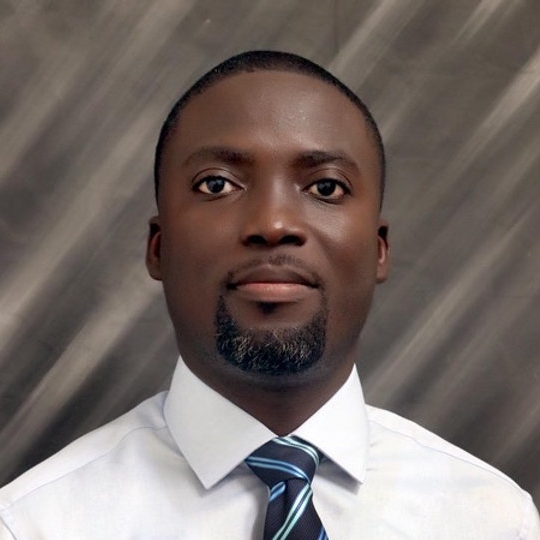
Fiifi Duodu
Dr. Fiifi Duodu is a Senior Resident/Consultant Neurologist at Korle-Bu Teaching Hospital in Accra, Ghana, specializing in multiple sclerosis and neuroimmunological disorders in Africa.
3
APPEARANCES
3
PODCASTS
Aug 7, 2026


Paul CraneHOST
Can you tell us a little bit about the paper and what you're hoping readers and listeners would gain from taking time to spend with the text?

Fiifi DuoduGUEST
Really wrote this paper because previously there was a notion that MS was sort of rare in our continent, but, uh, for treating clinicians, especially neurologists of the continent, uh, we thought that it was as a result of lack of data and a lack of data because there's a lack of making the diagnosis of the disease.
Fiifi DuoduGUEST
And so we really wanted to find out to the-- crux to the matter and find out what's the diagnostic, uh, state of these things in, in our part of the world in Africa.
Fiifi DuoduGUEST
Even within countries and even within regions in, in Africa, you can see sort of variations a-across the board.


Malya SahuGUEST
So that's another thing that, again, as a group, as AfrICTRIMS, that's something that can be more directly pursued.
Fiifi DuoduGUEST
I do really agree with Maya that indeed really it's actually taking on the low-hanging fruits and working on them really than start jumping up with the infrastructures, which maybe entails a lot of money and a lot of government commitment.
Fiifi DuoduGUEST
And the main thing is the collaborations, like she did mention, that in AfrICTRIMS came about.
Fiifi DuoduGUEST
For example, the referral patterns from other surgeons like neurosurgeons and orthopedic surgeons as well as the ophthalmologists too, as well with actually seeing these people first before they refer to us.
Fiifi DuoduGUEST
So what AfrICTRIMS really did in twenty twenty-four, again, as a collaboration, we did a, like an African online MS course where we had people joining in.


Brett DrummondHOST
What are some barriers that might exist to a quick diagnosis? How has this been impacted by the new diagnostic criteria? And just what does that journey look like for a person in your part of the world? If you can start, please.
Fiifi DuoduGUEST
Really when it comes to MS diagnosis and the journey could be quite long in a part of the world in Ghana.
Fiifi DuoduGUEST
I started by setting up a registry and I realized that on the average my patients take at least five years to get diagnosis from the first sentinel set to the time diagnosis made by a neurologist.
Fiifi DuoduGUEST
And also as I was quite similar across the sub region in another part of sub-Saharan Africa.
Fiifi DuoduGUEST
And these are because of the barriers they face before they finally get a diagnosis.
7 MINS LATER
Brett DrummondHOST
How important then is having organisations like BICTRMS and AFRICTRMS more newly formed to try and make sure that we're increasing the knowledge base of MS specialists and being included in this global conversation of what's happening in the latest and greatest in MS research and treatment updates?