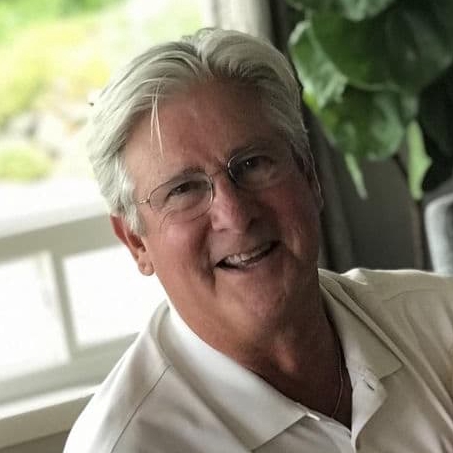
Evan Jaqua
International business development specialist and entrepreneur, founder of the Solutions Party, a political reform organization advocating one-term limits for politicians.
11
APPEARANCES
11
PODCASTS
Oct 23, 2026

FayeHOST
And how would you protect the credibility of elections while making it easier for people to compare candidates of their actual ideas?

Evan JaquaGUEST
Eliminating re-election is a great first step, but it's not the first thing that we need to do.
Evan JaquaGUEST
Now, why do we have the situation that we do? Why do we have the polarization that we do? Why do we have a country that is so viciously afflicted with emotions like hate and anger? And, you know, such vicious division in our country.
5 MINS LATER
FayeHOST
Did we get this point where people can look at the same event and form a way with a completely different understanding of what happened? What responsibility does journalists, media organisations, political leaders and audiences each have in rebuilding this church? And how can we encourage accountability in journalism without allowing calls that we form to become a way of silencing criticism?

GiftHOST
When you talk about political reform, what do you believe is the biggest problem with the way politics currently work? Well,
Evan JaquaGUEST
What is the fundamental problem? The commonality between the problems that people have with their politics and their government.
Evan JaquaGUEST
We humans, we have one, we have a number of weaknesses, but probably our greatest weakness is the ease with which We form addictions.
9 MINS LATER
GiftHOST
Is corruption primarily a political problem or cultural problem or a problem created by the incentive within

WisdomHOST
[laughs]
Evan JaquaGUEST
Profession also gave me the opportunity to, you know, live many years in Japan, uh, and then I spent time in China and South America.
Evan JaquaGUEST
But aside from living in those countries, I also made the tremendous effort and real effort to learn languages and to speak them well.
Evan JaquaGUEST
And that gave me the opportunity to talk to a whole variety of people in a lot of different walks of life, you know, um, and, and get many, many points of view, uh, from people regardless of their profession or their age.
Evan JaquaGUEST
And the thing that struck me most of all was the commonality that, uh, that I, I found.
Evan JaquaGUEST
And when I talk about commonality, I talk about, first of all, people everywhere, uh, whether, you know, uh, they're, they're from Asia or South America or North America or Europe, everybody wants, uh, you know, freedom and prosperity.
17 MINS LATER
WisdomHOST
What would you tell them?

Stefan BartlHOST
perhaps elaborate more on the party's platform and what you're aiming to achieve?
Evan JaquaGUEST
I have worked some very humble jobs in my life as a ranch hand on a cattle ranch.
25 MINS LATER
Stefan BartlHOST
What is your how do you read the temperature when you look at primaries in this instance in how political parties try to garner support inside this big tent, as you mentioned?

BiggieHOST
How have these experiences shaped your understanding of politics, freedom, and what people around the world have in common?
Evan JaquaGUEST
Well, I think the important thing to emphasize here is that, um, as you mentioned, you know, I've lived in these different countries, but I learned the languages and got, uh, quite fluent, in fact, very fluent in, in, you know, Japanese, Spanish, uh, Chinese, and then of course, uh, English, my native language.
Evan JaquaGUEST
And that has given me the opportunity to talk to a wide cross-section of people in these different countries.
Evan JaquaGUEST
And, uh, inevitably, we would start talking about, um, things that affect us all, politics and, and government.
Evan JaquaGUEST
And, and the thing that was most interesting was the amount of commonality that I found across the different countries, cultures, regardless of the language or, or the, the country's history.
Evan JaquaGUEST
And the, some of the commonality that I want to emphasize is, number one, that people everywhere want to live, um, you know, want, want freedom and prosperity.
Evan JaquaGUEST
Number two, there's m- worldwide frustration [chuckles] with, that, uh, people have when it comes to their, their government and their, the politics within their country.
8 MINS LATER
BiggieHOST
What do you believe have contributed to the, uh, declining public trust in the media, and that reforms, uh, could help restore it? What reforms in particular could help restore it?

AbrahamHOST
Now, the question is, what do you believe America needs to do differently to create more opportunities for entrepreneurs, workers and future generations?
Evan JaquaGUEST
Now, what's the problem that we have now? Well, the first thing that we must recognize is that the world's economy, not only America, but the world's economy is all based on energy.
Evan JaquaGUEST
Now, what's the problem with fossil fuels? Number one, it's a non-renewable resource, which means every year, There are fewer of them, and that's not a formula for prosperity when you have more and more people worldwide competing for fewer and fewer resources.
Evan JaquaGUEST
Number two is that these fossil fuels are controlled by large corporations, by royal families, by dictators, and they have an inherent interest in limiting the supply to keep the price up.
7 MINS LATER
AbrahamHOST
but


Matt DavisHOST
What did living outside the American political bubble teach you about what people actually want from their societies?
Evan JaquaGUEST
Well, that's a key question because when we talk about the United States and we talk about China and we talk about Japan, we're talking about four very different cultures, different forms of government, different ways of thinking.
Evan JaquaGUEST
When you speak or you come to speak other people's languages, you really understand that people formulate ideas differently.
Evan JaquaGUEST
But what has struck me over all the years is, let me just say that I've had the opportunity to talk with different people around the world about things like government and the politics.
10 MINS LATER

FerdinandHOST
So now let's talk about, if we are talking about reform the media, if we're talking about a more robust media solution, making journalism more robust, what does an ideal journalism situation look like for you?
Evan JaquaGUEST
Okay, well, let's talk about news organizations, journalism in general, and how it has changed over the years, because I think it's important to understand how we got to where we are now.
Evan JaquaGUEST
Okay, number one, you have to remember that in the past, to start, let's say, a newspaper was a very difficult thing to do.
Evan JaquaGUEST
You had to have printing presses, you had to have reporters, You had a way to distribute the newspapers.
Evan JaquaGUEST
It was a huge endeavor to start a newspaper or a news channel or a radio channel or radio news channel.
Evan JaquaGUEST
But now anybody with a laptop and a webpage can start a quote unquote news site.
35 MINS LATER
FerdinandHOST
capitalism capitalism capitalism

MosesHOST
How did that journey eventually lead you to creating the Solutions Party?
Evan JaquaGUEST
Well, I will just tell you, as you mentioned, I've had a wonderful and very interesting life.
Evan JaquaGUEST
I've had the opportunity to live And in different countries, learned different languages and immersed myself in different cultures.
Evan JaquaGUEST
And during this time in all these different countries, including my own, the United States, I've had the opportunity to talk with a lot of people.
9 MINS LATER
MosesHOST
Eliminating political re-election.

BlessedHOST
If that's true, why is society so often deeply divided?
Evan JaquaGUEST
It doesn't matter what country we're talking about, what political system we're talking about.
Evan JaquaGUEST
Now, the human brain is a wonderful thing, but one of the human brain's greatest weaknesses is the ease with which it can form problems.
11 MINS LATER
BlessedHOST
what end?


Evan JaquaGUEST
And so I th- I think that what I have proposed in, at solutionsparty.org is the way to make it impossible for somebody to get addicted to power is the way that you make it very difficult for somebody to get addicted to a medication.
Evan JaquaGUEST
Like for example, Okechukwu, if I were your doctor and I had to prescribe you a very addictive, uh, medication, well, the way to prescribe that to you but to minimize the possibility that you would get addicted to it is I would give you small doses spread apart.