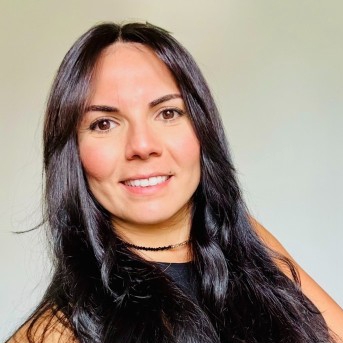
Eva Aimable-Kolosko
Global leadership and transformation advisor, executive coach, and author of "Growth Without Borders: A Global Leaders' Toolkit," creator of the Global Leaders Compass framework.
5
APPEARANCES
5
PODCASTS
Oct 19, 2026

Roberta NdlelaHOST
And would you say that honing in on those transferable skills also helps you with global cultural intelligence?

Eva Aimable-KoloskoGUEST
Because, again, at the core of all of this is being able to be adaptable.
Eva Aimable-KoloskoGUEST
I think the two go hand in hand, because if you're curious, you will then understand and ask those questions of why, why, why, why, why certain things happen the way they happen.
Eva Aimable-KoloskoGUEST
And when I moved to the Philippines, for example, I had already managed Filipino teams from North America.
Roberta NdlelaHOST
Now, is there something that I haven't asked you yet you were hoping to share today during this conversation?


Khudania AjayHOST
So there are global best practices, best standards that companies also in a way are adopting.
Eva Aimable KoloskoGUEST
I think cultural intelligence, I would like to see cultural intelligence become a mainstream topic.
Eva Aimable KoloskoGUEST
What exactly does that mean? Because we've heard of emotional intelligence, we've heard of intellect, but we've not heard so much about cultural intelligence.
Eva Aimable KoloskoGUEST
and there are some great leaders and thought leaders in this space but really what i can say cultural intelligence is it's the knowledge of the different cultures so if you are in a um in a new environment it's understanding your culture it's understanding the culture you're now operating in and knowing the gap in between and being able to close that gap or understand that gap or overcome that gap.
Eva Aimable KoloskoGUEST
And why is that important? Well, it's important because if you're not able to close that gap, especially if when I came to Canada and I came from, I'm from St.
13 MINS LATER
Khudania AjayHOST
You know, these are things organizations will not tell you, but they are watching, you know, from all these perspective.

Khudania AjayHOST
So there are global best practices, best standards that companies also, in a way, are adopting.
Eva Aimable-KoloskoGUEST
I think cultural intelligence, I would like to see cultural intelligence become a mainstream topic.
Eva Aimable-KoloskoGUEST
Right now, it's very fringe, and I get a lot of questions, "What exactly does that mean?" Because we've heard of emotional intelligence, we've heard of intellect, but we've not heard so much about cultural intelligence.
Eva Aimable-KoloskoGUEST
And there are some great leaders and thought leaders in this space, but- Really, what I can say cultural intelligence is, it's the knowledge of the different cultures.
Eva Aimable-KoloskoGUEST
So if you are in a, um, in a, a new environment, it's understanding your culture, it's understanding the culture you're now operating in, and knowing the gap in between, and being able to close that gap or understand that gap or overcome that gap.
Eva Aimable-KoloskoGUEST
And why is that important? Well, it's important because, uh, if you're not able to close that gap, especially if...
14 MINS LATER

SanaHOST
Tell us that journey.
Eva Aimable-KoloskoGUEST
I love the fact that you asked that question because throughout my entire journey, what's come up is that really growth isn't a straight line.
Eva Aimable-KoloskoGUEST
And when I was growing up, my dad had a job that took us around many different countries in the Caribbean, and even within the country, we would change, uh, regions.
Eva Aimable-KoloskoGUEST
So we'd end up going to about 10 different schools, uh, throughout my childhood.
Eva Aimable-KoloskoGUEST
Of course, at the time, I didn't necessarily appreciate the skill that that would embed into me.
Eva Aimable-KoloskoGUEST
However, now I realize that it allows me to be adaptable, and that is one of the key skills of being a global leader.
23 MINS LATER
SanaHOST
Um, I mean, after managing portfolios exceeding, you know, like $100 million, um, in enterprise transformation, what do you think is still right now the biggest misconception that, you know, organizations are holding about how change actually happens?

AbrahamHOST
What are some of the biggest mistakes leaders make when trying to guide people through change?
Eva Aimable-KoloskoGUEST
I think some of the biggest mistakes that we make are assuming that people get it.
15 MINS LATER
AbrahamHOST
And