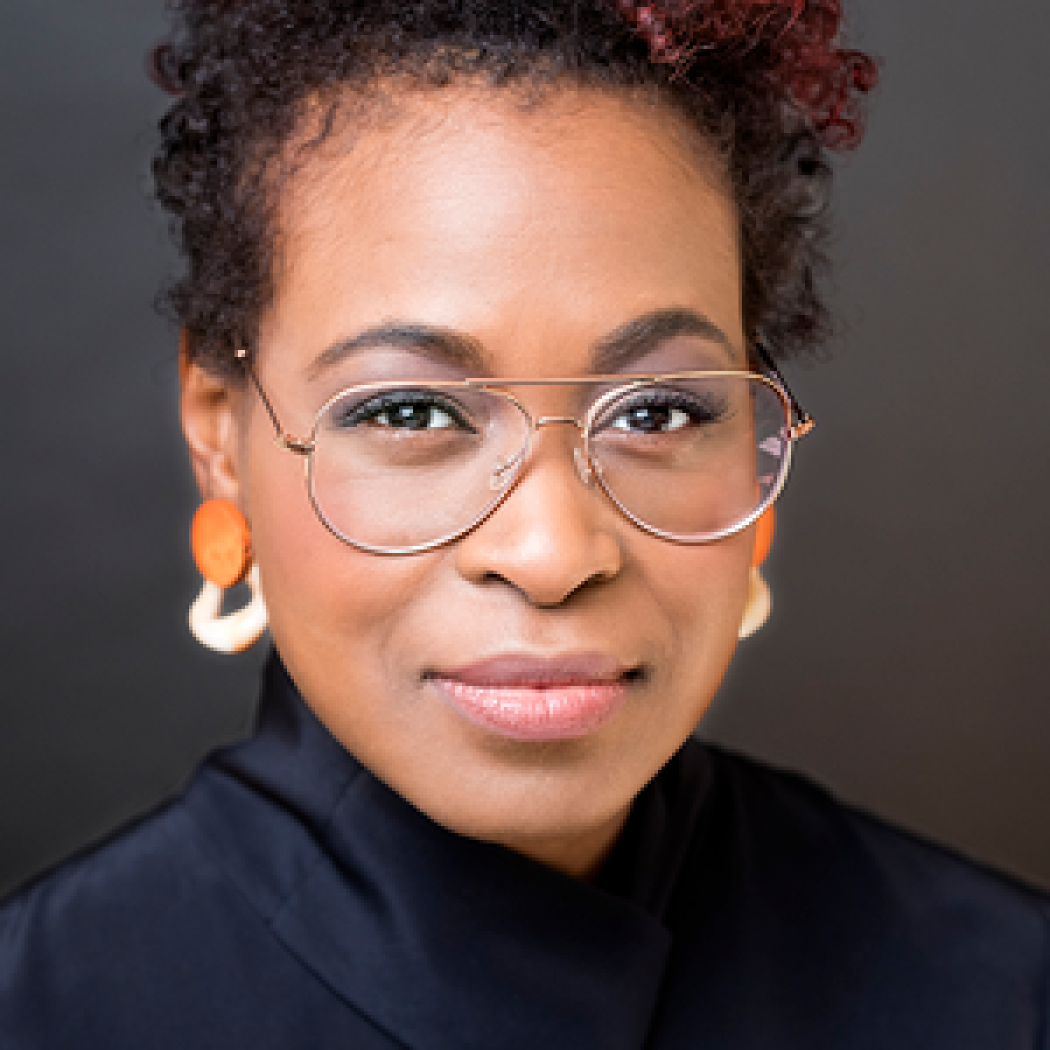
Errin Haines
American journalist
22
APPEARANCES
16
PODCASTS
Sep 28, 2026


Errin HainesGUEST
Like, if, if we are going to get to a place where American journalism is truly representative, then we need to be hiring Black journalists to cover Black communities and the totality of diverse communities, right? Like, not just showing up when something bad happens, but covering them in their everyday life, showing them a full picture of themselves.
Errin HainesGUEST
Like, that is the work that to this day is not fully happening in American journalism, right? And so NABJ comes along in 1975, founded by 44 Black journalists who understood that representation inside newsrooms was essential to shaping the fair and accurate coverage of, of Black communities across this country, right? And so here we are 51 years later.
Errin HainesGUEST
Uh, you- I think when the Kerner Commission report came out, something like 5% of all the journalists in, in American newsrooms were Black journalists.
Errin HainesGUEST
That number today is something around 6%, right? So we're not talking about [laughs] the Black press has just taken over American journalism.

Melissa MurrayHOST
What do you think the role should be between these press organizations and journalists at this time? How do you balance the interest and the need for access with the desire and indeed the imperative to stand up for the First Amendment?
Errin HainesGUEST
So from where I sit, the First Amendment is not optional, and I think that we are in a moment where, where journalists are gonna have to fight for this profession.
Errin HainesGUEST
We're not gonna have access to anything if we don't have, if we don't have a profession intact and standing strong and standing together because the truth has to matter.


Ali VelshiHOST
And two, in that the news organizations who often don't agree with each other and are competitive with one another have decided that they are going to take a stand on this.
Errin HainesGUEST
And look, yes, I am certainly a member of the independent media as somebody who helped to found an independent newsroom.
Errin HainesGUEST
We're standing up and standing together because we know that it could be one of us today.
10 MINS LATER
Ali VelshiHOST
And two, in that the news organizations who often don't agree with each other and are competitive with one another have decided that they are going to take a stand on this.
Errin HainesGUEST
And look, yes, I am certainly a member of the independent media as somebody who helped to found an independent newsroom.
Errin HainesGUEST
We're standing up and standing together because we know that it could be one of us today.
10 MINS LATER

Errin HainesGUEST
... as, as a country going forward, right? So, like, what does it mean for us to look at the South, to learn from the South, to listen to people in the South about what, um, the issues that they care about, to be seeing up close the unfinished business of our democracy? I'm talking about race and how that's playing out across our politics.
Errin HainesGUEST
Like, 250 years, uh, into this, this, uh, American democratic experience, like, what does it mean, uh, when we are seeing people who are literally, um, contesting their ability to participate in this democracy freely and fairly and equally on the other side of that Calais decision? So, I mean, obviously couldn't have predicted that coming down at a better time for our, our show and for us to be in places like Georgia and Texas, in North and South Carolina, in Mississippi, in Tennessee, like, seeing, you know, the choices that lawmakers are making in this part of the country and how that's playing out, and particularly animating people to participate in how the South is changing.
Errin HainesGUEST
So many people are moving to our part of the country from other places, and they're bringing with that new ideas and new energy and saying, you know, look.
Errin HainesGUEST
Places like North Carolina where you have, like, almost 40% of people saying that they are unaffiliated.

Tim MillerHOST
And, uh, this was their question, right? Like, also, like, to me living here, right? And I'm curious to you, you know, out there doing this reporting, like, is the Blacklash real? Like, is it just on social media among activists that were already a- you know, activated? Like, what's your sense for kind of the reaction to Calais?


Stacey AbramsHOST
... as an unbreakable political machine, who hear you describe suburban mom and have a very clear image that is not necessarily you or me, for those who think that there are only certain conversations that we get to have, what do they misunderstand about this region? And what are the biggest shifts that you see happening in the South over the last 10 years?
Errin HainesGUEST
I mean, absolutely it came to pass in Georgia, right? Witness 2020 when the, the, you know, the unthinkable was suddenly possible, and then it was happening.
Errin HainesGUEST
Georgia r- is responsible for electing a Democrat, uh, to the presidency, presidency of the United States for the first time in a generation.
Errin HainesGUEST
Two Democratic senators historically so, coming out of Georgia in 2020 in the middle of a pandemic.
Errin HainesGUEST
Even though Georgia was the last state to turn red in the South, people just thought, "Oh, well, well, that means it's just gonna be red forever.
14 MINS LATER
Stacey AbramsHOST
Why do you think that that's both appropriate, if you do, and who else do you think is doing a good job of thinking about it?


Erin HainesGUEST
I appreciate you saying that because, you know, when you were criticized, you heard that criticism for what it was, right? It's not just about calling you out.
Erin HainesGUEST
People were trying to call you in as somebody who we do see as a member of community.
Erin HainesGUEST
Listen, I had a chance to... listened to him responding to us giving him the thumbs down award.
Erin HainesGUEST
And it's clear that he seems to think that us giving him this award means that we think that he is now some kind of enemy of NABJ.
9 MINS LATER


Joy ReidHOST
So can you talk about this moment? Because it definitely feels like it's never been more fraught of a time, at least in our m- modern history, to be a Black journalist.
Errin HainesGUEST
Yeah, I mean, I think that's right, right? I mean, uh, you know, NABJ was founded in 1975 because you had, you know, 44 bold founders who, who saw the need.
Errin HainesGUEST
They understood the power of strength in numbers for them to come together and for them to advocate for our representation in, uh, you know, mainstream American newsrooms.
Errin HainesGUEST
Uh, certainly the Black press is, is absolutely a part of who we are and what we do.
Errin HainesGUEST
Uh, other folks who, who have other roles in media, but who are facing some of the same challenges that we are facing as Black journalists stand with us.
Errin HainesGUEST
And so we've grown, you know, 50 years later to an organization that is 4,000 strong, but is absolutely, you know, facing some of the same challenges, uh, and worse that, that those 44 founders, uh, faced 50 years ago.
9 MINS LATER
Joy ReidHOST
Where, where does she stand in your view as somebody who has covered her for so long, um, has written about her, and how do we think about Kamala Harris right now as Black women and as Black journalists?

Errin HainesGUEST
All roads lead to the South, another way to say that, but, like, at no point in our country's history...
Errin HainesGUEST
We're, we're celebrating our 250th birthday, right? But at no point in the country's history has the South not shaped American politics.
Errin HainesGUEST
All of the things that are playing out, whether it, you're talking about voting rights, I mean, gerrymandering.
Errin HainesGUEST
You think that that's not gonna affect you, somebody in California? You're, you're gonna have less representation if people in the South aren't able to vote for the voters of their choice.
Errin HainesGUEST
So, like, there's so much to unpack about this place, um, uh, n- not even just in terms of our politics, but just how, who and how we're going to be as a country moving forward.
5 MINS LATER

Errin HainesGUEST
I mean, look, the gains in Georgia were absolutely part of the backlash that was fueling, you know, this whole, uh, big lie that, that, um, y- you know, climaxes in, in, in people storming the Capitol on January 6th, 2021.
Errin HainesGUEST
So, you know, uh, here we are six years later, and you still have the president now back in office, uh, talking about voter fraud, talking about Georgia being part of a, this rigged election scheme that happened in 2020, and still trying to find proof of that somehow, despite the fact that like over and over and over and over again in my home state, that had been rebuked, uh, that had been negated, that had been disproven.
Errin HainesGUEST
Georgia obviously still very much on his mind [laughs] and very much in his focus headed into not just, uh, the midterms, but even beyond that.
Errin HainesGUEST
So, uh, yeah, Georgia, uh, continues to be kind of the center of the political universe.

Alex WagnerHOST
Yeah.W- w- is that, do you, is that the sense that you get, that people are, like, as angry as they may be, it also pushes them to the polls?


Isabelle RougholHOST
So let's start with who is Elizabeth? What do we know about where she comes from in her childhood?
Errin HainesGUEST
She is an enslaved woman in Sheffield, and she's working for the family of Colonel John Ashley and Hannah Ashley.
25 MINS LATER


Katy TurHOST
Is this motivating more Democratic voters? Is it putting John Ossoff on a stronger position?
Errin HainesGUEST
Georgia, as I don't have to tell you, Katie, was one of those places where the president tried to say that the election was rigged and that specifically in Georgia there was malfeasance, something that had been proven wrong time after time after time after time in the wake of the 2020 election.
Errin HainesGUEST
And still here we are six years later and the president is still trying to litigate this.
Errin HainesGUEST
You had Republican Governor Brian Kemp say, And Republican Secretary of State Brad Raffensperger rejecting the idea that the elections were rigged or somehow illegitimate in Georgia, bucking the president on that.
Errin HainesGUEST
But look, I mean, we tend to talk about election interference as something that some kind of foreign adversary does, right, like hacking a machine or by spreading propaganda.
11 MINS LATER


Garrison HayesCORRESPONDENT
It's an inspiring piece of hidden American history, and if you're anything like me, you're probably wondering why you haven't learned about Elizabeth Freeman sooner.
Errin HainesGUEST
So Elizabeth Freeman is an enslaved woman at the time of, you know, the kind of emerging American Revolution, uh, who went by Mum Bett.
Errin HainesGUEST
And the family that she worked for, the master of that house would have dinners with other, you know, prominent men in, in Massachusetts, and they would talk.
Errin HainesGUEST
They would talk about, you know, really some of the ideas that became the founding ideals of America, of the United States.
Errin HainesGUEST
And so one of those people Mum Bett overhears talking about freedom, talking about equality, talking about liberty.


Errin HainesGUEST
... standing shoulder to shoulder with white women pushing for suffrage, pushing for women's equal access to the ballot box, and what happens when it looks like white women can finally get across that finish line in 1920? Oh, but you can't bring Black women with you.
Errin HainesGUEST
Like, that, that dy- like, even today, you know, the listen to Black women, [laughs] uh, believe Black women, uh, mantra is back, and, and, a- but have, have, have those lessons been learned from, um, you know, 100 years ago in our politics? I would say that they probably have not.
Errin HainesGUEST
Like, Black women have been naming this dynamic for a long time, right? The, the idea that movements will invite women in, but not actually share power with them, we had to learn that the hard way.
Errin HainesGUEST
Um, and, and, and I think what's different now is that more women are experiencing this directly, and so that, I, I would hope that, that, um, that they can also understand the long tradition, the continuum [laughs] that we have been on, um, that maybe will lead them to make different choices about how to move going forward.

Errin HainesGUEST
This, this adjacency to success and adjacency to power, adjacency to rare experiences that are of honor, of, of positions of honor and dignity.
Errin HainesGUEST
And when you get there, you're oftentimes rolled out there as the person who then the white listenership or white viewership, where the racism problem in this country resides, um, and not exclusively there, but predominantly there, um, they then get to see you and say, "Oh, they're all not the same.
Errin HainesGUEST
Oh, there is difference and there is diversity, because where I live, the people who look like that all do such and such and such."
Errin HainesGUEST
I think it's dis-- I think it's deplorable that people can be that simple-minded, can be that, as my daddy used to say, "Don't be simple, son.
Errin HainesGUEST
Don't be simple." Which was the, by my standard, the worst insult you could get from your daddy, 'cause that was just basically, "Don't be dumb." Um, but so often we find ourselves having to carry that burden, even though we didn't create the problem, and we're not the ones who are the cure to the problem, but we're oftentimes treated not only like the people who, who, who, who made the mess and also the, the maids who have to come behind to clean the mess up.
Errin HainesGUEST
Um, and I, I just, I'm, I'm proud for that brother 'cause I hope he feels pride in what he's, what he's doing and, and this moment of relief he's given us here on Earth where it feels like hell.

speaker_0UNKNOWN
We staying on the moon, baby
Errin HainesGUEST
What does it mean for folks to see this, you know, see that press conference, to see that clip, folks that are watching this who may be abroad, who may be thinking about coming to America? They see that, they say, "Well, I'm not coming here.
Errin HainesGUEST
I'm not flying into Los Angeles." So I mean, we're talking about th-that-that-
12 MINS LATER


Errin HainesGUEST
And Ali, I mean, I'm so glad that you're pointing this out and that you played those clips because this is about Americans' ability to participate fully in our democracy, in our workforce, in our society, and this is what it looks like for democracy to really feel personal, right? It's not some abstract thing that's out there for the American people.
Errin HainesGUEST
It is something that is a literal kitchen table issue that to Secretary Sebelius's point could be motivating voters.
Errin HainesGUEST
They remember, uh, you know, how it feels when they have to make these decisions that are based on policy.
Errin HainesGUEST
Meanwhile, you've got a president that is focused on a solution in search of a problem for, you know, you know, the, the myth of, of voter fraud, to your point.

29:53

The laws in this country, the civil rights laws that were fought for to inject some equity into this experiment that is the American democracy, are now being weaponized in a way in which I don't think in 1960, 1964, 1965, civil rights activists thought were possible.
Errin HainesGUEST
Yeah, I was going to say, Simone, I mean, I do think that Black journalists have often had to do the work that is part of the work of democracy.
Errin HainesGUEST
You do not have a truly representative, truly free press, and not have a truly representative and free democracy.

Eugene DanielsHOST
And I wonder, as president of NABJ and as a journalist who's been doing this for so long, how that changes the game for reporters trying to do their work and in turn changes the game for the American people.

Monique PressleyHOST
I'm calling it the crime of journalism, is what they're t- truly accused of at this point, and I know that NABJ and other associations have something to say about that.
Errin HainesGUEST
Uh, yeah, I mean, Monique, listen, we will continue to say that committing journalism is not committing a crime, and that is exactly what Don Lemon was doing, what Georgia Ford is doing, and we will continue, uh, to say that.
Errin HainesGUEST
Just because they are out of federal custody, they are back in a federal courtroom now, having to make the case that, that do- you know, committing journalism is not, it should not, is not something that should be criminalized.
Errin HainesGUEST
So I mean, I just wanna acknowledge that, that this is such a serious moment, not just for Don and Georgia, but really for journalism, and it should be for, for all of the public that cares about the public's right to know, because that is also what is at risk.
Errin HainesGUEST
And so, uh, you know, as president of NABJ, my role is to defend journalists and to defend press freedom, and so that is why we spoke up in support of Don and Georgia.
Errin HainesGUEST
Uh, we know that this situation raises really important questions about whether journalists can report on events, especially controversial or tense situations, like what was happening on the ground in Minneapolis, without fear of criminal prosecution.
6 MINS LATER
Monique PressleyHOST
What kind of supports are in place for journalists, and are there things that they should be doing, ways they should be signing up, perhaps becoming members of the National Association of Black Journalists or others?
Errin HainesGUEST
I mean, look, folks in here have already said it, but it, it is worth repeating that a federal magistrate judge declined to authorize charges, said that there was insufficient evidence, said that there was lack of probable cause.
Errin HainesGUEST
So the fact that authorities moved anyway against Don and Georgia should really be alarming, uh, to anybody who believes in, in judicial oversight and constitutional limits.
Errin HainesGUEST
Um, a- as Georgia said, I, I mean, just watching that, um, it, it, it's alarming because I, I, I mean, she wasn't...
14 MINS LATER

Vaughn HilliardCORRESPONDENT
And two, how do we make sure we have support and infrastructure for these journalists, some of whom are the first to be targeted, but certainly not the last?
Errin HainesGUEST
And we are seeing a serious threat to the First Amendment today with the arrest of journalists for certainly the first time in my lifetime.
Errin HainesGUEST
for attempting to do their job, to speak truth to power and to show people what is happening on the ground in Minneapolis.
14:54
And if they are allowed to get away with it here, they will not only do it again, they will escalate.
Errin HainesGUEST
I mean, listen, we know that, that part of these attacks on diversity, equity, and inclusion include attacks on journalists of color who we know have been disproportionately impacted, uh, in this anti-DEI climate, right? And so we must push back against that because if we do not have a truly representative press, how can we have a truly free press? And how can we have a truly healthy democracy? We know that these issues are tied together, right? That, that democracy and a free, and a free press and diversity, those things are not mutually exclusive.
Errin HainesGUEST
They rise and fall together, as do the rest of us, right? These are issues that should frankly concern and alarm all Americans, right? Um, we do know, right? We know that for Black journalists, the stakes can be even higher, right? Because we are often the ones that are on the front lines, right, uh, covering policing, covering immigration enforcement, covering civil rights, covering systemic inequality, the very places where accountability is most needed, right? So when institutions avoid moral clarity in these moments, it is Black journalists and the communities that we serve who feel the consequences of that.
20 MINS LATER
speaker_10UNKNOWN
Yeah.

Ali VelshiHOST
I- in, in areas like the Department of Education, the Postal Service, places where Black women went and Black people went to be employed because they had worker protections before the private sector did.
Errin HainesGUEST
And listen, we know that the public sector has been a pathway to the middle class for so many Black people, including Black women, many of whom, you know, are the sole breadwinners of their households, right? And certainly these are people who are actively engaged in democracy.
Errin HainesGUEST
We've seen the power of Black women at the ballot box, and certainly some people would argue that that power, uh, has, has, uh, directly resulted in, in the backlash that we are seeing now by this administration attacking diversity, equity, and inclusion.
Errin HainesGUEST
And when you combine that with his attack on the public sector, what you get is, uh, you know, so many of th- that 320,000 plus and counting, right-
Errin HainesGUEST
I mean, well, you have to think about Carla Hayden as, as somebody who was head of the Library of Congress.