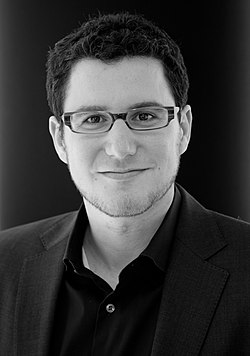
Eric Ries
American entrepreneur and blogger
104
APPEARANCES
96
PODCASTS
Sep 17, 2026


James TaylorHOST
So can you can you unpack that a little bit for us? What kind of structures quietly corrupt even the best intentions?

Eric RiesGUEST
So in order to understand why this happens, you have to understand what organizations are in a deeper way than we tend to.
Eric RiesGUEST
And I know this is going to be hard for some people and they hear it for the first time, but the science of this is super well studied and well established.
19 MINS LATER
speaker_6ADVERTISER
in this dimension.


Tommy StadlenHOST
Maybe before we talk about lessons learned all this time that's passed, could you just distill down what was the key message of Lean Startup?
Eric RiesGUEST
So much of how we used to teach entrepreneurship really was based on 20th century general management principles.
Eric RiesGUEST
Principles that every one of us has learned if we've had any kind of a job, right? You do better than expected, you're doing a good job.
Eric RiesGUEST
You do worse than expected, you're doing a bad job, which requires you to have a manager.
Eric RiesGUEST
And then you could be judged based on how what you did compares to what you were supposed to do.
7 MINS LATER
Tommy StadlenHOST
Eric, could you just give us a quick version of the thinking, the main vision behind the book?

Seth MatlinsHOST
Agreeing with the difficulty, is this an argument for stakeholder versus shareholder capitalism?
Eric RiesGUEST
In fact, I tried really hard to write the whole book without using the word stakeholder, which was very difficult because, of course, that is the way we currently talk about this.
Eric RiesGUEST
But the problem is, we'll get into the problem of stakeholder capitalism before, but let me answer your question about how do we derive this properly? Because everything I'm saying, deferred liabilities, negative externalities, You'll learn this in an econ class.
Eric RiesGUEST
If you take econ, they'll walk you through all these problems with our current definition of value.
Eric RiesGUEST
And then if you say, well, should we change the definition? They'll be like, no, that's just the one we've used for this all the time.
17 MINS LATER
Seth MatlinsHOST
Give the audience, if you would, a case study of, you know, where they focused on the customer to the upside and where they – extracted value without any value to the customer and it led to perhaps bankruptcy.

GaneshHOST
So what is the right way to talk to customers and validate the idea?
Eric RiesGUEST
If you don't know what to do and you're stuck, like I often, I remember being in a situation once where conversion rate, I was working on a product that was very conversion rate sensitive, and our conversion rate was stuck at a certain number and we couldn't get it up, couldn't figure out how to make it higher.
Eric RiesGUEST
And after months we started to think, "You know, we better talk to some customers 'cause we obviously don't understand." And as soon as we started talking to customers, we had lots of new ideas, lots of new hypotheses.
5 MINS LATER
GaneshHOST
Can you give an example that could be understood by non-coders?

Eric RiesGUEST
Why? This has been going on for more than 200 years and probably a lot longer than that, but we have really good documentary evidence back to 200 years.
Eric RiesGUEST
The oldest story like this in the book happened in 1800 to a guy named Robert Owen.
Eric RiesGUEST
He took over a bankrupt textile mill in Scotland in 1800 and had this very radical philosophy of business.

Mitch JoelHOST
Why? Why do they want to change the person if that person is doing them a solid? What is that perversion? Yeah,

Scott CookMODERATOR
Scare us with how things
Eric RiesGUEST
Okay, well, certainly one of my favorite stories in the – in the book because it takes place in San Diego where I grew up.
28 MINS LATER
Scott CookMODERATOR
or 30%


Derek AndersenHOST
But if you raise $1 of venture capital or you take any outside money or you need to sort of have this forcing function to have an exit, can you really build a company like that? Or is it different flavors? So I tell a story in the book of a...
Eric RiesGUEST
A university professor who's starting a really, really advanced AI biotech company comes to see me for advice.
Eric RiesGUEST
And he also has to recruit the top scientists in the world in his field to join him.
12 MINS LATER
Derek AndersenHOST
What are the three or four things that I should do to set it off on the right path to overcoming these deeply rooted kind of values and sort of motivations, wrong

33 MINS LATER

Jason KnightHOST
Obviously, we could probably do hours on the specifics of that, but kind of as an overview, what are some of the things that people need to either build in, bake in, or I guess also, interestingly, shift if they're in that situation?

Eric RiesGUEST
think from an intellectual point of view, if you ask people for the core concepts that make up entrepreneurship, you'll hear pivots and MVPs and stuff like that.
Eric RiesGUEST
But so many of the people who have built incredible companies using those techniques have nonetheless ended up miserable.

Jeremy AuHOST
Were there any particular moments that stuck out for you in your research or something that changed your mind?


Amy VaccaroHOST
So walk me through how did you get there, and what does this mean for organizations?
Eric RiesGUEST
And I really wanted to try something different with this book to make a philosophical point about the nature of business, the nature of organizations, because that has been my experience, having worked with so many companies, so many leaders, so many founders, so many boards, so many investors, nonprofits, for-profits, governments.
23 MINS LATER

Jonathan JacksonHOST
Well, just because it was so timely with how GLP-1s are exploding and worth like a jillion dollars.

Eric RiesGUEST
And I said, who here remembers Saul Price? And not even that many hands in San Diego went up.
Eric RiesGUEST
I was like, wait a second, what's happening? So who's Saul? Saul is widely considered to be the father of modern retail.
11 MINS LATER

Don McPhersonHOST
How important is it for companies to attract the right investors? And how can that be a position of empowerment for them? So I think it's a fallacy


6 MINS LATER
44:48
What must the management, what must the board or a founder do, who's responsible for that, in your opinion, to protect that mission and really make it alive and not just an artifact written somewhere and filed with a lawyer and nobody reads it anymore? Yeah.

MaxineHOST
Can you maybe take us on that journey? Like, what changed for you, at least from the outside, which looks like two very different ways of thinking about the world, right? Moving fast, breaking things, running really fast at things, and then thinking about, you know, now with Incorruptible, thinking about how do you create things to last? How do you create things that, you know, maintain their structure?
Eric RiesGUEST
You know, from the outside, I know people perceive this as me doing a bunch of different things that all seem very different from each other.
Eric RiesGUEST
But from the inside, what you have to understand is, to me, it's always been just one thing, and I don't really understand why it has played out the way that it has.
Eric RiesGUEST
I, I try to be discerning about, okay, what, what does the world need now? Okay, let's go do it.
Eric RiesGUEST
So to me, it wasn't really that different, you know, doing startups versus writing about startups, writing code versus writing prose.
MaxineHOST
What a great way of looking at that.

speaker_2ANNOUNCER
What a great way of looking at that.
Eric RiesGUEST
Yeah, well, otherwise you go crazy because you put an idea into the world, you also get a lot of vitriol and people who don't like it too.
Eric RiesGUEST
In any event, so to me, the question was like, what is true? How do you make great companies? What does it take? And I felt like Lean Startup was like the first attempt at a general theory of entrepreneurship, like just very, very, very basic.
22 MINS LATER
speaker_2ANNOUNCER
Totally.


Eric RiesGUEST
I call it the force that no one controls but everyone obeys, and it's there in the public markets.
7 MINS LATER


Eric RiesGUEST
And I just think it, what's cool about Devoted Health, and look, it's- it's- it's started by someone I really admire, uh, uh, Todd and Ed Park, uh, brothers.
Eric RiesGUEST
Uh, you know, he's had a life, uh, as a successful health entrepreneur and also, uh, in public service.
Eric RiesGUEST
He was the, uh, uh, chief technology officer of the United States under Obama, under President Obama.
16 MINS LATER


Áine KerrHOST
So is that one of the learnings here is that we've maybe been too short term in terms of how we've built and designed massive, maybe multinationals, global companies without thinking about the unintended consequences from the start, from the get go proactively.
Eric RiesGUEST
But I think there's something a lot more insidious going on because I have helped many companies, I mean, hundreds of companies at this point get started.
Áine KerrHOST
Given this moment where we're still debating how to build the guardrails, how to regulate and still move at a pace and figure out the power and potential of this technology, where do you fall on the whole debate of how helpful or harmful is AI in this moment?

Eric RiesGUEST
What Cory Doctorow calls inshittification in the technology sector, but it's not unique to technology.
Eric RiesGUEST
You see it in physical products and governmental services and non-profits even what's happening is people have figured out that they can make money by extracting the value out of the engine of these companies so whereas when you ask most people what's a great company you're like ah great company a great company is a vital beautiful living thing that rewards its employees that competes on the basis of quality that delights its customers whose products are always getting better and who stands for something in the world, quality or efficiency or beauty or whatever it is true to itself.

D PereiraHOST
So what is the difference that good companies you mentioned and the great companies, that's what something people are wondering.

Aaron WalterHOST
I wonder if you could unpack what you learned in that timeframe between Lean Startup and your new book that changes your perspective.
Eric RiesGUEST
Now, I don't think it's so much conflicting messages as I've learned how to talk about this a lot better than I when I was younger, as we all get smarter at this kind of thing.
Eric RiesGUEST
For example, we've all learned that a healthy, thriving company will see its stock price grow.
15 MINS LATER


Aakash GuptaHOST
So should everybody consider doing this? Are there people who shouldn't adopt this?
Eric RiesGUEST
And in fact, I'll tell you one of my favorite stories about the development of this structure.
Eric RiesGUEST
She was one of the first Danish doctors, actually, very interesting, uh, woman in her own right.
Eric RiesGUEST
But she contracted diabetes, which at that time had no known cure, so it was a fatal disease.
Eric RiesGUEST
But her husband, August, had just received the Nobel Prize, and so he asked her, in spite of her illness, would she accompany him on a lecture tour of North America? She said yes, and they came to North America, uh, to, you know, travel around and meet other scientists and have his lectures.
21 MINS LATER
Aakash GuptaHOST
So how did you structure it properly so that it's incorruptible? What were the specific decisions you made?


Eric RiesGUEST
But interestingly, even Milton Friedman and the economics people took it for granted that – although, yes, they were very – they would have hated ESG, hated stakeholder capital.
Eric RiesGUEST
And they really believe that this theory would be beneficial to shareholders because it would free companies to become more efficient, more long-term value-creating in the long term.
6 MINS LATER


Susie LewisHOST
Can we come to the term financial gravity in inverted commas, Eric? Why gravity and not temptation or ambition or greed? Why does the physics metaphor, what is it right that a moral one would not translate?
Eric RiesGUEST
This was very tricky to figure out how to write about this because on the one hand, it's a thing that we've all experienced pretty much every day.
Eric RiesGUEST
And yet we have a tendency to personalize it and want to make it somebody's fault, not realizing that there is something intrinsic to our situation that causes this behavior.
Eric RiesGUEST
And like the investors in FedMart, when we talk about companies, we talk about leadership, we talk about organizations.
16 MINS LATER

Eric RiesGUEST
Let me tell you a story with a happy ending, okay? And there's not that many happy endings in the book, but here's one.
Eric RiesGUEST
He created a company in the 1950s called FedMart that is like the first real big American discount retail chain in the modern way that all the other big modern big box chains are derived from this template.
12 MINS LATER

Michael KrigsmanHOST
This is from Swami Vaidyanathan who says, is there a specific structure, public for-profit or non-profit or long-term benefit trust or non-profit parent with capped subsidiary that keeps it incorruptible or is it more dependent on the board?


Nick MoranHOST
Can you tell us a story highlighting a critical lesson that has changed how you lead?
Eric RiesGUEST
So Lou Craperata or Lieutenant General Retired Lou Craperata, he was a Marine Corps general.
Eric RiesGUEST
He was an advisor to me for a long time before becoming a, a, a board member here.
Eric RiesGUEST
Um, I tried really hard to make it work out, but, like, th-th-there's only so much of that you can do, and some of that was self-imposed and in hindsight, not totally necessary.
Scroll for more appearances